Primary Junior Infants STE

STE for Junior Infants

A primary STE programme exploring living things, materials, energy and forces, technology helpers, and engineering solutions.

  • Investigation Journal
  • Mapped to the NCCA curriculum

The whole first lesson, as your class sees it. No sign-in needed.

On the interactive whiteboard
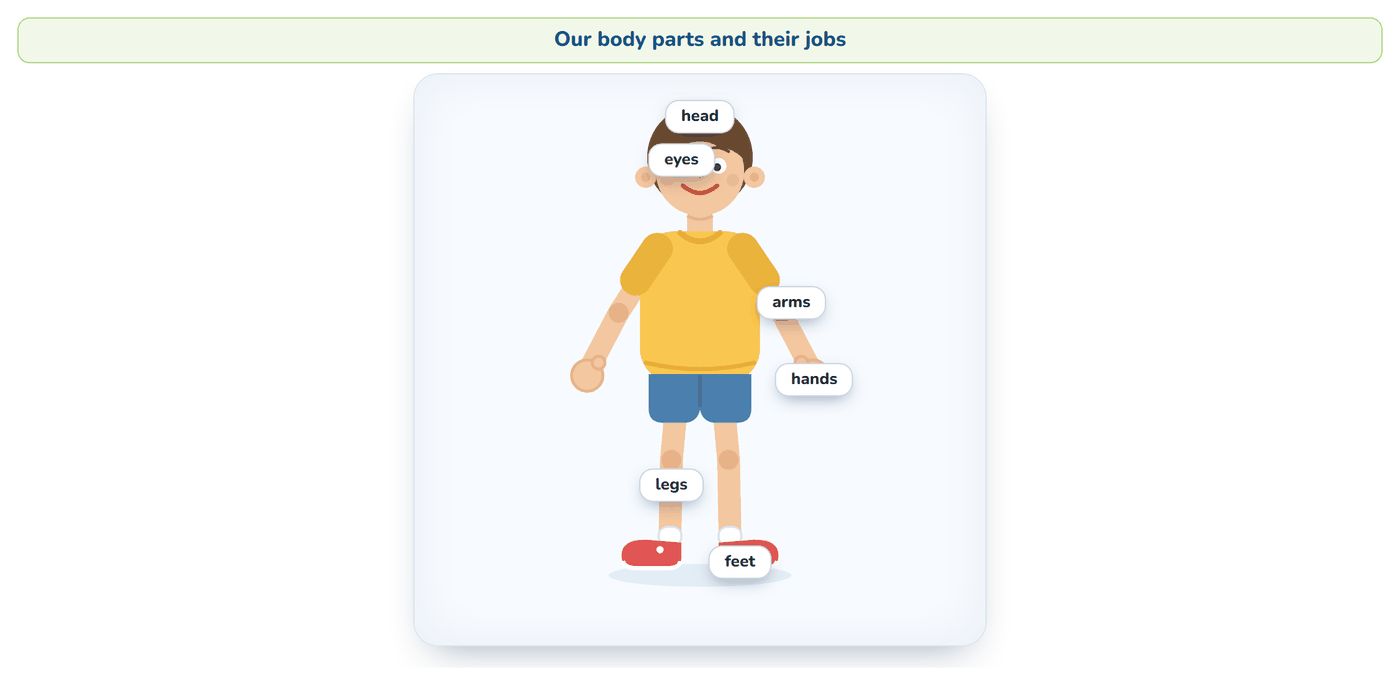
Naming our body parts
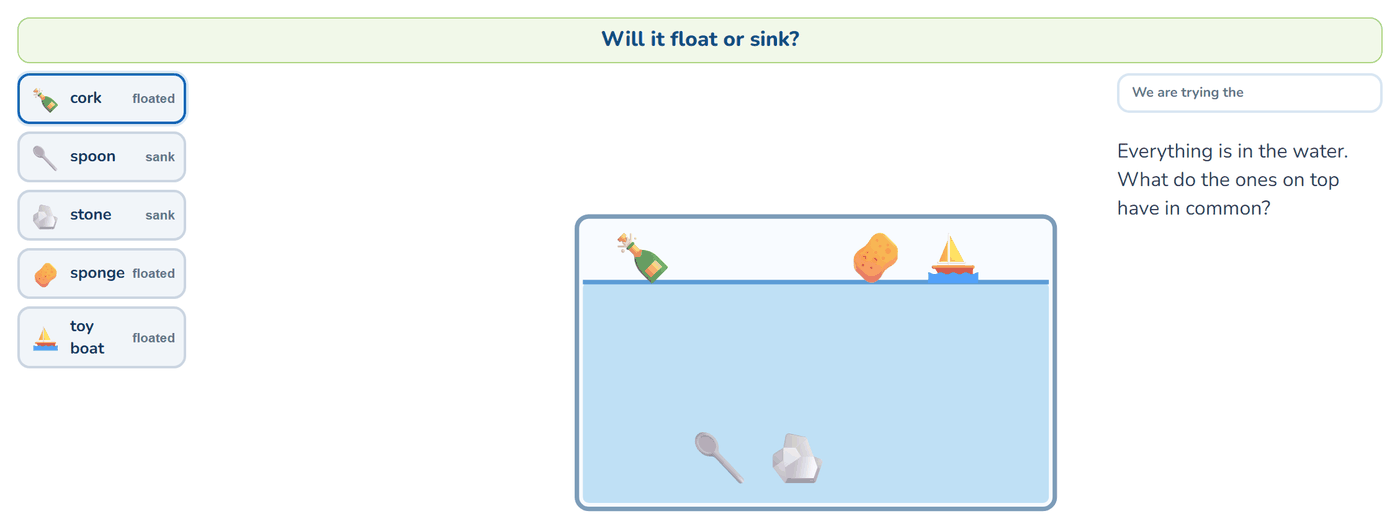
Will it float or sink?
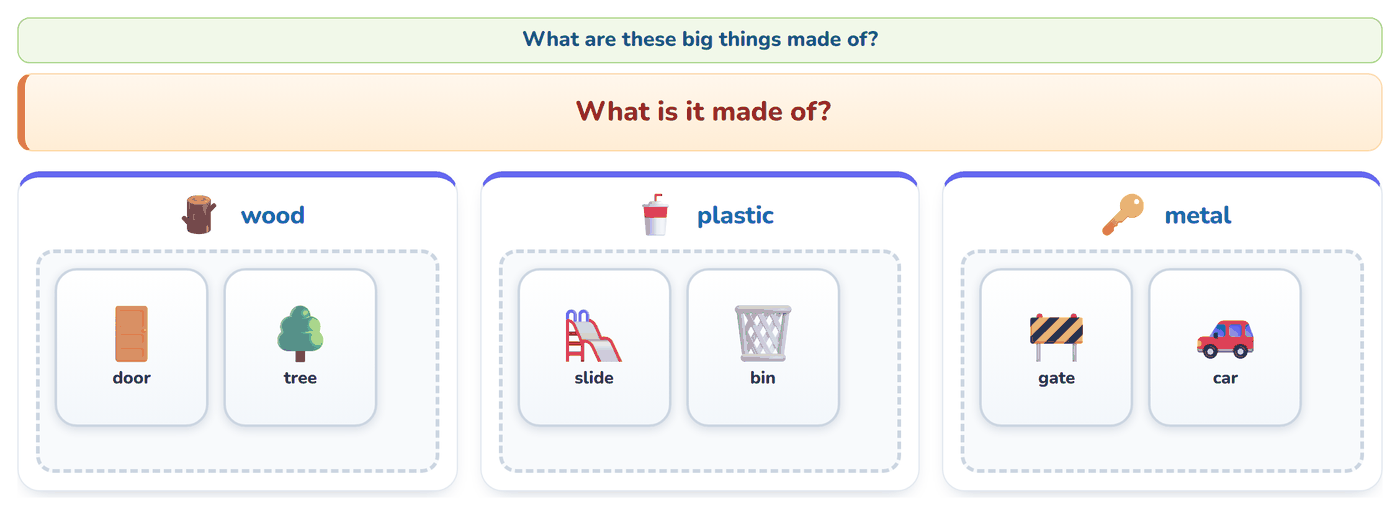
What is it made of?
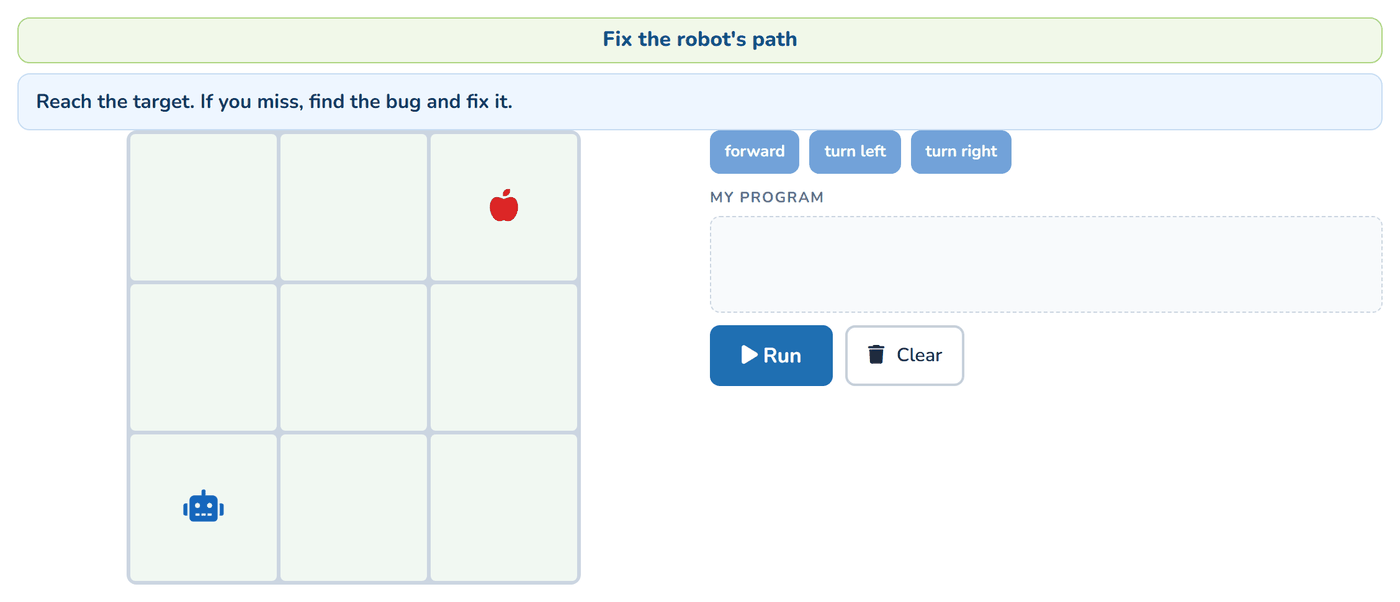
Programming a robot's path

What your school gets

Everything a teacher needs to teach STE for Junior Infants this year.

In class

On paper

  • Investigation JournalA page for 17 of the lessons, for each pupil to record their work.
    Look inside
  • Teacher Resource BookThe whole course laid out for the teacher, lesson by lesson, ready to print.
    Look inside The sample lesson's pages

The whole books come with the course, in each class's Resources.

For planning

Included with the course, in English and in Irish. Teachers find them in their class's Resources.

The curriculum it covers

Every lesson is mapped to the specification. This course teaches 12 of the 12 outcomes for this class.

Nature of STEM 1 of 1 outcome
Living things 3 of 3 outcomes
Materials 2 of 2 outcomes
Energy and forces 3 of 3 outcomes
Technology 2 of 2 outcomes
Engineering 1 of 1 outcome
See every outcome
Curriculum Area
Outcomes
Nature of STEM
S1.1.1
Living things
S2.1.1 S2.1.2 S2.1.3
Materials
S3.1.1 S3.1.2
Energy and forces
S4.1.1 S4.1.2 S4.1.3
Technology
S5.1.1 S5.1.2
Engineering
S6.1.1

Tap any outcome to read it. The coloured ones are taught in this course. The curriculum does not include official reference codes for individual learning outcomes, so we have assigned a code scheme to make it easier to identify and track coverage.

The course, module by module

36 lessons in 5 modules. The lesson marked Sample opens in full.

1 Living Things: Me, My Body, My Senses and Nature Outdoors 9 lessons · about 5 hours

The youngest science begins with wondering, then moves through the external parts of the body and their jobs, the main phases of the human life cycle (baby, child, grown-up), the five senses, and exploring, observing and sorting the plants and animals of the school garden and what they need. All play-based: noticing, naming, sorting and drawing.

  1. Wondering and My Body
  2. 1 Hello! Let's Wonder Together Sample lesson
  3. 2 My Amazing Body
  4. 3 What My Body Parts Do
  5. 4 Baby, Child, Grown-up
  6. My Senses
  7. 5 Our Wonderful Senses
  8. 6 A Senses Walk Outdoors
  9. Nature in Our Garden
  10. 7 Minibeasts in Our Garden
  11. 8 Sorting Plants and Animals
  12. 9 What Plants and Animals Need Outdoors
2 Materials: What Things Are Made of and How They Change 7 lessons · about 4 hours

Notice that everything is made of a material, name common materials and sort by them, feel their properties (hard or soft, bendy or stiff, see-through or not), and explore how we can change a material by squashing, bending and wetting, with the teacher showing ice melting safely.

  1. Naming and Sorting Materials
  2. 10 What Is It Made Of?
  3. 11 Sorting Our Materials
  4. How Materials Feel
  5. 12 Hard and Soft
  6. 13 Bendy and Stiff
  7. 14 See-through or Not
  8. Changing Materials
  9. 15 Squashing and Bending: Things Change!
  10. 16 Wet, Dry and Melting
3 Energy and Forces: What Makes Things Go, Pushes and Pulls, and Magnets 8 lessons · about 4 hours

Notice that energy makes things go and that toys go in different ways, feel how pushes and pulls move things, explore float and sink at the water tray, and have fun finding what magnets pull, sorting magnetic from not, and spotting magnets at work.

  1. What Makes Things Go
  2. 17 What Makes Things Go?
  3. 18 Toys That Need Winding, Batteries or a Push
  4. Pushes, Pulls, Floating and Sinking
  5. 19 Pushes and Pulls
  6. 20 Big Push, Little Push
  7. 21 Float or Sink?
  8. Magnets
  9. 22 Magnets: What Do They Pull?
  10. 23 Magnet Sorting: Yes or No
  11. 24 Magnets Help Us
4 Technology: the Helpers We Use and Steps in Order 7 lessons · about 4 hours

Notice the everyday helpers (technologies) that help us do jobs, sort screen from no-screen, then have fun with first computational thinking: putting steps in order, spotting a repeat, spotting a wrong step (a bug), and driving a floor robot. All unplugged or using a physical floor robot, with no ScratchJr this year.

  1. Helpers All Around Us
  2. 25 Helpers All Around Us
  3. 26 Screens and No Screens
  4. Steps in Order (Unplugged)
  5. 27 Step by Step: Getting Ready
  6. 28 Again and Again: Spotting a Repeat
  7. 29 Oops: Spotting a Wrong Step
  8. Drive the Floor Robot
  9. 30 Drive the Floor Robot
  10. 31 Floor Robot: Fix the Bug
5 Engineering: Find a Little Problem and Make Something to Help 5 lessons · about 3 hours

Notice the helping things engineers make, then have a go at making simple things, a tall tower, a little boat and a bed for a teddy, and show them, talking about the little problem each one solves. Every make is a single make-and-show lesson.

  1. Engineers Make Things to Help
  2. 32 Engineers Make Things to Help
  3. Making Things to Help
  4. 33 Build a Tall Tower
  5. 34 Make a Little Boat That Floats
  6. 35 Make a Bed for a Teddy
  7. Showing Our Makes
  8. 36 Show and Tell Our Makes

What pupils learn

This course introduces young children to core STE concepts through hands-on exploration of living things, materials, energy and forces, technology, and engineering. Pupils investigate their bodies and senses, name and test materials, discover pushes, pulls, magnets and energy sources, sequence steps unplugged and with floor robots, and design simple solutions to everyday problems such as building towers, floating boats and cosy beds for toys. It nurtures curiosity, observation, problem-solving and creative making.

By the end of the course, pupils can

  1. Identify and name the main parts of the human body and describe what each part does through movement, song and discussion.
  2. Use their senses to observe and describe the world around them during indoor carousel activities and outdoor sensory walks.
  3. Sort objects and pictures into groups by material (wood, plastic, metal, paper, fabric) and by properties (hard/soft, bendy/stiff, see-through or not).
  4. Recognise and demonstrate different types of energy and forces including pushes, pulls, winding, batteries and magnetism through play and investigation.
  5. Follow and create simple sequences of steps to programme a floor robot, identifying and fixing errors when it goes wrong.
  6. Design and build a simple product such as a tower, boat or teddy bed to solve a given problem using appropriate materials.
  7. Explain what problem their made object solves and share their engineering work with others in a show-and-tell circle.

Ready to bring STE for Junior Infants to your school?

Get in touch to discuss pricing and ordering for your school.

Back to Junior Infants courses
Ready to get started?
Pricing & Ordering Contact Us
🍪 Our website uses cookies to make your browsing experience better. By using our website you agree to our use of cookies. Learn more