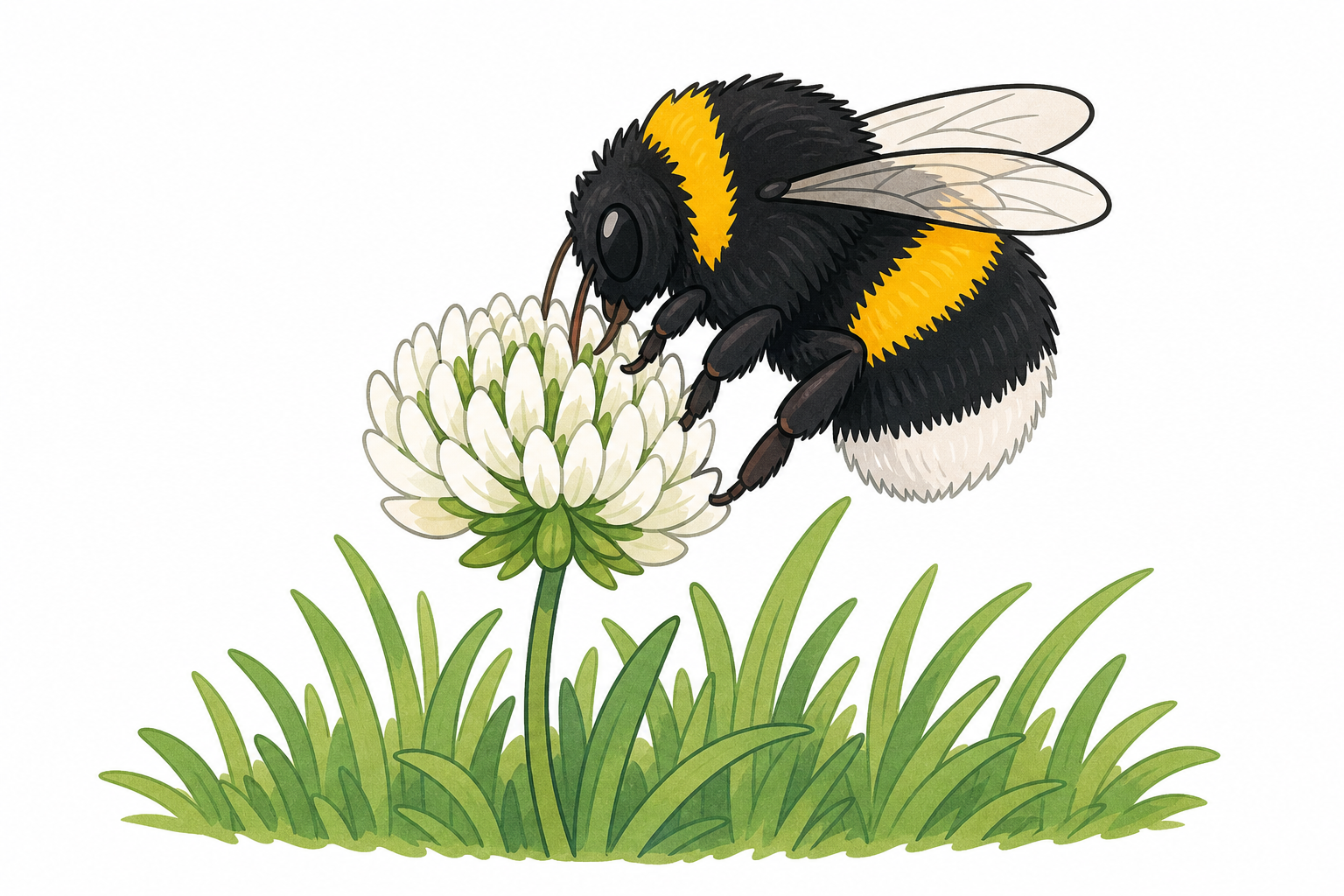
 Look back at your biodiversity audit from earlier in this project. Which living things did you find, and which spots felt richest?
Today we dig deeper: why does that variety matter, what is going wrong for pollinators in Ireland, and how could our grounds help?
With a partner, talk for one minute about the question below.
Be ready to share one idea with the class.
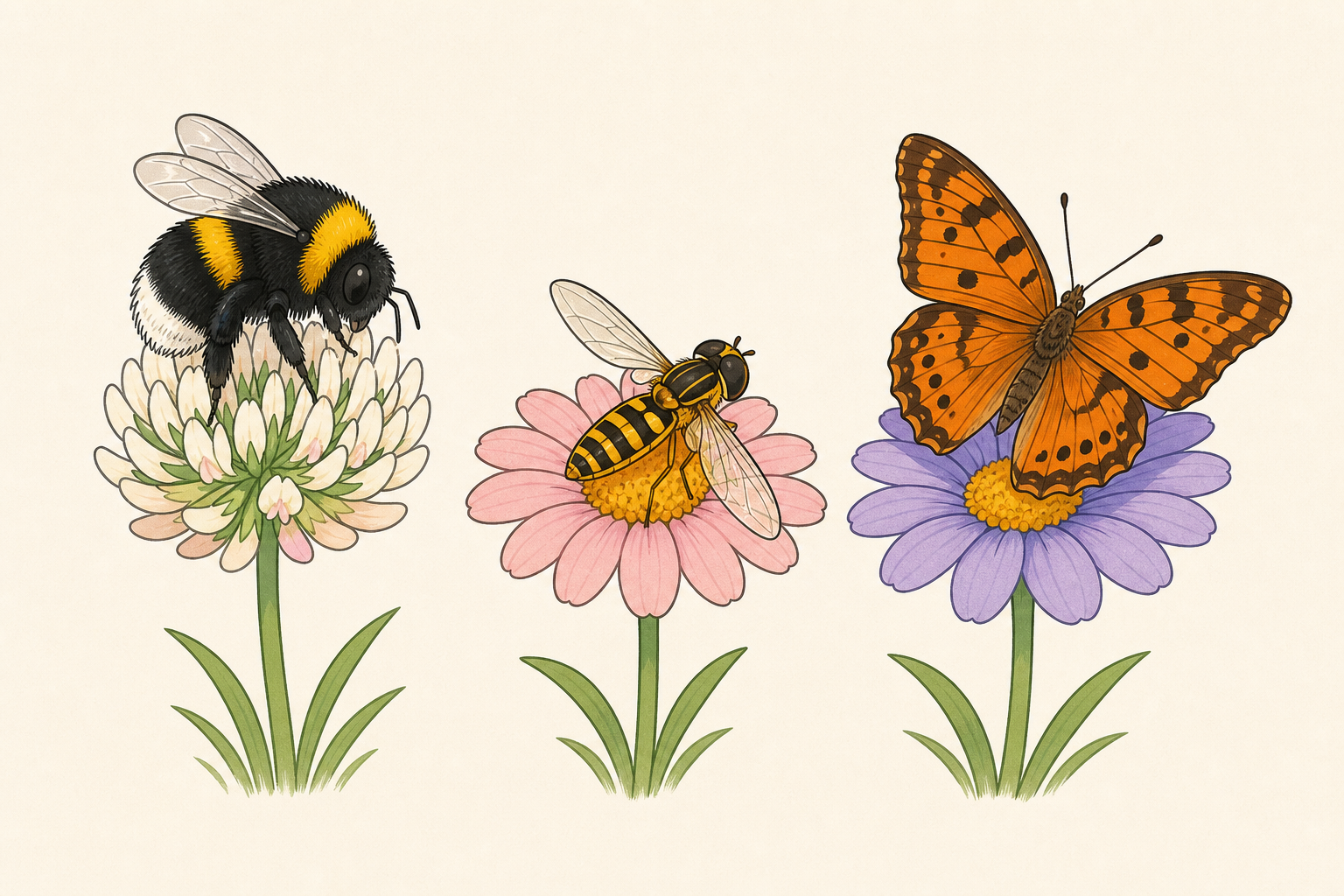 Your audit already showed variety in our grounds. Scientists call that biodiversity: the different living things in a place.
A pollinator is an animal that moves pollen so plants can make seeds and fruit. Bees, hoverflies and butterflies do this job.
A food web shows who eats whom, and how living things in a habitat depend on each other.
Scientists who study living things work in Biology. Ecologists study how living things depend on each other and on where they live, and they start by recording what is there, just as you did in your audit.
Think quietly, or whisper one idea to your partner: if fewer pollinators visited our grounds, what might change in a food web here? We will meet the evidence next.
Your group has five research cards, A to E. Start with Cards B and C. Read each one aloud together, then write three short notes for each card:
- one important fact from the card
- one thing it matches in our audit of the school grounds
- one idea for helping our grounds
If you have time left, read one more card, A, D or E, and put a star beside the line you think matters most.
Keep your notes: you will use Card B again at the end of the lesson.
Unlock the full learning experience
You're previewing this lesson. Get full access to this lesson and hundreds more — each one ready to teach, with interactive activities, printable resources and pupil progress tracking built in.
This lesson is copyright of 123Learn.ie 2017 - 2026. Unauthorised use, copying or distribution is not allowed.