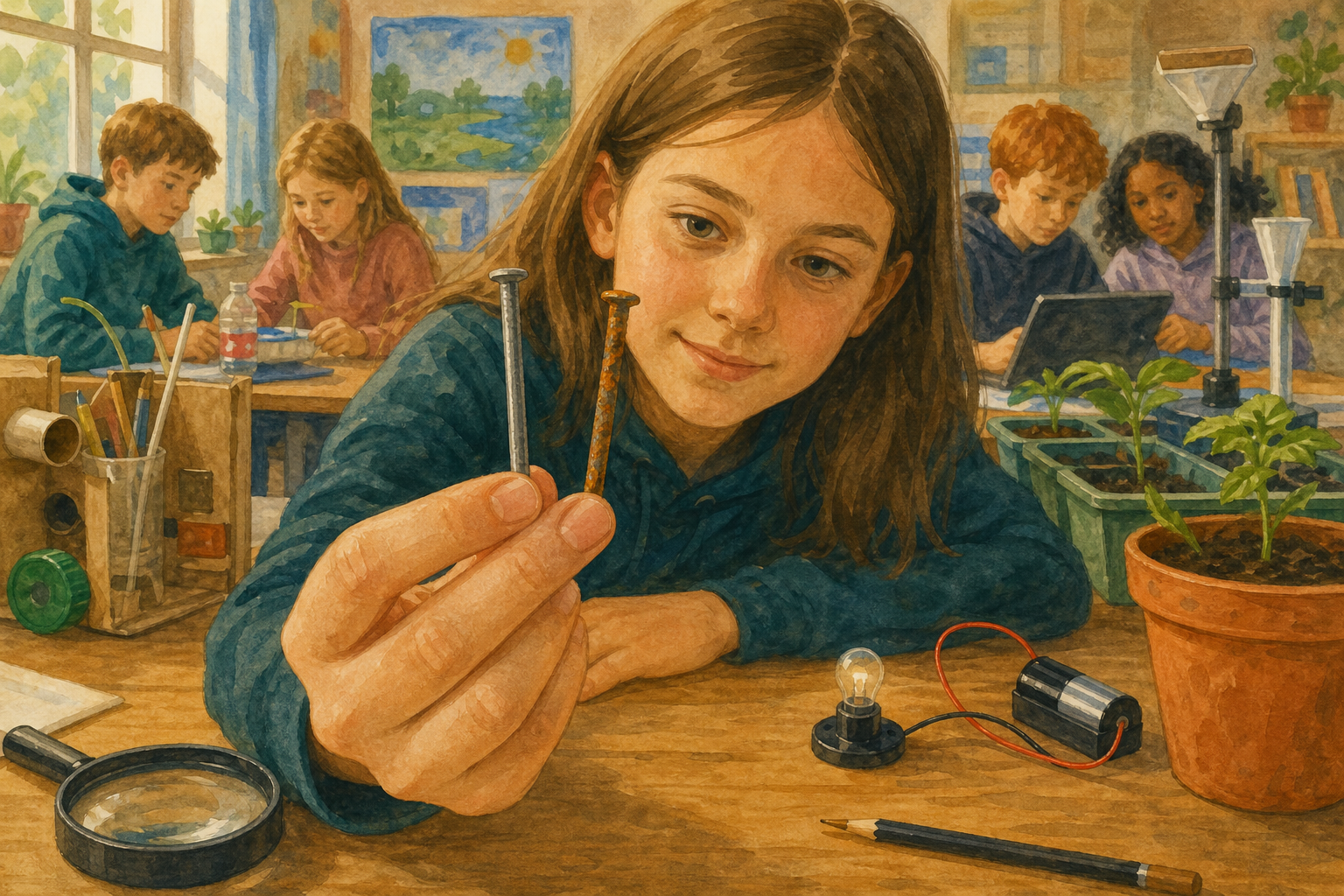
 Look at this iron nail. Outside, old metal gates and bike chains often turn a dusty orange-brown. What do you think is happening to the metal, and can that change ever be undone?
Today we will catch a new gas in a balloon, set up nails to watch over the coming days, and sort changes into ones we can undo and ones we cannot.
 Some changes can be undone. Melting ice can be frozen again. The orange-brown on an old bike chain does not turn back into shiny metal.
Other changes stick: you cannot get the starting materials back the way they were. What clues might tell us a brand-new material has appeared?
We will mix baking soda with vinegar and trap whatever forms in a balloon. We will also put clean nails into three different places: dry air, water, and oil.
What do you think will happen to the balloon, and which nail do you think will change most over the coming days? Say why.
Write your balloon prediction and your nail prediction on your Investigation Journal page now, before we start the mix.
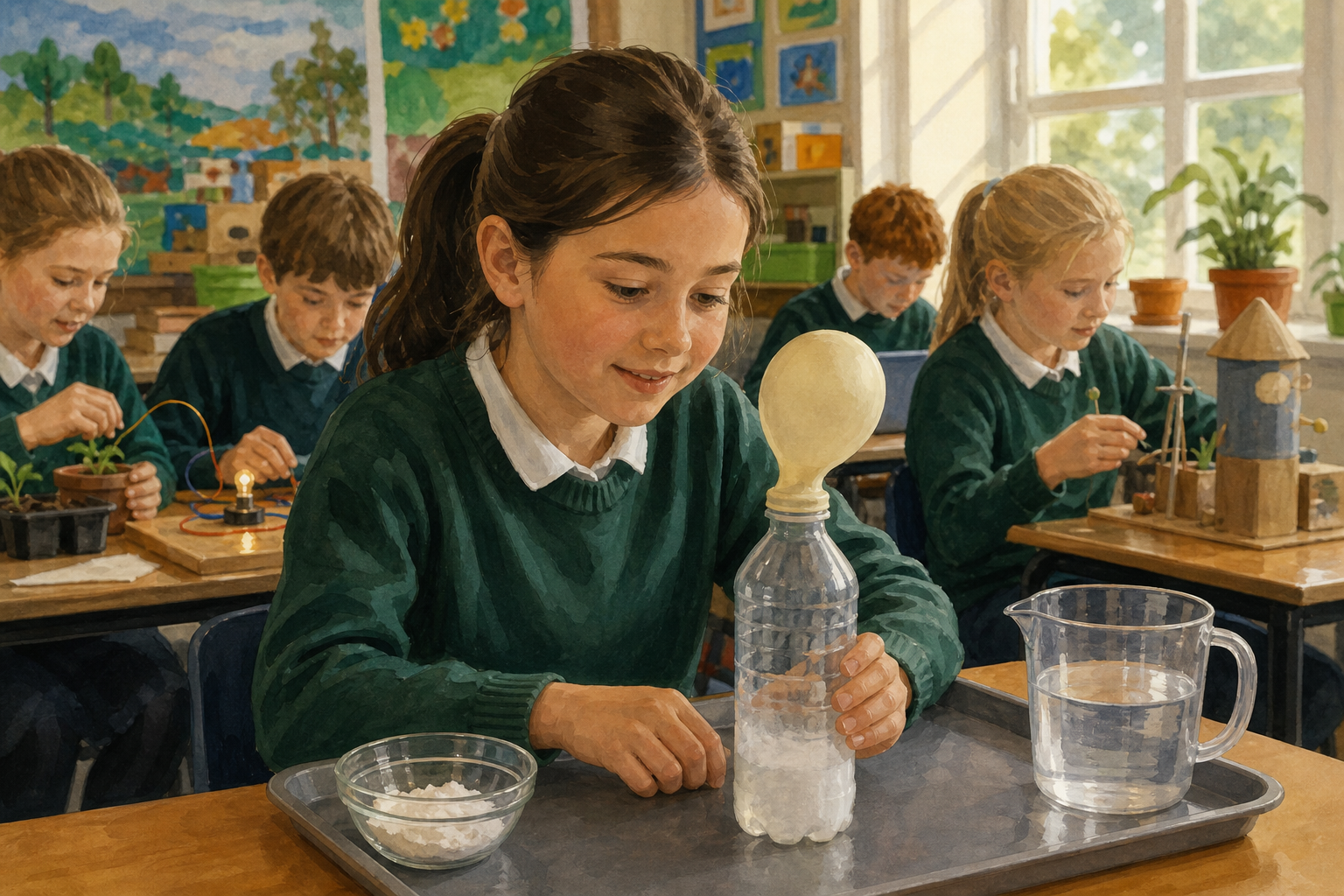
In your group you will mix baking soda and vinegar in a bottle with a balloon stretched over the top, so that anything new the mixture makes is trapped where you can all see it.
The materials, the method and the safety rules are on the board. Follow them in order, and while it happens watch closely: what do you see, hear and feel? Afterwards, ask yourself whether you could get the dry powder and the vinegar back the way they were.
One decision is yours as a group: which piece of evidence will you trust first to say that a new material has formed — the fizz, the balloon filling, a smell, or something you can feel on the bottle? Be ready to share that choice and say why you picked it.
Rusting is slow, so we set it up today and watch it over the coming days. First wipe trays and wash or dry hands so oil and vinegar do not mix into the jars.
As a class we will prepare three clean nails in three labelled jars (one shared set is enough). Help with the steps on the board:
- Dry: place one clean nail in an empty dry jar or on a dry lid.
- Water: stand one nail in a jar with enough tap water to wet only part of the metal. Leave the jar open or only loosely covered so air can still reach the wet nail.
- Oil: stand the third nail in its jar and pour cooking oil until the whole nail is fully under the oil.
Remind yourself what you predicted for the nails. You will test that prediction on later jar checks when we look for a new orange-brown material on the metal. We are not expecting rust to appear in this lesson.
Unlock the full learning experience
You're previewing this lesson. Get full access to this lesson and hundreds more — each one ready to teach, with interactive activities, printable resources and pupil progress tracking built in.
This lesson is copyright of 123Learn.ie 2017 - 2025. Unauthorised use, copying or distribution is not allowed.