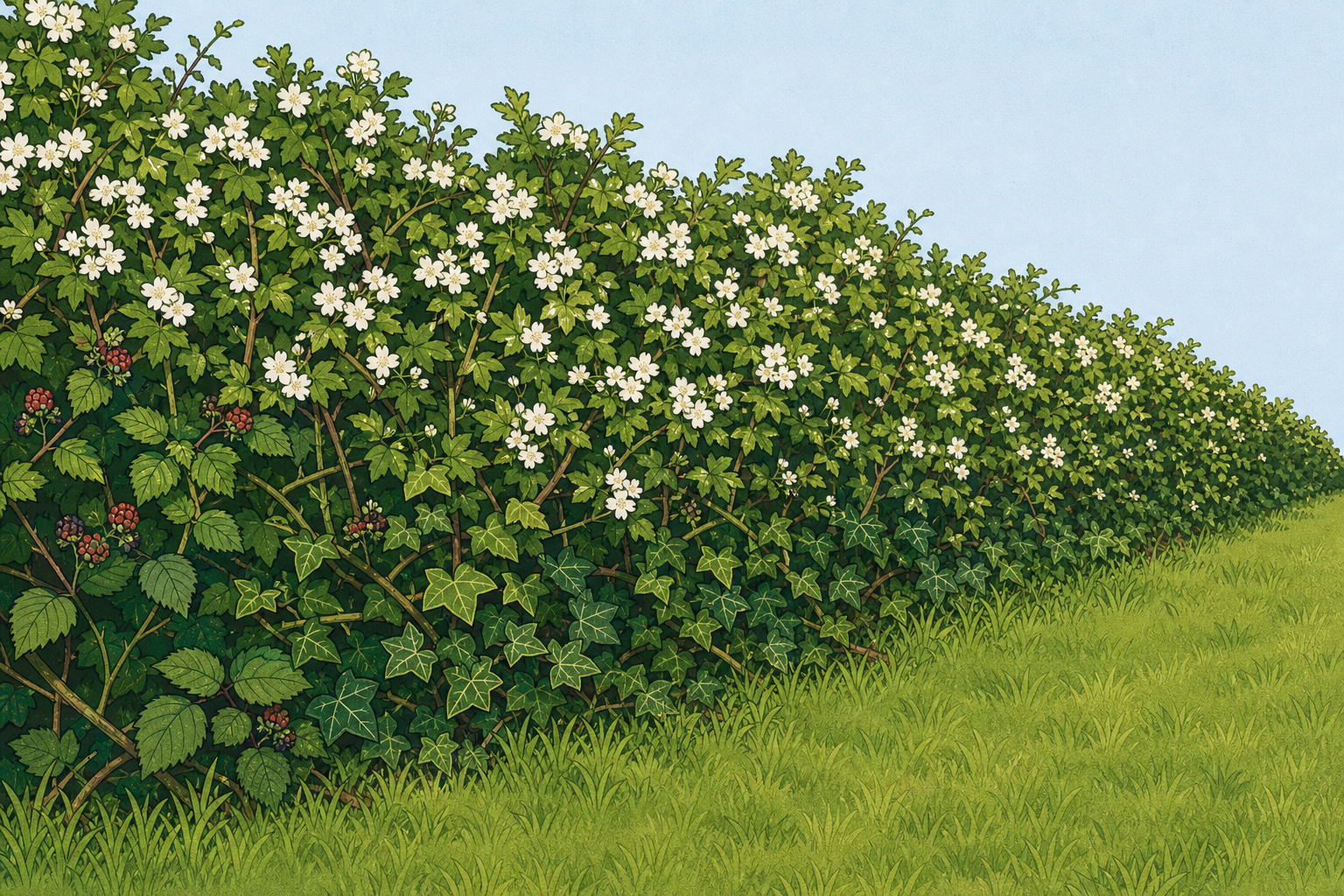
 Imagine a thick Irish hedgerow full of flowers, bees and birds. One season it is cut away to make a wider field edge. What do you think happens first to the living things that used that hedge?
Hands up: which living thing do you think would feel the change soonest, and why?
 We cannot cut down a real hedge just to see what happens. So today you will build a hedge on your desk with counters, in the Hedge Game. A game like this is called a model: something simple that helps us understand something too big to test for real.
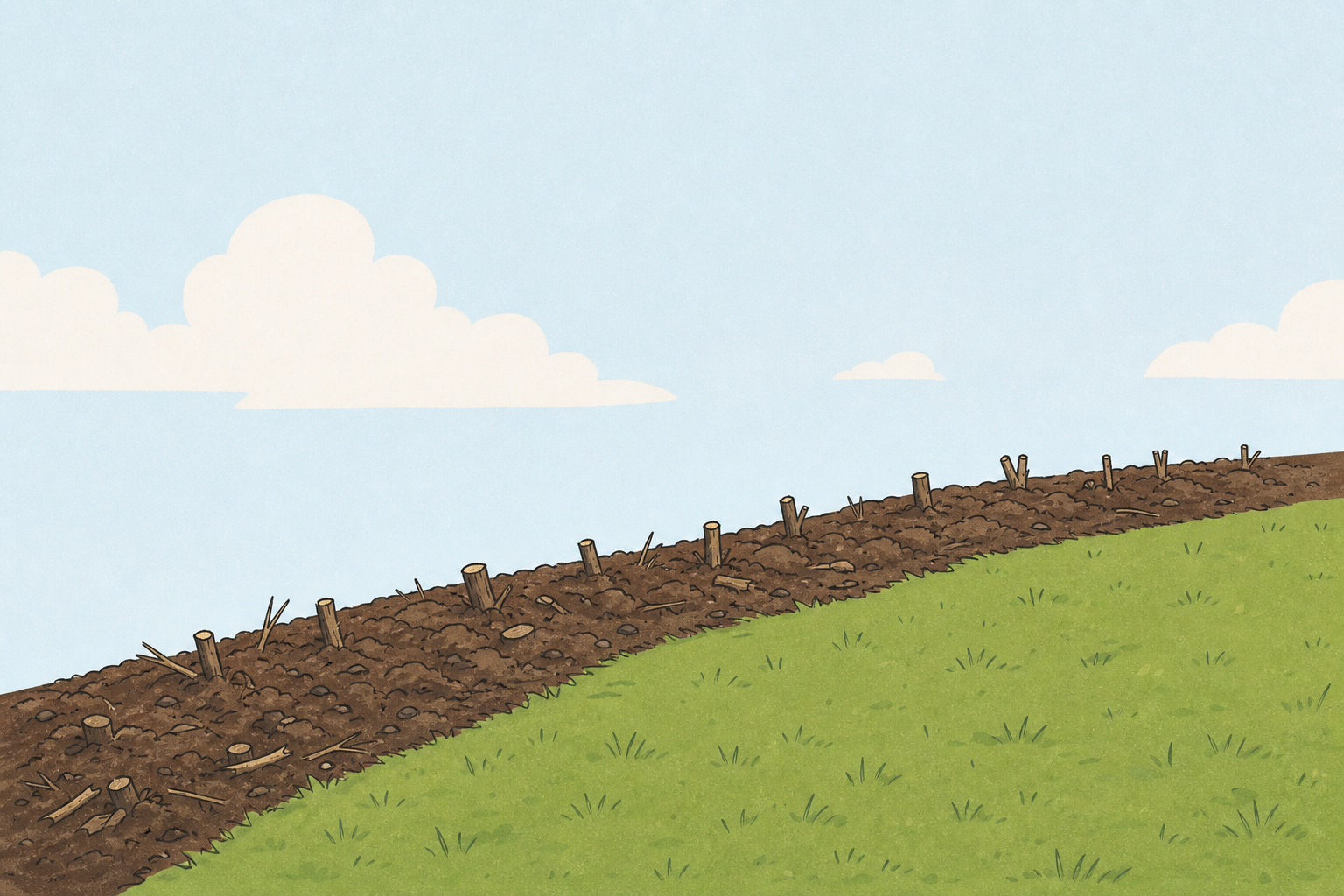
In our game, hedge plants feed insects, and insects feed small birds. Then the hedge is cut away, and most of the plants are gone.
First: who will feel it first, and why? Then: will the birds be all right, since nobody touched them? Write your prediction at the top of your Investigation Journal page.

Your group has counters in three colours. Green counters are plants, yellow counters are insects and blue counters are birds. If your counters are other colours, use the colours your teacher writes on the board.
Every insect needs two plants to eat. Every bird needs two insects to eat.
Round 1: with the hedge.
- Put 16 plant counters in a row. That is the hedge.
- Put one insect counter under each pair of plants.
- Put one bird counter under each pair of insects.
- Count the plants, the insects and the birds. Write the three numbers in the table on your page.
Round 2: the hedge is cut away. Slide 12 plants away from one end of the row, so only 4 are left. Take away every insect that has no pair of plants above it. Then take away every bird that has no pair of insects above it. Count, and write the numbers.
Round 3: a wild corner grows back. Put 4 plants back at the end of the row, so there are 8. Add an insect under each new pair of plants, and a bird under each new pair of insects. Count, and write the numbers.
Let's put our three rounds into the table on the board. Call out the numbers as we fill it in. Then we show the bar chart of the birds.
We only took away plants. We never touched the birds. So why did the birds drop? When one change leads to another like this, it is called a knock-on effect.
The Hedge Game
Unlock the full learning experience
You're previewing this lesson. Get full access to this lesson and hundreds more — each one ready to teach, with interactive activities, printable resources and pupil progress tracking built in.
This lesson is copyright of 123Learn.ie 2017 - 2026. Unauthorised use, copying or distribution is not allowed.