Mathematics
Beginner
50 mins
Teacher/Student led
+80 XP
What you need:
IWB/Projector/Large Screen

What Is a Fraction? Review Part-whole

Learn what fractions are by naming the numerator and denominator. Shade and label fractions using pizzas and paper strips, discovering how the bottom number sets the size of each part.
Teacher Class Feed

Load previous activity

    1 - Getting Started ~4 mins

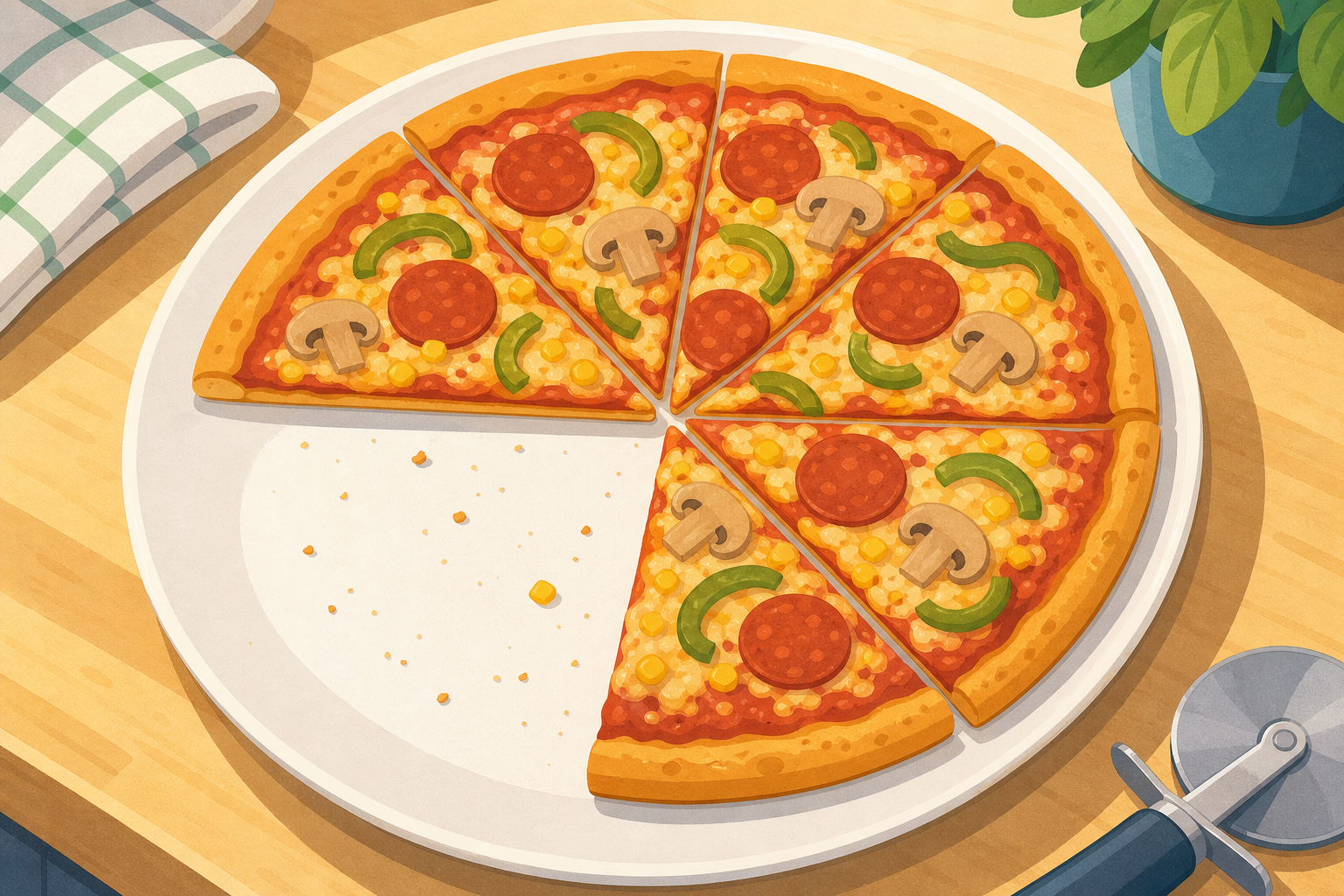
    Illustration for Getting StartedHere is a pizza cut into eight equal slices, but three of them have already been eaten. Hands up: what fraction of the pizza is gone, and what fraction is still on the plate?

    2 - Watch and Notice ~11 mins

    One half

    Watch the pizza-slicer. The whole pizza is cut into two equal parts and one part is shaded. That is one out of two equal parts. We call that one half, and we write it as 1/2. The bottom number, 2, tells us how many equal parts there are; the top number, 1, tells us how many are shaded.

    Three quarters

    Now the same pizza is cut into four equal parts and three are shaded. Three out of four equal parts is three-quarters, which we write as 3/4.

    Five eighths

    This is the pizza from our starting question. It is cut into eight equal parts and five are still here. Five out of eight equal parts is five-eighths, written 5/8.

    Seven twelfths

    Here the whole is cut into twelve equal parts and seven are shaded. That is seven out of twelve equal parts, seven-twelfths, written 7/12. Look how the slices got thinner as the bottom number got bigger.

    3 - Try It Together ~11 mins

    Now we try it together. I will call out a fraction, and one pupil will come to the board to slice the pizza into the right number of equal parts and shade the right number of them. While they work, the rest of us read the fraction back out loud together to check it is right.

    Slice and shade the called fraction

    4 - Sketch the Fractions in Your Copy ~5 mins

    COPYBOOK MOMENT

    Take one of the printed circle templates. Each circle is already a round whole, so you only need to divide it into equal slices and shade. Divide each circle into the right number of equal slices, shade the right number, and write the fraction underneath. Sketch these three:

    • 1/2
    • 3/4
    • 5/8

    5 - Class Challenge ~10 mins

    Now we fold and shade real fractions. Take a paper strip and fold it into halves, then quarters, then eighths. Each time you fold, shade and label the fraction your teacher calls. The fold lines show you the equal parts.

    Make the called fraction

    6 - What Did We Notice? ~5 mins

    MATHS TALK

    On the board we watched 1/2, then 3/4, then 5/8, then 7/12. Why is the bottom number the size of the parts? What happened to each slice as the bottom number got bigger?

    7 - What's Next ~4 mins

    What we learned today

    • A fraction names how many of the equal parts of a whole we have.
    • The bottom number (denominator) sets how many equal parts there are, so it sets the size of each part.
    • The top number (numerator) counts how many of those parts we have shaded.
    • The same whole cut into more parts gives smaller parts.

    Coming up

    Coming up

    Next time we look at equivalent fractions: the same amount of pizza written with a different number of slices. We will find out why 1/2, 2/4 and 4/8 are all the same chunk.

    Pupil practice
    Module 3 · Fractions, Decimals and Percentages Number
    Lesson 31 · What Is a Fraction? Review Part-whole
    Download Activity Book page (PDF)
    End of lesson
    123learn · Online learning platform

    Unlock the full learning experience

    You're previewing this lesson. Get full access to this lesson and hundreds more — each one ready to teach, with interactive activities, printable resources and pupil progress tracking built in.

    Hundreds of curriculum-aligned lessons
    Interactive activities in every lesson
    Printable resources & progress tracking
    Copyright Notice
    This lesson is copyright of 123Learn.ie 2017 - 2025. Unauthorised use, copying or distribution is not allowed.
    🍪 Our website uses cookies to make your browsing experience better. By using our website you agree to our use of cookies. Learn more
