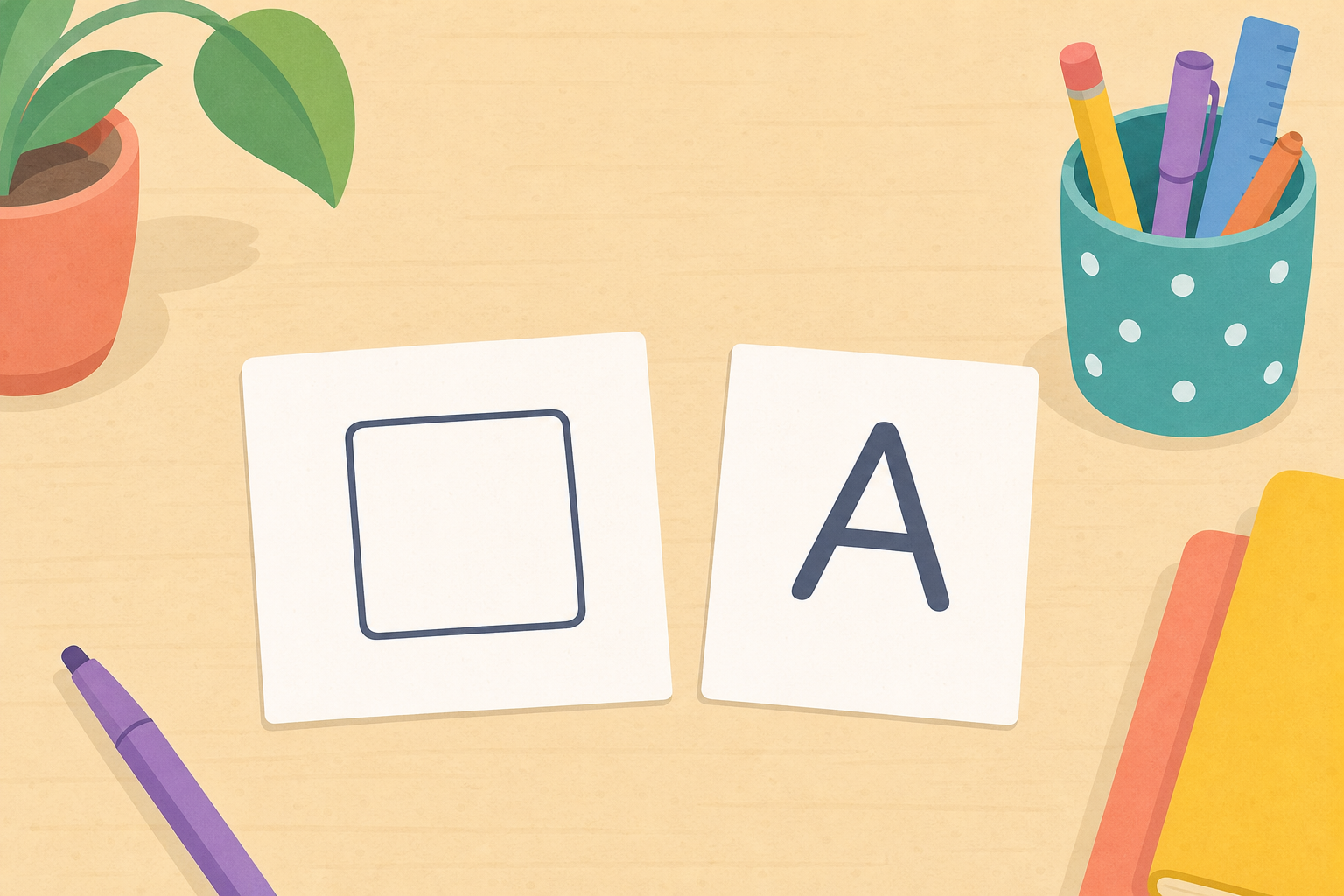
Here are two number sentences side by side:
□ + 3 = 9 and a + 3 = 9
One uses a box for the missing number. The other uses a letter. Is the missing number the same in both? Hands up: what do you think that missing number is?
Watch the balance beams. Each shows a number sentence with a letter for the unknown. Look for the value that levels the beam. The letter does the same job a box would do.
Now a fresh letter in a different sentence, b + 4 = 10.
The last one is different. Here the letter sits on its own on the left because the letter is the whole. On the right sit the two parts, 5 and 2. So d = 5 + 2. See if the same idea still works.
Let's work one out together on the balance. Our sentence is a + 4 = 9, written with a letter. We slide the letter until the beam hangs level. Then we say what the letter is standing in for. Remember: 9 is the whole and 4 is one part, so a has to be the other part.
In your maths copy, copy this sentence and find a:
Write what a equals. Then rewrite the very same sentence with a box instead of the letter. To rewrite with a box, keep every number exactly the same and just swap the letter for an empty box, like this: □ + 5 = 11. This shows the box and the letter mean the same thing.
You're previewing this lesson. Get full access to this lesson and hundreds more — each one ready to teach, with interactive activities, printable resources and pupil progress tracking built in.