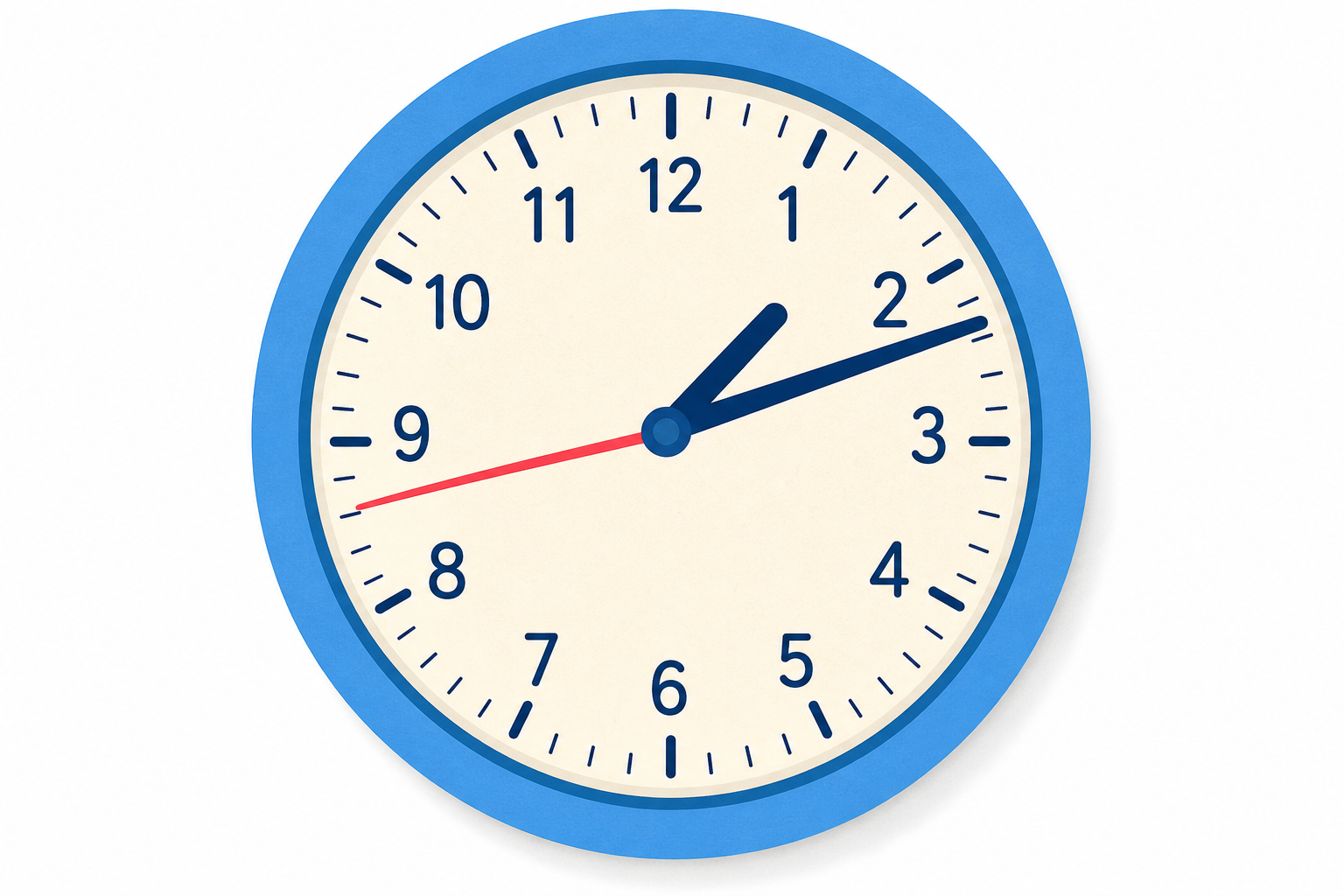
We are going to sit in complete silence for exactly one minute. Keep your eyes on the clock at the front of the room as the time goes by.
When the minute is up: how many seconds do you think passed? And how many of those quiet minutes would it take to fill one whole hour?
Look at the clock. The second hand goes all the way around, a full 60, just to move the minute hand on by one notch. So 60 seconds make one minute.
Look at the minute hand. It goes the whole way around, 60 minutes, to complete one hour. And a whole day is 24 hours: the hour hand goes right around the clock twice. Then 7 of those days make one week.
Each bigger unit is built from a fixed number of the next smaller one.
Today we drive the clock together to show the units nesting. First we sweep the minute hand once right around to make one whole hour. Then we move the hour hand on one notch to show that hour passing. After that we take the hour hand around twice to show one whole day. And 7 of those days would make one week.
In your maths copy, copy out and complete this fact list, filling in each blank:
Then write one time fact of your own underneath.
You're previewing this lesson. Get full access to this lesson and hundreds more — each one ready to teach, with interactive activities, printable resources and pupil progress tracking built in.