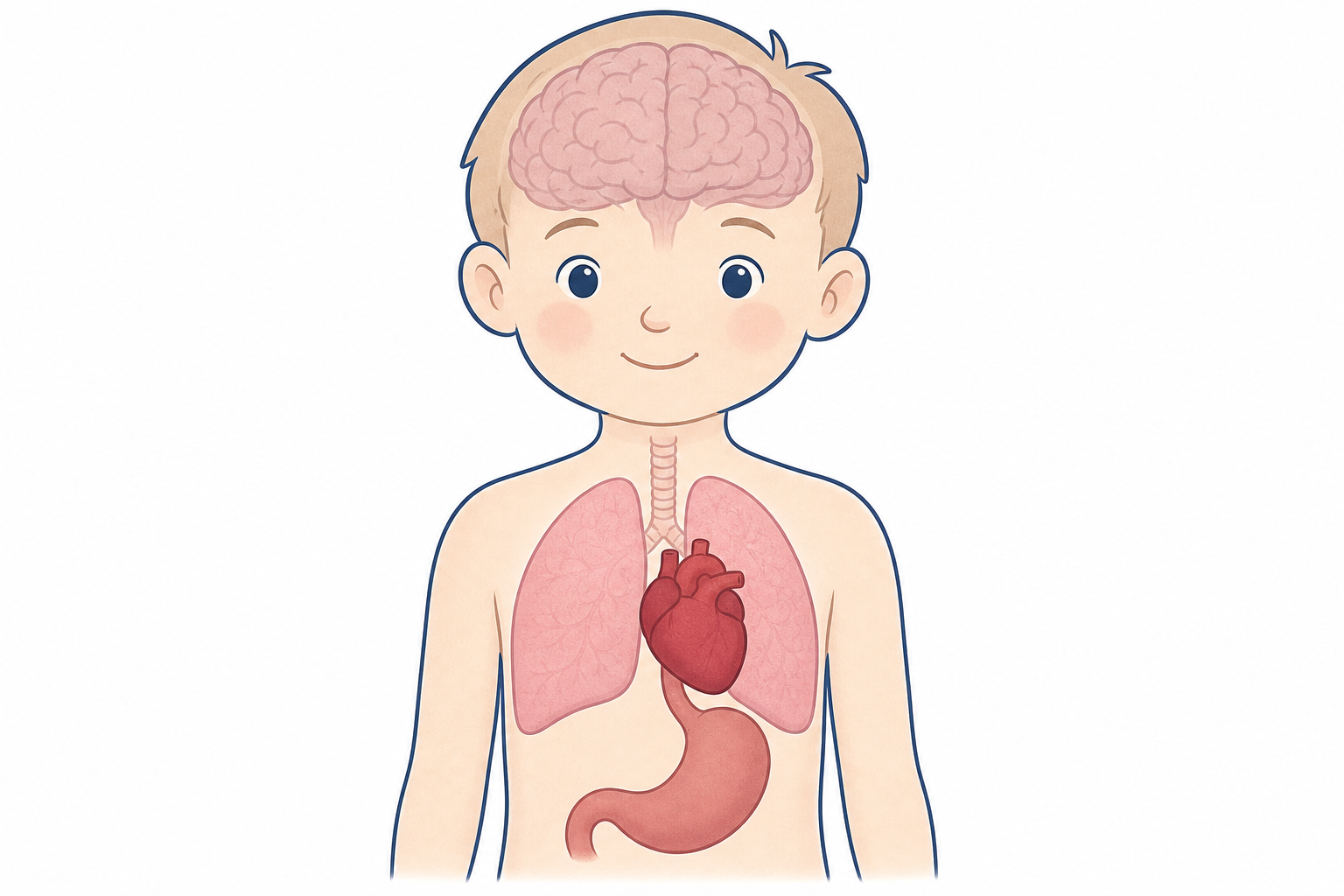
 Right now, sitting still, your body is still busy. What jobs do you think it is doing this second?
Hands up one job you can name. We will find out how those jobs are run by teams inside you.
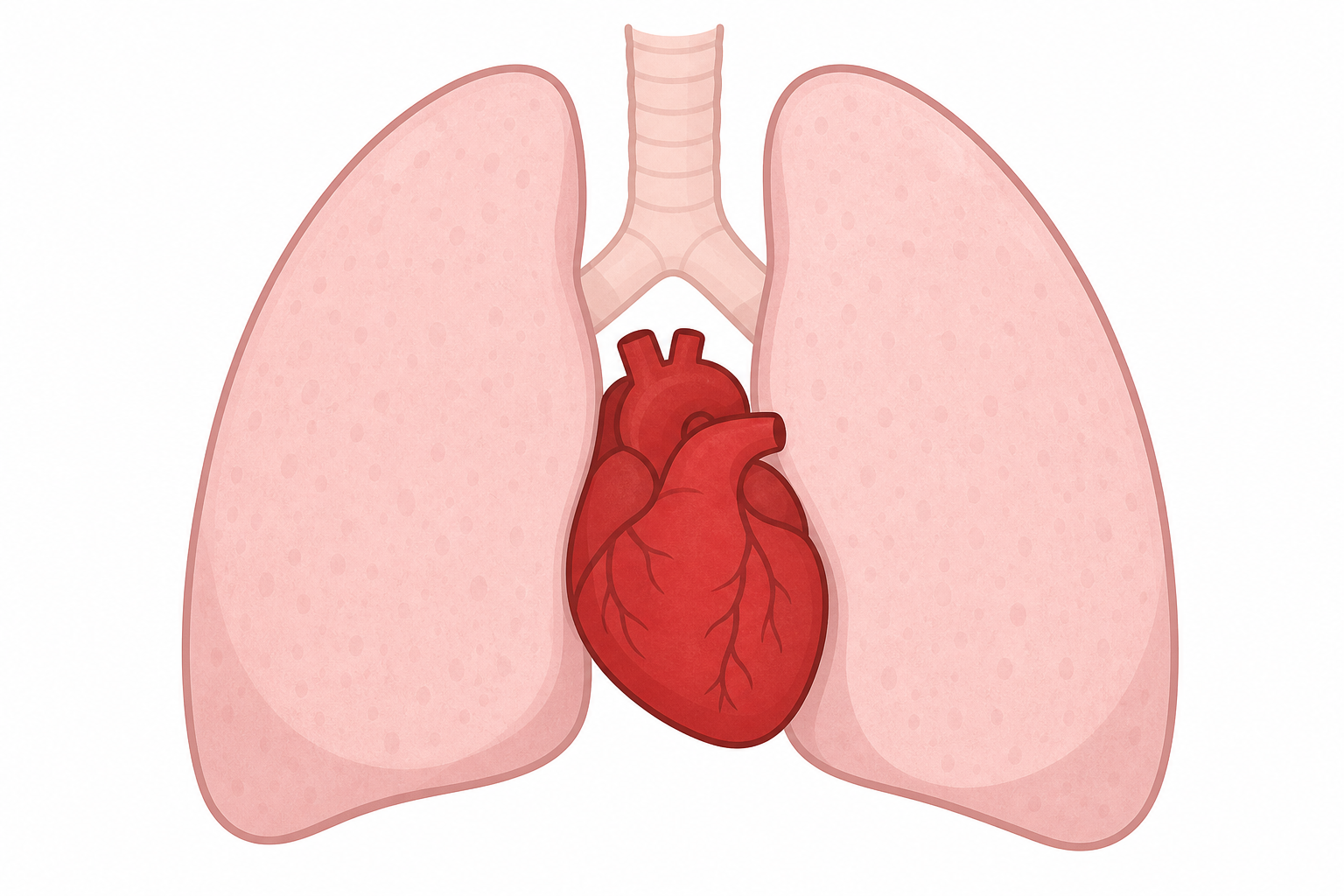 Today's words: organ — a body part with one clear job. body system — a team of organs that share one big job.
Take the heart as our example. The heart's job is to pump blood around the body. Even though it sits in the chest right beside the lungs, we put it with the team that does that pumping job, not with the team it happens to sit next to.
When we sort organs, we sort by the job the team does, not by where the organ sits in the body.
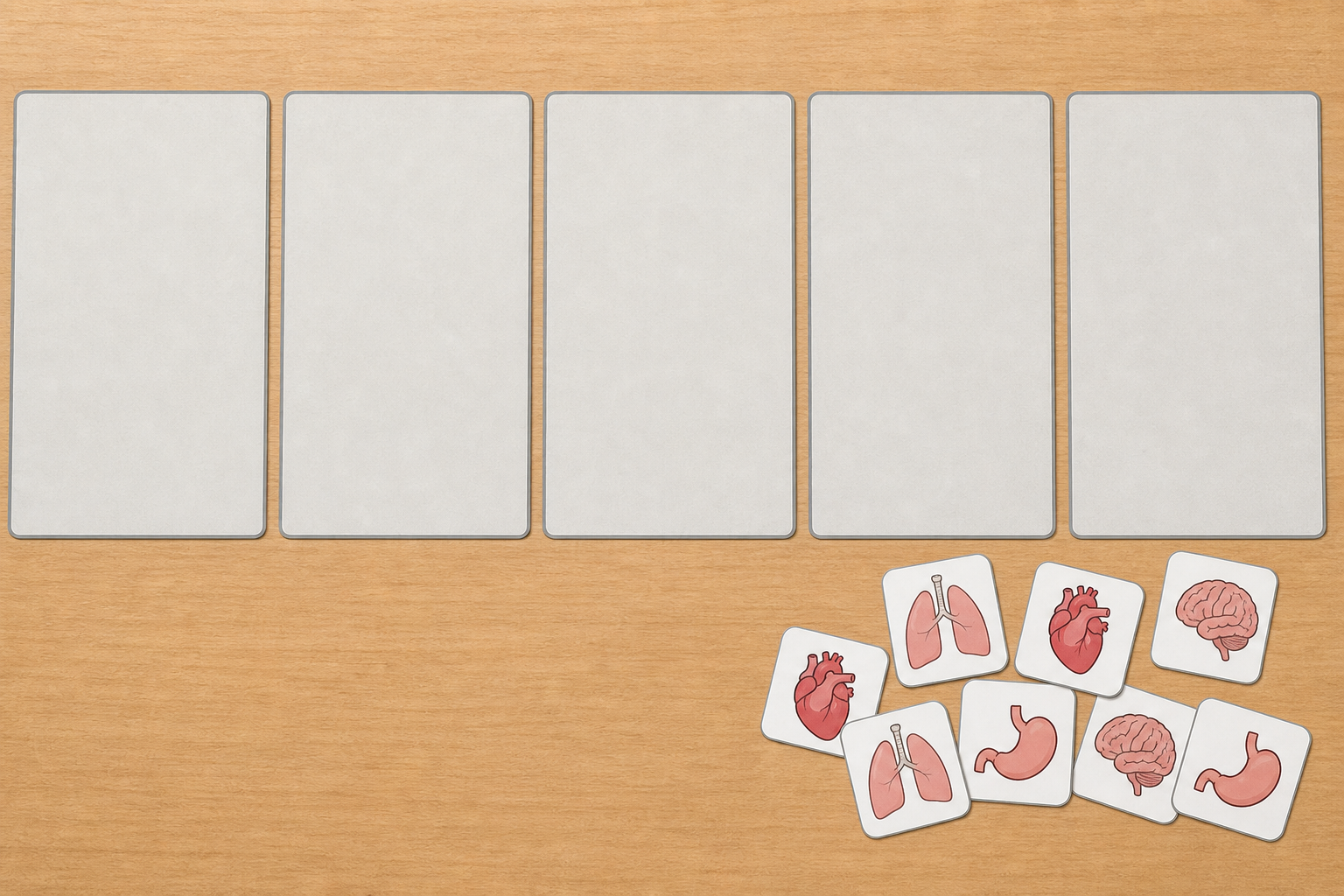 Here are our five teams, with the name a doctor or biologist would use for each one: Breathing, the respiratory system (brings oxygen in); Circulation, the circulatory system (moves blood around); Digestion, the digestive system (breaks down food); Movement, the musculoskeletal system (bones and muscles that move us); and Control, the nervous system (brain and nerves that send messages and control what the body does).
In your group, sort every organ card onto one of the five team mats. Take each organ in turn, say what that organ does for the body, and place it on the mat of the team whose job it helps with. If you disagree, say why before you place it.
You do not need a device for this one. The same ten organs you have just sorted at your table are on the board, and we will work through them one at a time.
I will take each organ in turn. Call out the team it belongs to and the job sentence that proves it, and I will drag it onto that team. Then check the board against your own mats: if your group placed a card somewhere else, say which card you would move now and what changed your mind.
Sort the organs into body systems
On your Investigation Journal page, make a quick record of the sort we agreed.
Fully label three teams: write the team name, the big job it does, and the organs that belong in it. For the other two teams, write the team name and at least one organ each. Use your sorted cards to help you.
When your group has three full teams down, hand your mats to the front so we can use them next.
Unlock the full learning experience
You're previewing this lesson. Get full access to this lesson and hundreds more — each one ready to teach, with interactive activities, printable resources and pupil progress tracking built in.
This lesson is copyright of 123Learn.ie 2017 - 2025. Unauthorised use, copying or distribution is not allowed.