Intermediate
60 mins
Teacher/Student led
+100 XP
Teacher-led from the board. Pupils do not need a device, but can follow on one.

The Skeleton and Muscles: How We Move

Discover how bones and muscles work as a team to move your body. Build and test a model hinge joint with a muscle pair using card and elastic bands. Feel the muscles in your own arm and record your findings.

Teacher Class Feed

Load previous activity
    Your turn
    Your teacher is running this lesson on the board. Here is the part you can try yourself.
    Observation
    Construction

    1 - Getting Started ~5 mins

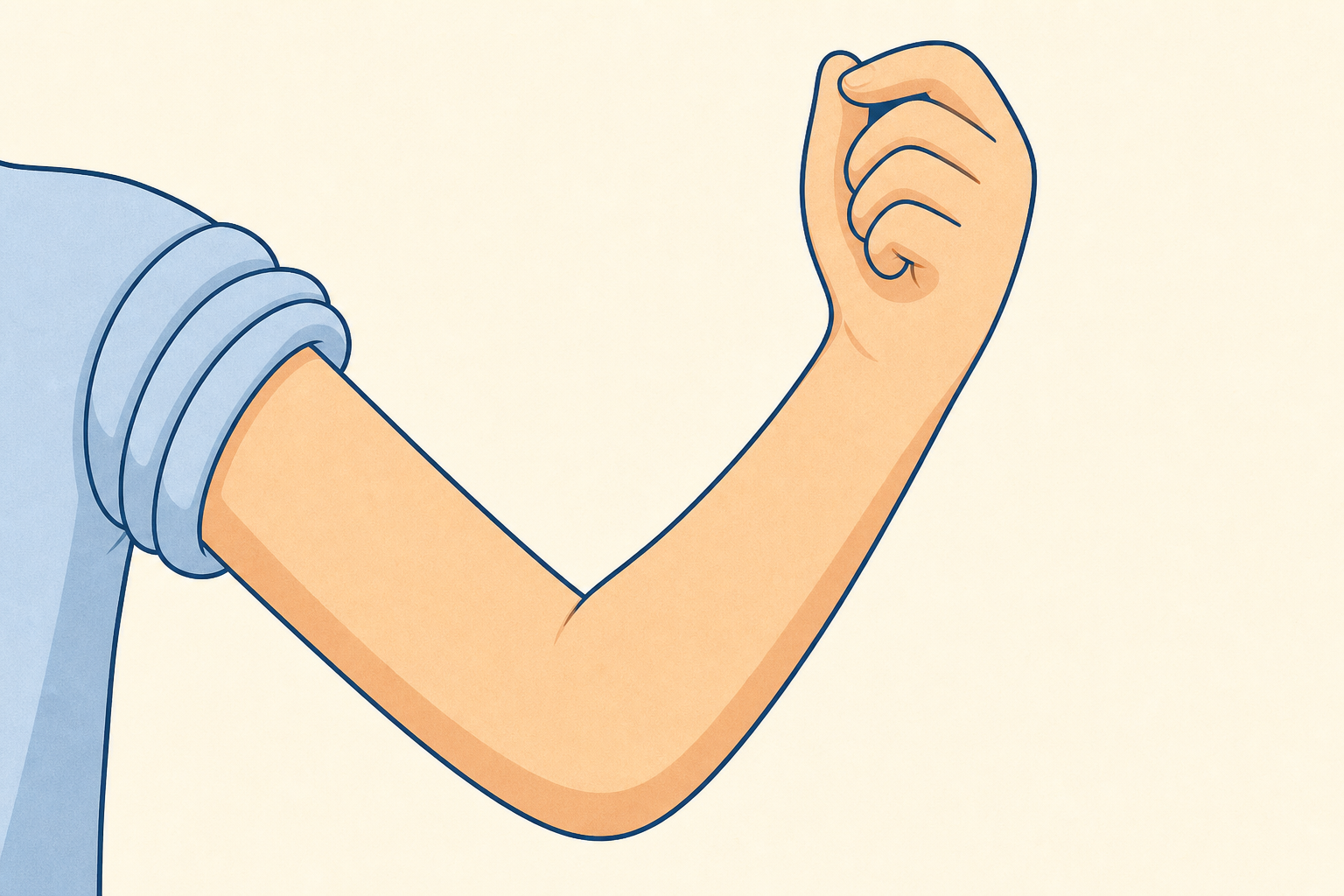
    The real subject: a bent elbow, close and plain, to gather the classHold your arm out straight, then bend it at the elbow. What is happening under your skin that makes that move possible?

    There is a hidden team under your skin doing that job every time you pick up a pencil.

    Today we will feel that teamwork on your own arm, then build and test a working model of a hinge joint and a muscle pair.
    2 - Bones and Muscles Work as a Team ~7 mins

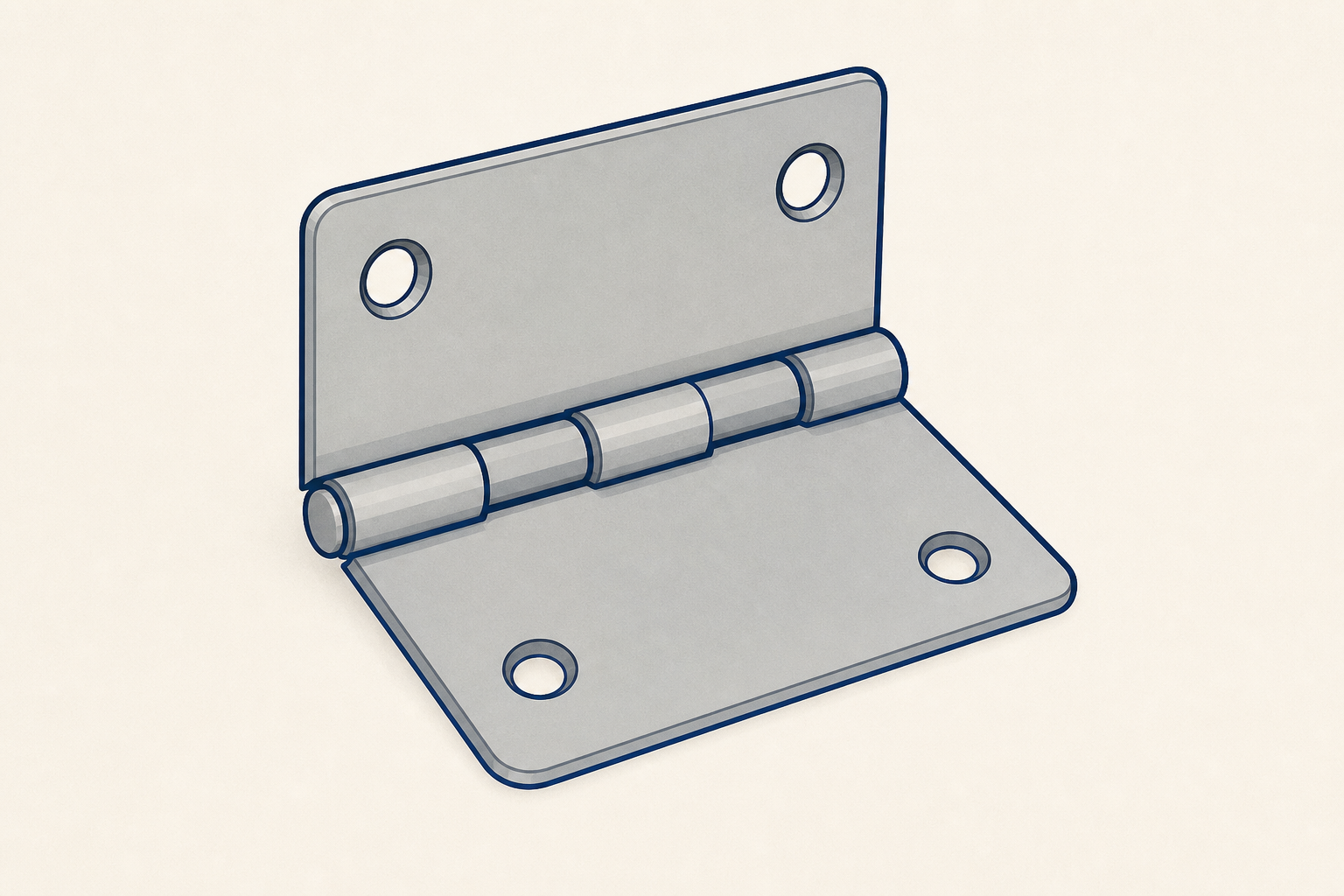
    A door hinge, the everyday object the joint is compared toBend your elbow again. That bend happens at a hinge joint: like a door hinge, it moves one way and back again.

    A joint cannot move itself. Muscles move it, and a muscle can do only one thing: pull. When a muscle pulls, it gets shorter and fatter, and it tugs on the bone it is joined to. A muscle can never push.

    Key point

    So one muscle can move your forearm only one way. To move it back, a second muscle on the other side pulls the other way. Two muscles that take turns like this are a muscle pair.

    Two arms side by side. To bend the arm, the biceps on the front of the upper arm pulls: it is short and fat, and the forearm rises. To straighten the arm, the triceps on the back pulls on the elbow point: it is short and fat, and the forearm drops. The relaxed muscle is long and thin each time.

    Look at the picture. Which muscle pulls to bend your arm? Which muscle pulls to straighten it?
    3 - Feel Your Own Arm ~7 mins

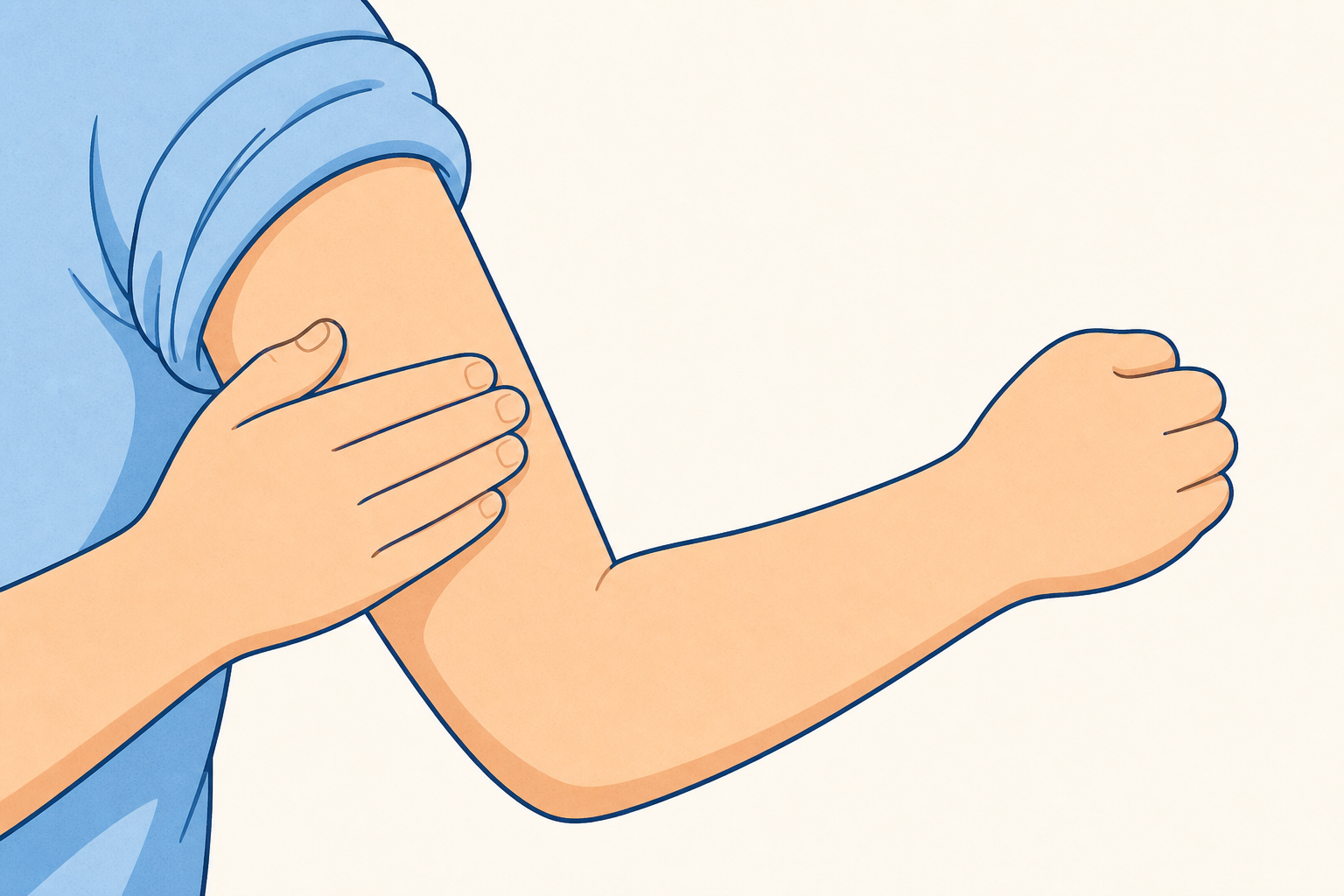
    Where to place a hand to feel the muscle on the front of the upper armPlace one hand on the front of your upper arm. Bend your elbow slowly and feel the muscle firm up. That is your biceps pulling.

    Now place your hand on the back of the same upper arm. Straighten your elbow and feel the muscle firm up. That is your triceps pulling.

    Key point

    Notice: when one muscle pulls and shortens, the other softens and lengthens. They work as a pair.

    4 - Build a Hinge Joint and Muscle Pair ~18 mins

    The finished elbow model: two card strips joined by a split pin, the forearm's 3 cm elbow point sticking out past the pin, a yellow band taped to the forearm 4 cm below the pin and laid up the front edge of the upper arm, and a red band taped to the tip of the elbow point and laid up the back edge, each with its top end free to pullIn your group, build this elbow model. The two card strips are the bones, the split pin is the elbow hinge, and the two elastic bands are the muscle pair.

    Key point

    Follow the build guide below one step at a time, and check each step against its picture before you go on. The yellow band goes on the front of the forearm. The red band goes on the elbow point, the short end that sticks out past the pin.

    When your model looks like the big picture, stop. Do not pull the bands yet: first we predict what each band will do.

    Pupil practice · Investigation Journal
    Module 1 · Living Things: the Human Body, Nutrition and Classifying
    Lesson 4 · The Skeleton and Muscles: How We Move
    Download Investigation Journal sheet (PDF)
    123learn · Online learning platform

    Unlock the full learning experience

    You're previewing this lesson. Get full access to this lesson and hundreds more — each one ready to teach, with interactive activities, printable resources and pupil progress tracking built in.

    Hundreds of curriculum-aligned lessons
    Interactive activities in every lesson
    Printable resources & progress tracking
    Copyright Notice
    This lesson is copyright of 123Learn.ie 2017 - 2026. Unauthorised use, copying or distribution is not allowed.
    🍪 Our website uses cookies to make your browsing experience better. By using our website you agree to our use of cookies. Learn more