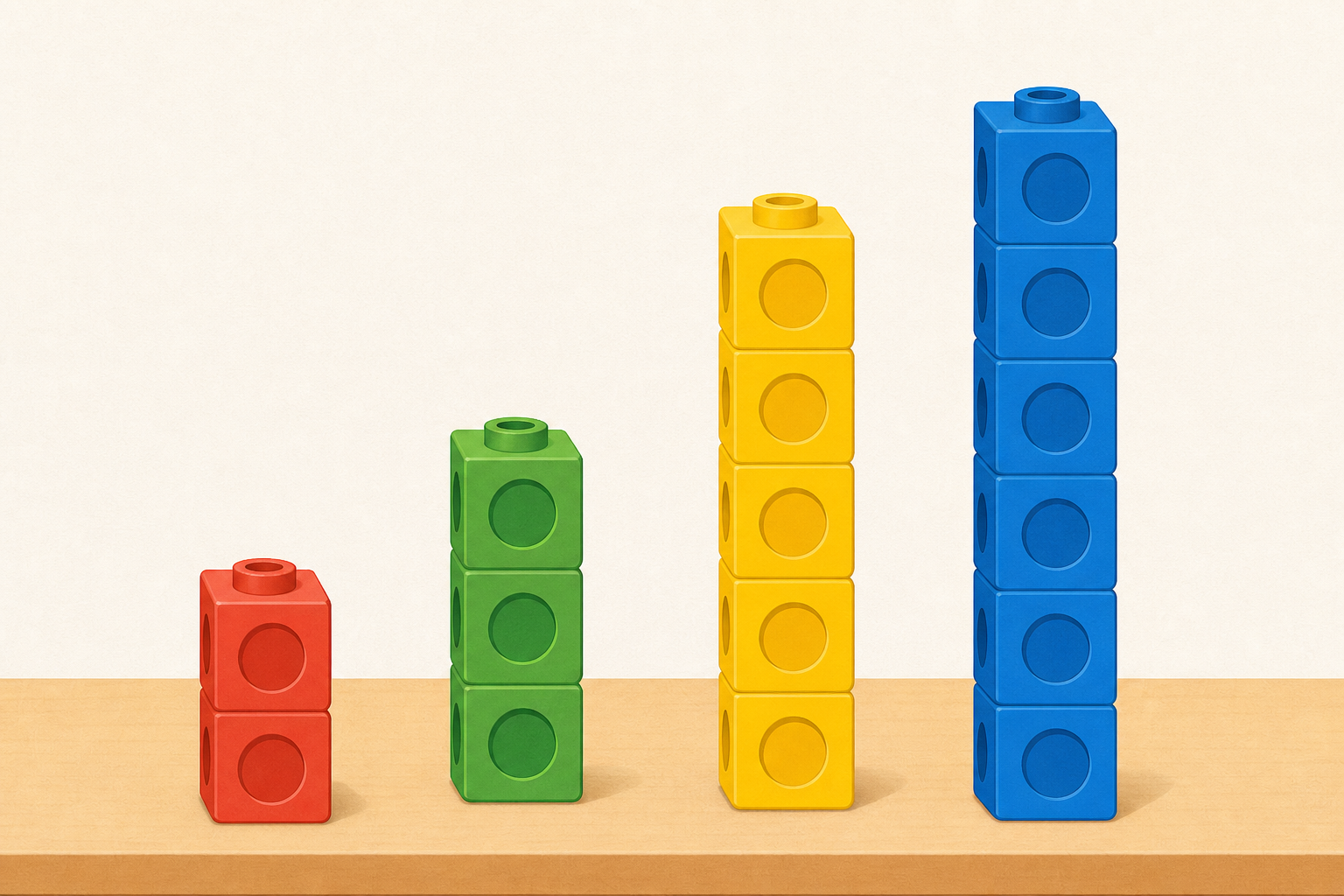
Look at these four towers of cubes: one is 3 high, one is 5, one is 2, and one is 6. They belong to four friends.
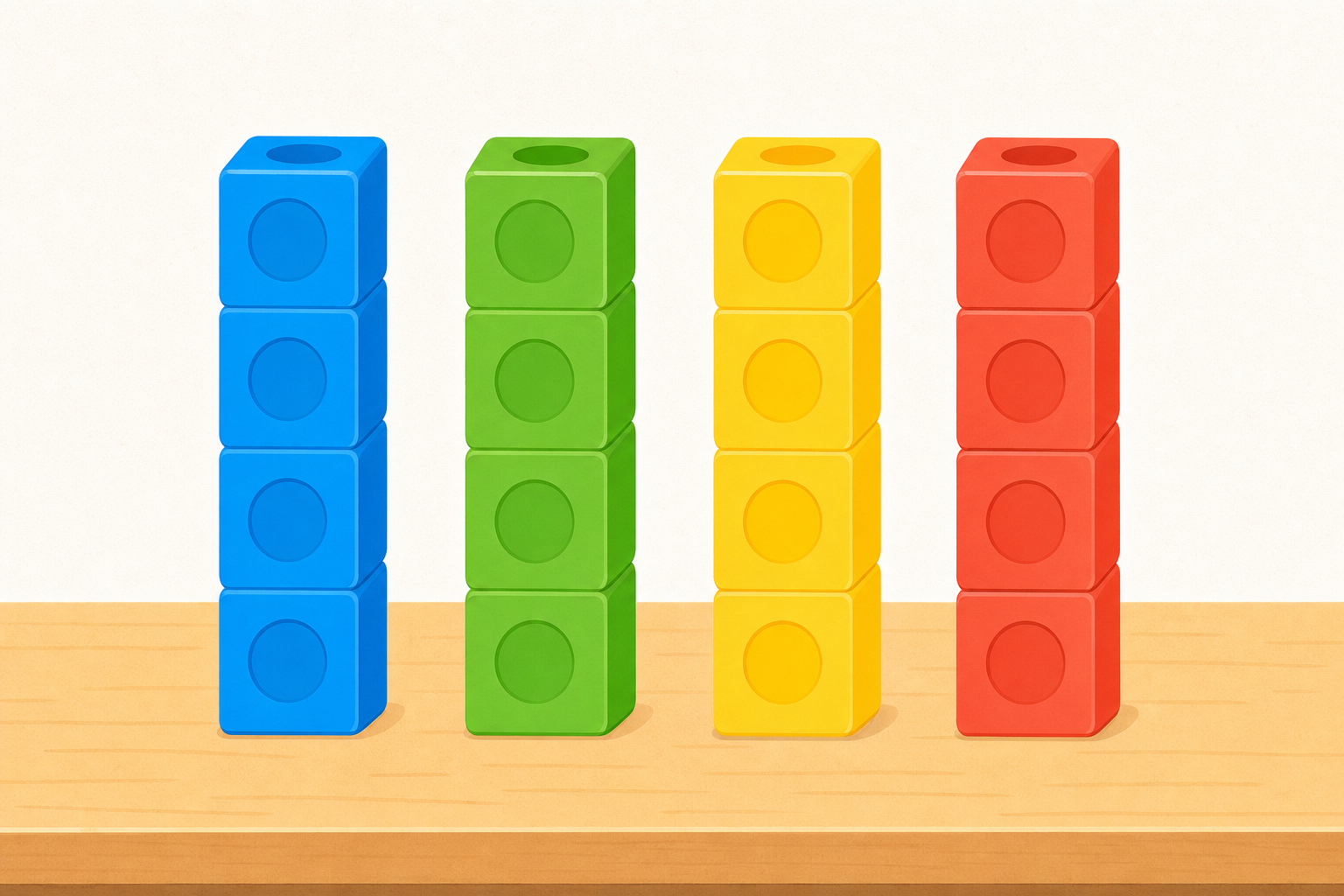
If the four friends shared all their cubes fairly, so everyone had the same, how many would each one get?
Watch what happens when we make the four towers the same height. We move cubes off the tall towers and put them onto the short ones, taking care not to add or lose any.
When every tower is level, that even height is the fair share for everyone. We call this fair share the mean.
There is also a quicker way to reach the same answer: add all the heights together, then share the total between the towers.
We take one set at a time. For each set, build the towers first: use your own cubes, or shade the towers on your cube-tower strip. Then move cubes from the tall towers to the short ones until every tower is the same height. A pupil does the same at the board.
When every tower in a set is the same height, read off that even height together. That is the fair share: the mean.
Here is the add-then-share method written out for the four friends' towers, so you can see each step clearly before you use it on your own.
You're previewing this lesson. Get full access to this lesson and hundreds more — each one ready to teach, with interactive activities, printable resources and pupil progress tracking built in.