 Think about the last thing you ate. Where does that food go after you swallow? Does it just sit in one place, or does it travel?
Today we follow food on a one-way journey through the body, and we find out what squeezes it along.
Today's big idea: the digestive system is the team of body parts that break food into useful bits and send waste on its way. Food takes a one-way journey: it travels in order and does not jump backwards.
Food goes in at the mouth, and what is left over leaves at the far end. What do you think it travels through in between, and in what order?
One stop has a tricky name: oesophagus (say it ee-SOF-uh-gus). Listen for it as we build the journey.
In your group, stretch the rope into one long gut on the floor. Place the organ cards in the order food travels. Read each card aloud as you set it down.
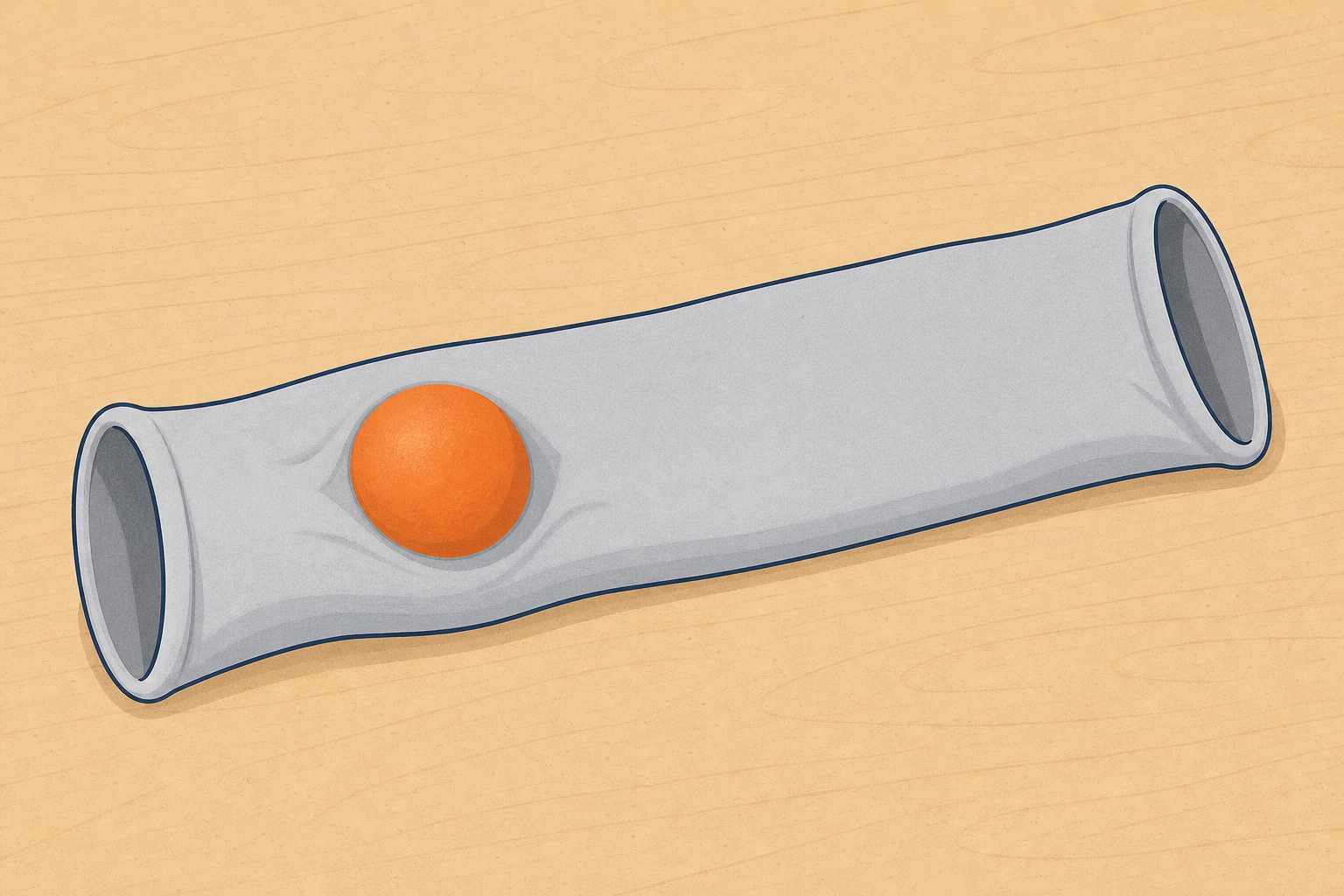
Then take turns gently pushing the soft ball through the fabric tube. Feel how squeezes, not gravity alone, move the ball. That wave of squeezes is called peristalsis.
Stay by your rope. We are not rebuilding it. We are asking whether it could be any other way.
Your rope says food meets the stomach before the small intestine. What would go wrong if it were the other way round?
The large intestine takes water back into the body. Why does that job have to come near the end of the journey?
The five stops from your rope are now on the board, but one of them has been put in the wrong place on purpose. Read what the board asks you to do, then be ready to argue your case out loud to the class.
When the order is fixed, talk about peristalsis: remember the fabric-tube squeeze — that wave pushes food along the whole chain, not at one stop only.
Catch the wrong order
Unlock the full learning experience
You're previewing this lesson. Get full access to this lesson and hundreds more — each one ready to teach, with interactive activities, printable resources and pupil progress tracking built in.
This lesson is copyright of 123Learn.ie 2017 - 2025. Unauthorised use, copying or distribution is not allowed.