Before the Lesson
Print the provided station cards (one card per group) and the Investigation Journal page (one per group — the group shares one sheet with three boxes). The full text of all six station cards is below — print them as they are written here. There is one card per station, so set out six stations (or use the first five if you have five or fewer groups).
Station 1 — A famous bridge
Ireland has many famous bridges. A bridge solves a clear problem: how do people and goods cross a wide river? Before bridges, people had to wait for a boat or a low tide, or travel many miles to a shallow crossing. A bridge lets people, carts and later cars cross quickly and safely, day or night. Stone bridges were built by engineers who shaped the stones into a curved arch so the weight pressed the stones together and held the bridge up. Newer bridges use steel and concrete and can stretch much further across. Because of bridges, towns on opposite riverbanks could trade, work and visit each other every day. What changed: crossing a river went from slow and risky to quick and safe.
Station 2 — A wind farm
A wind farm is a group of tall wind turbines, often on Irish hills or out at sea, that turn moving wind into electricity. Before wind farms, most of Ireland's electricity came from burning turf (peat), coal or gas, which runs out and adds pollution to the air. Wind never runs out and makes no smoke. Engineers design each turbine so the wind pushes its blades around, and that spinning is turned into electricity that travels along wires to homes and schools. Ireland is windy, especially on the west coast, so it is a good place for wind farms. What changed: more of our electricity now comes from clean, never-ending wind instead of fuel that runs out.
Station 3 — An Irish scientist who studied electricity
In the 1800s, an Irish priest and scientist named Nicholas Callan worked at a college in Maynooth, County Kildare. He invented the induction coil, a device that could make a strong burst of electricity from a small one. Before his work, people knew very little about controlling electricity. His induction coil was an early step toward the technology that later let people send electricity and signals over distances. The ideas behind coils like his are still used today inside things that need electricity, from car engines to chargers. What changed: his work helped people learn to make and control electricity, which we use everywhere today.
Station 4 — Clean drinking water
Turning a tap and getting clean water is something we do without thinking, but it took a lot of STEM. Long ago, people carried water from a well, a pump or a stream, and dirty water often made people very sick. Engineers built reservoirs to store rainwater, pipes to carry it to towns, and treatment works that clean the water before it reaches your tap. Scientists test the water to make sure it is safe to drink. Because of this, water-borne illness became rare and people no longer spend hours each day carrying water. What changed: clean water came straight to the tap, so people stayed healthier and saved hours of work.
Station 5 — The air-filled bicycle tyre
The bicycle lets a person travel much faster than walking using only their own legs, but early bicycles had hard wheels that made riding bumpy and slow. In Belfast in 1888, John Boyd Dunlop developed a practical air-filled (pneumatic) tyre to give his son a smoother ride on his tricycle. The air inside the tyre cushions every bump in the road. Before the air-filled tyre, riding was rough and tiring; afterwards, bicycles became smooth, fast and comfortable, and ordinary families could travel to work, school and other villages far more easily. The same air-filled tyre idea is now used on almost every bicycle and car in the world. What changed: a Belfast invention made wheels smooth and comfortable, so travel by bicycle and car became easy for everyone.
Station 6 — The submarine
A submarine is a boat that can travel under the water as well as on top of it. An Irish-born engineer named John Philip Holland, from County Clare, designed some of the first successful submarines in the late 1800s. Before his work, no one had built a reliable boat that could dive, travel underwater and come back up safely. Holland worked out how to make a vessel sink and rise by letting water in and pushing it out again, and how to power it both above and below the surface. His designs became the model for modern submarines used around the world. What changed: people could travel and explore beneath the sea for the first time, thanks to an inventor from County Clare.
Running the stations
Move between groups, prompting the before → what changed shape. For readers who need support, read the card aloud with the group and have them underline the one sentence in bold. Fast finishers add a second 'I wonder' question to the back of their Investigation Journal page. If you have more than six groups, put two groups on the same station and pair them in Step 5 to co-present: one group says the 'before' and the other says the 'what changed'.

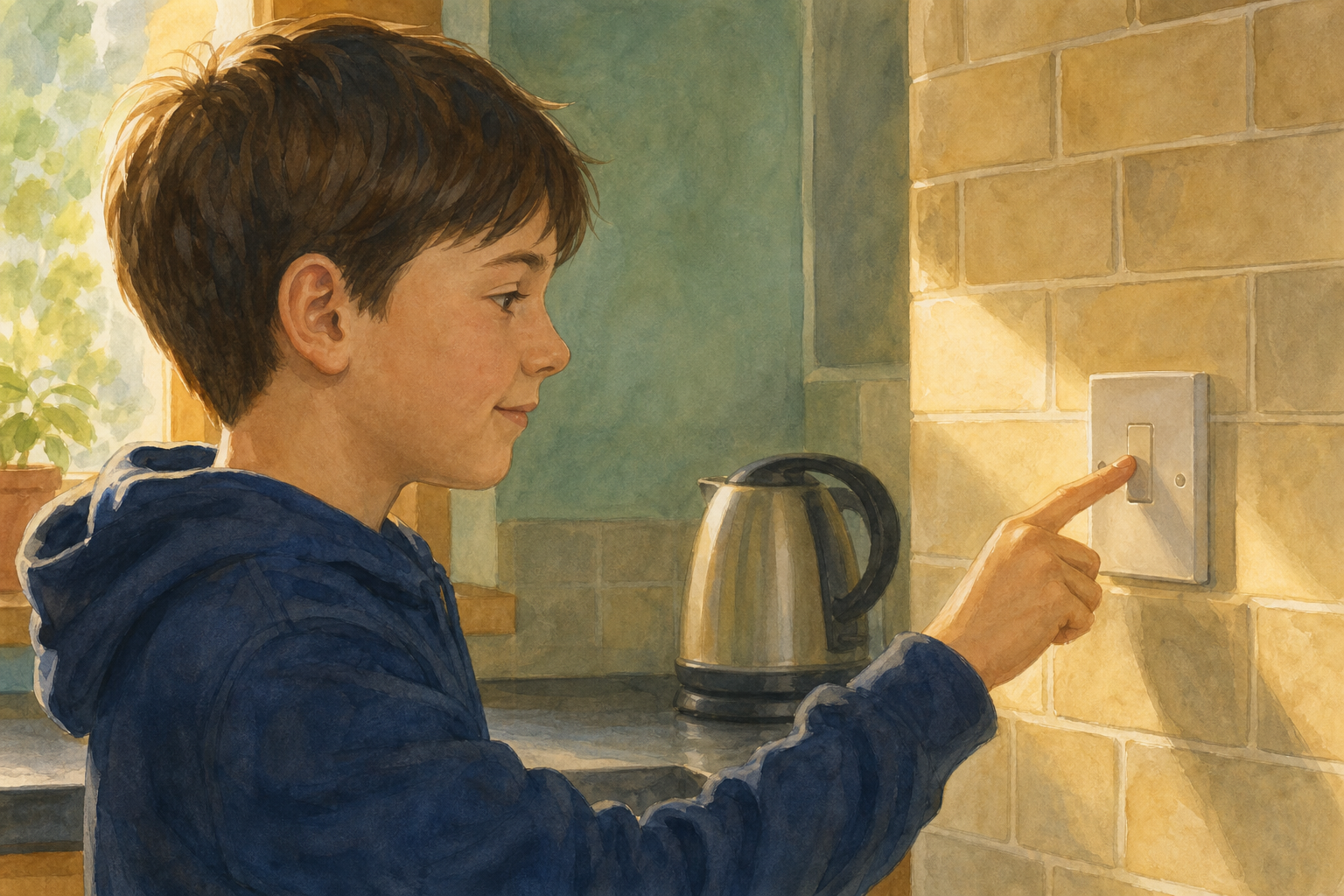 Think about everything you used this morning before you came to school: a tap for water, a light switch, maybe a bus or a car, a clock, a kettle. Every single one of those was worked out and built by people. We call all that working-out, inventing and building STEM — Science, Technology, Engineering and Maths.
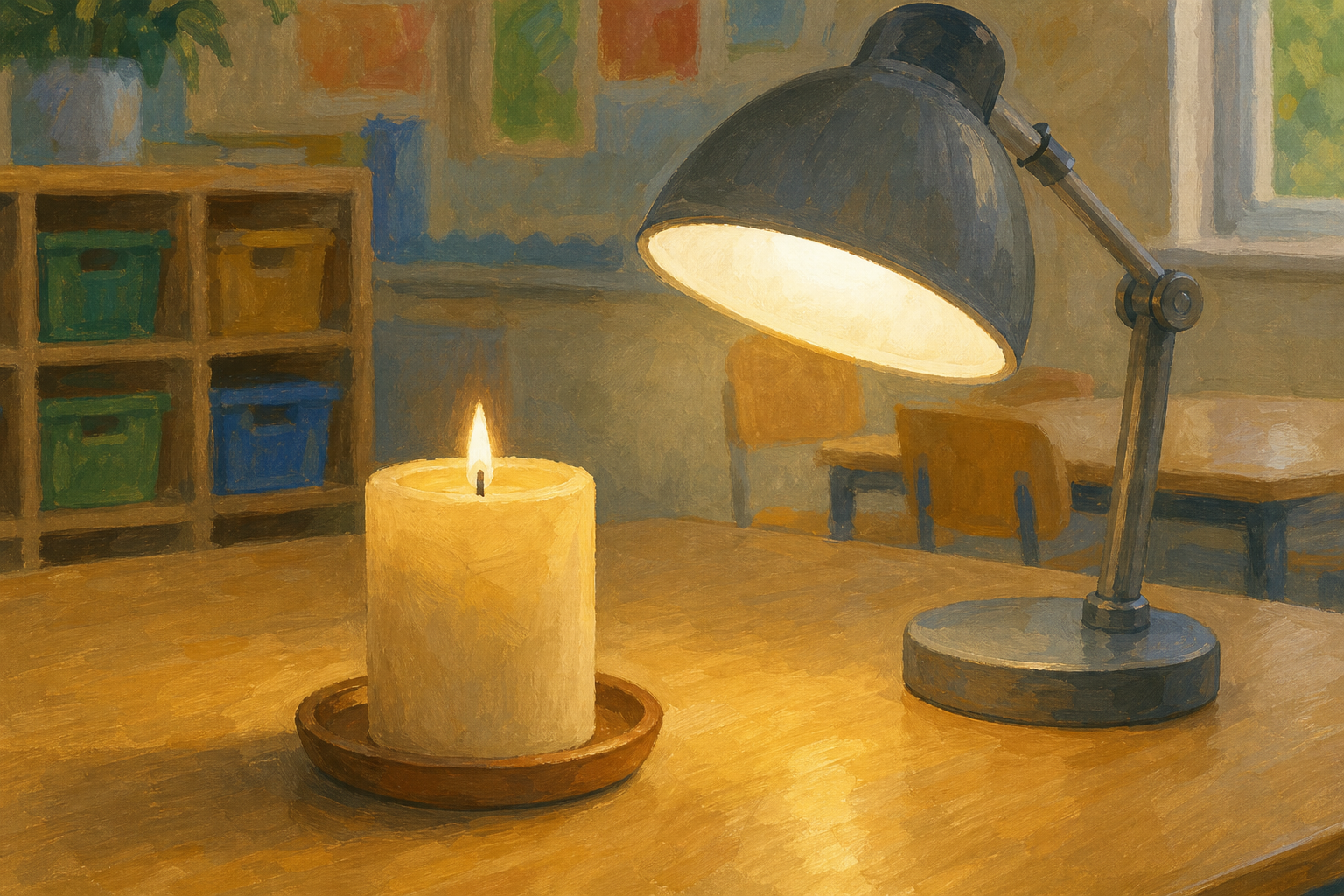 Let's do one together before you research your own. We will look at the electric light.
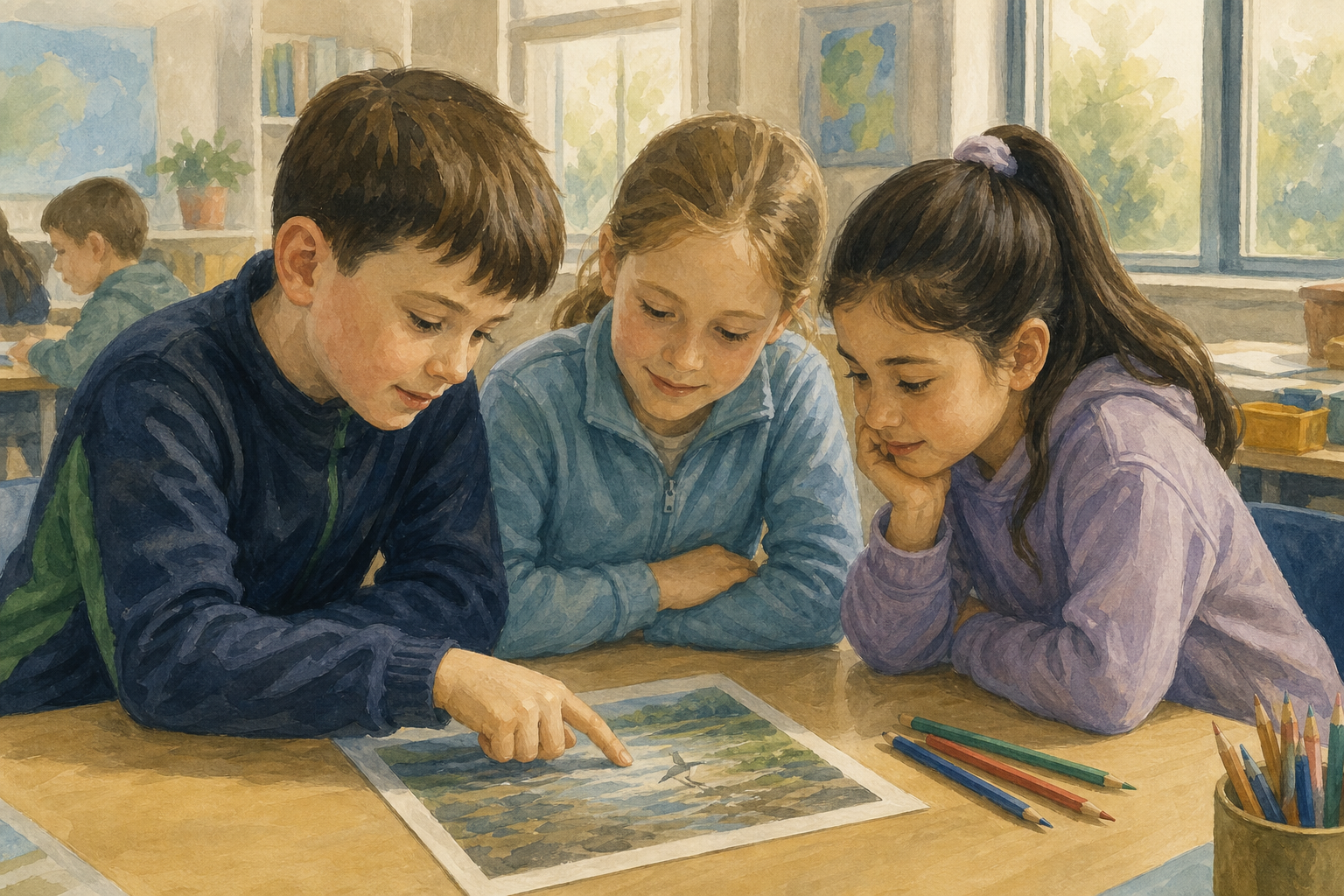 Now it is your group's turn. Each group goes to one station and becomes the experts on that Irish STEM person, place or invention. Read your card together. Your job is to find out:
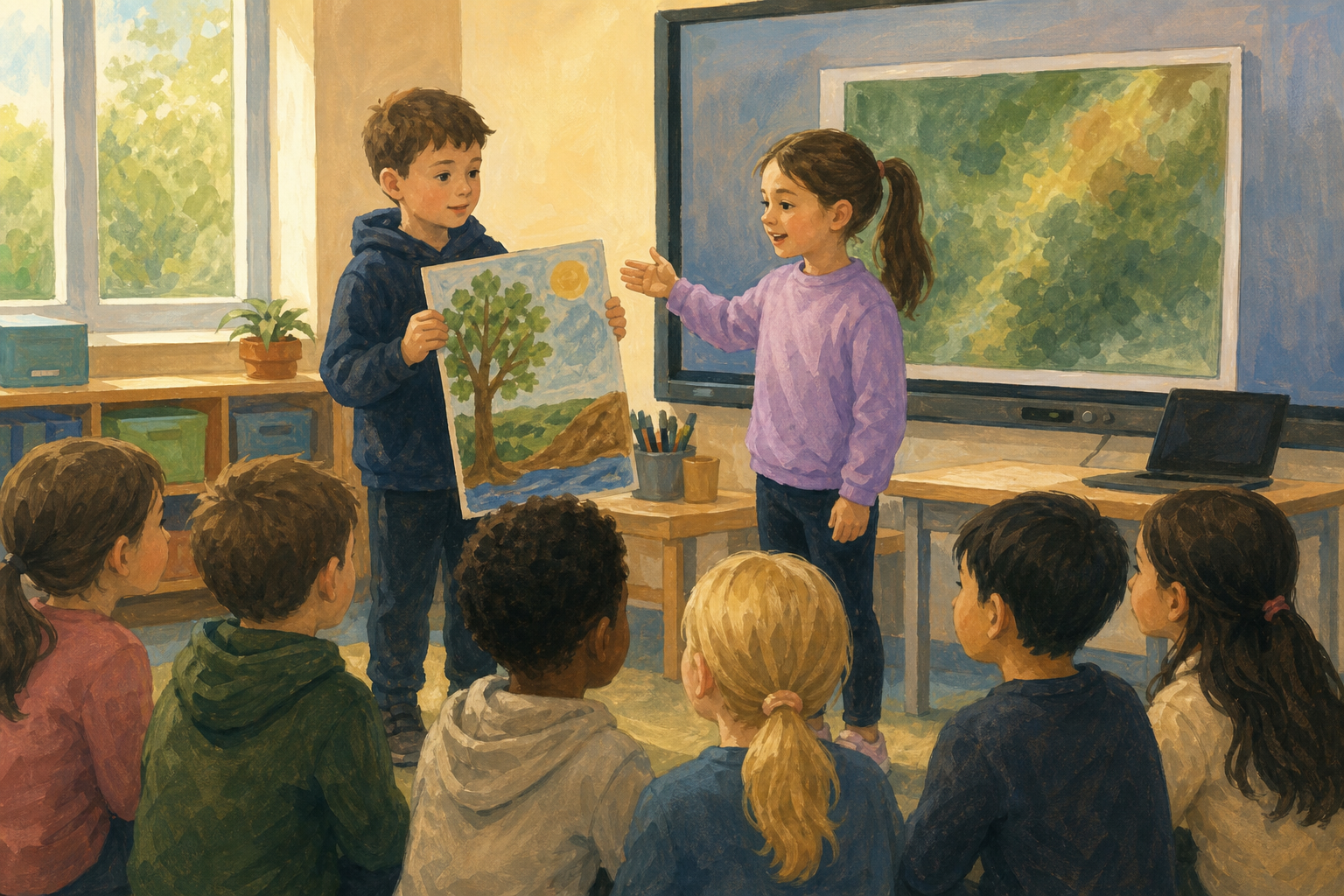 Time to share! Each group has two minutes to teach everyone else about your STEM person, place or invention. Tell us three things:
 Look at everything we found out today. STEM is not just one thing — it is people wondering, inventing and building, all the way through Irish history and right up to the wind farms and water taps we use now.