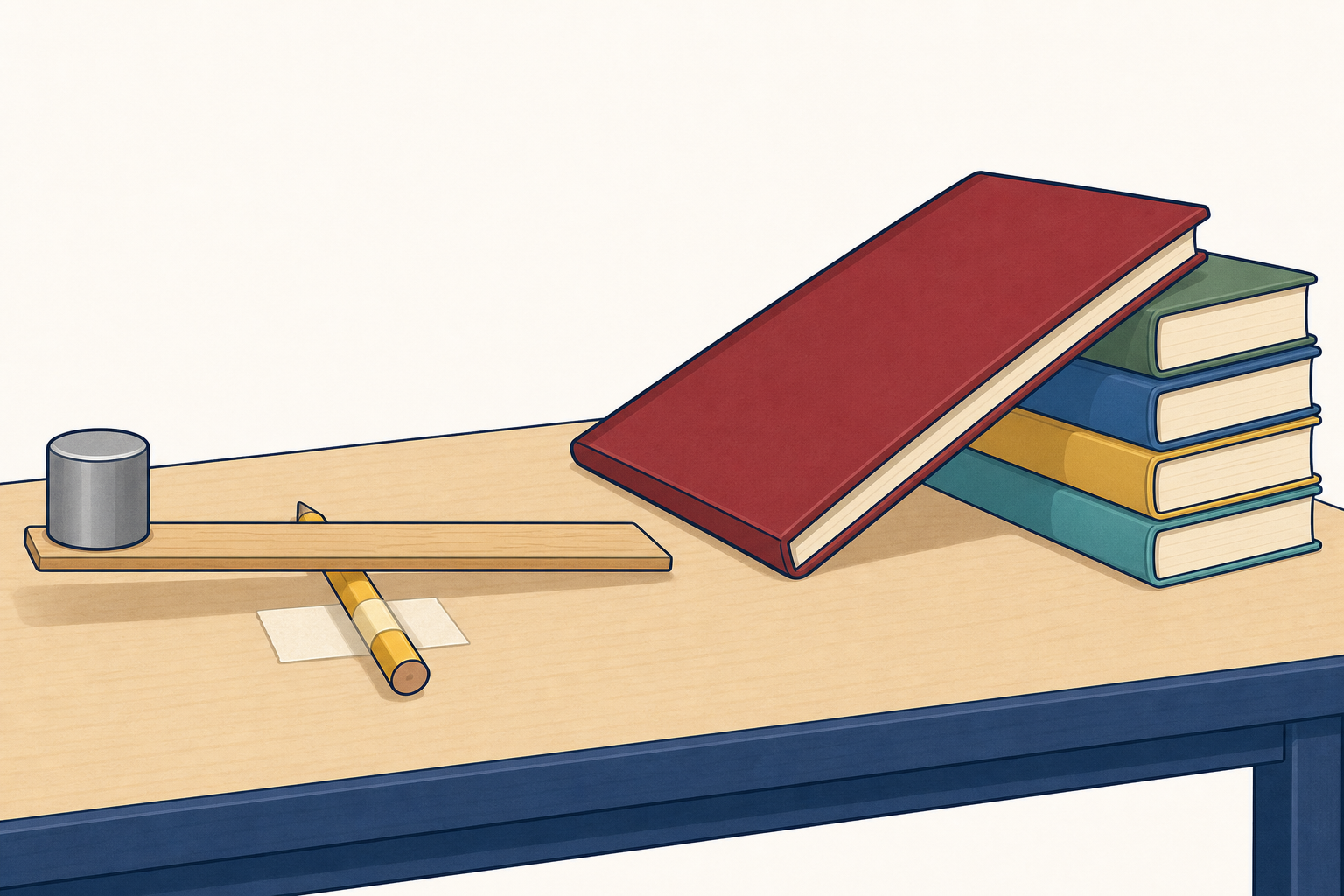
 Imagine you need to lift a heavy box onto a shelf. Would you rather lift it straight up, or roll it up a long slope? Why?
Today we build two simple machines, a lever and a ramp, and feel how they change the effort needed to move a load.
 Where have you already used a slope or a stiff bar that lifts something today?
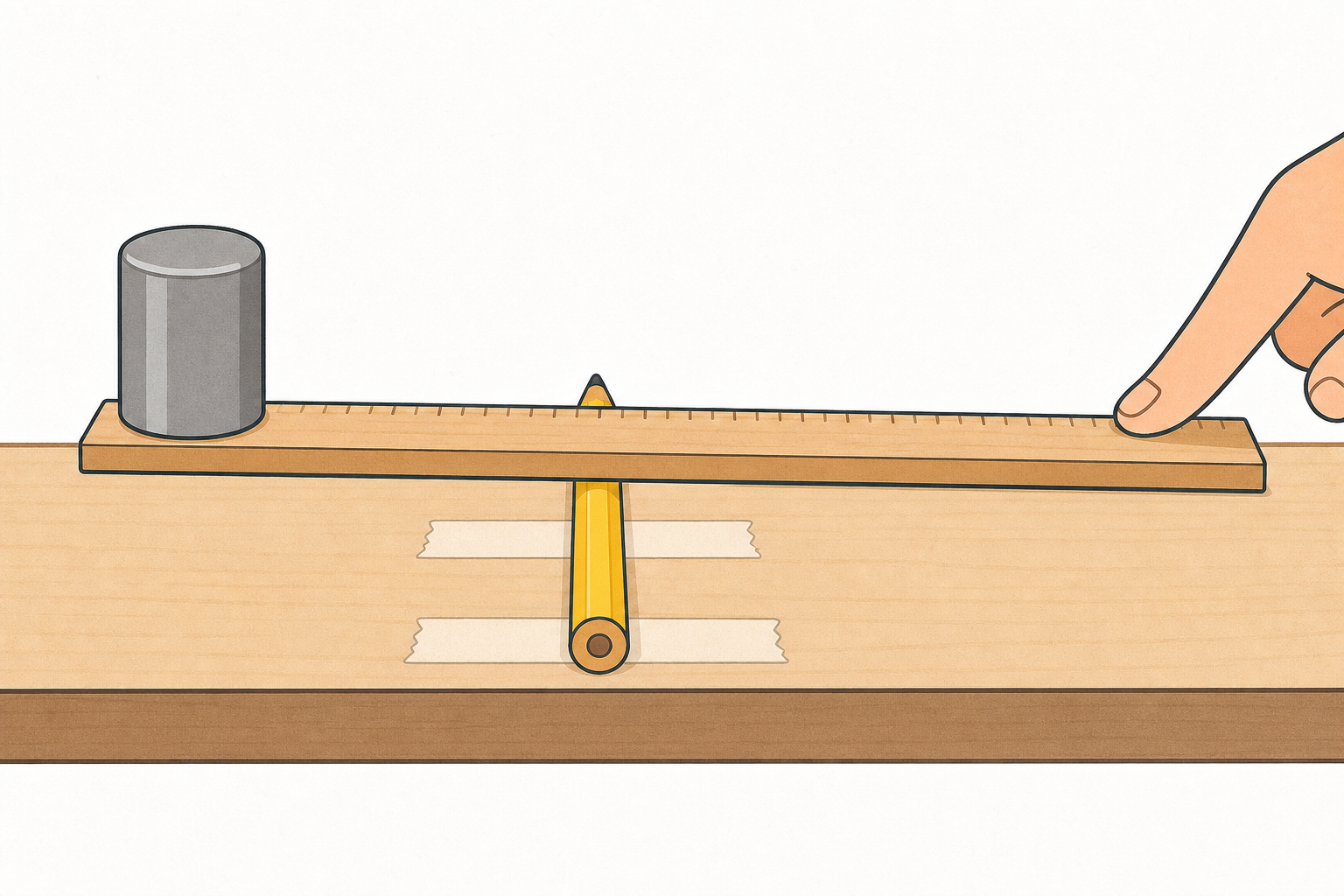
A lever is a stiff bar that turns on a pivot. A ramp is a slope that lets you push a load up gradually instead of lifting it straight up.
Watch this lever model. We will name the effort (your push) and the load (what moves) as we go.
In your group, build a lever from a ruler and a pivot. Rest a load near one end. Practise pressing the free end so the load rises cleanly without the ruler slipping off the pivot.
When your lever works, keep it set up for the next investigation.
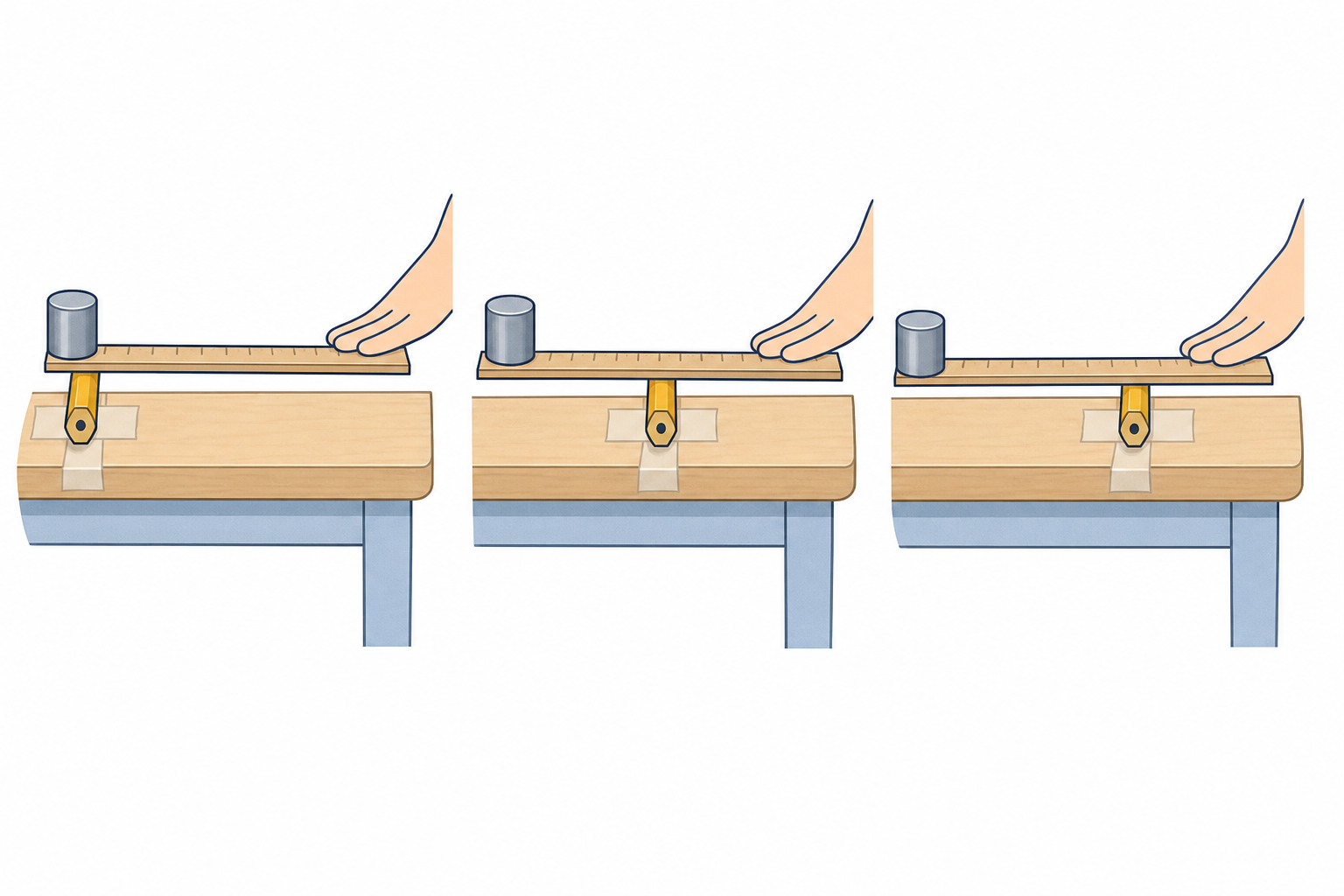 Leave your lever set up exactly as it is. The card below gives you the question to test and the three pivot places to try, and it tells you what to write down at the end. Say your prediction out loud before you touch the ruler.
Keep the same load and use the same hand for every push, so the only thing that changes is where the pivot sits. Watch how far your hand has to travel as well as how hard the push feels.
Use the same load all the way through, and work in this order:
- First, build a ramp: prop a stiff board (a hardback cover, ring-binder or thick card) on classroom books or blocks up to a low raised surface.
- Then compare two ways to the same height: lift the load straight up onto that surface, then push or slide it up the ramp. Which feels easier?
- Last, change only the ramp angle: try one steeper ramp and one gentler ramp to that same height. Notice how the effort changes.
If the load sticks or scrapes, sit it on a piece of card so you feel the slope helping, not the friction.
Unlock the full learning experience
You're previewing this lesson. Get full access to this lesson and hundreds more — each one ready to teach, with interactive activities, printable resources and pupil progress tracking built in.
This lesson is copyright of 123Learn.ie 2017 - 2025. Unauthorised use, copying or distribution is not allowed.