You have already seen ratio bars used to describe a split, like two parts juice to three parts water. Today we go one step further and actually share out a real amount.
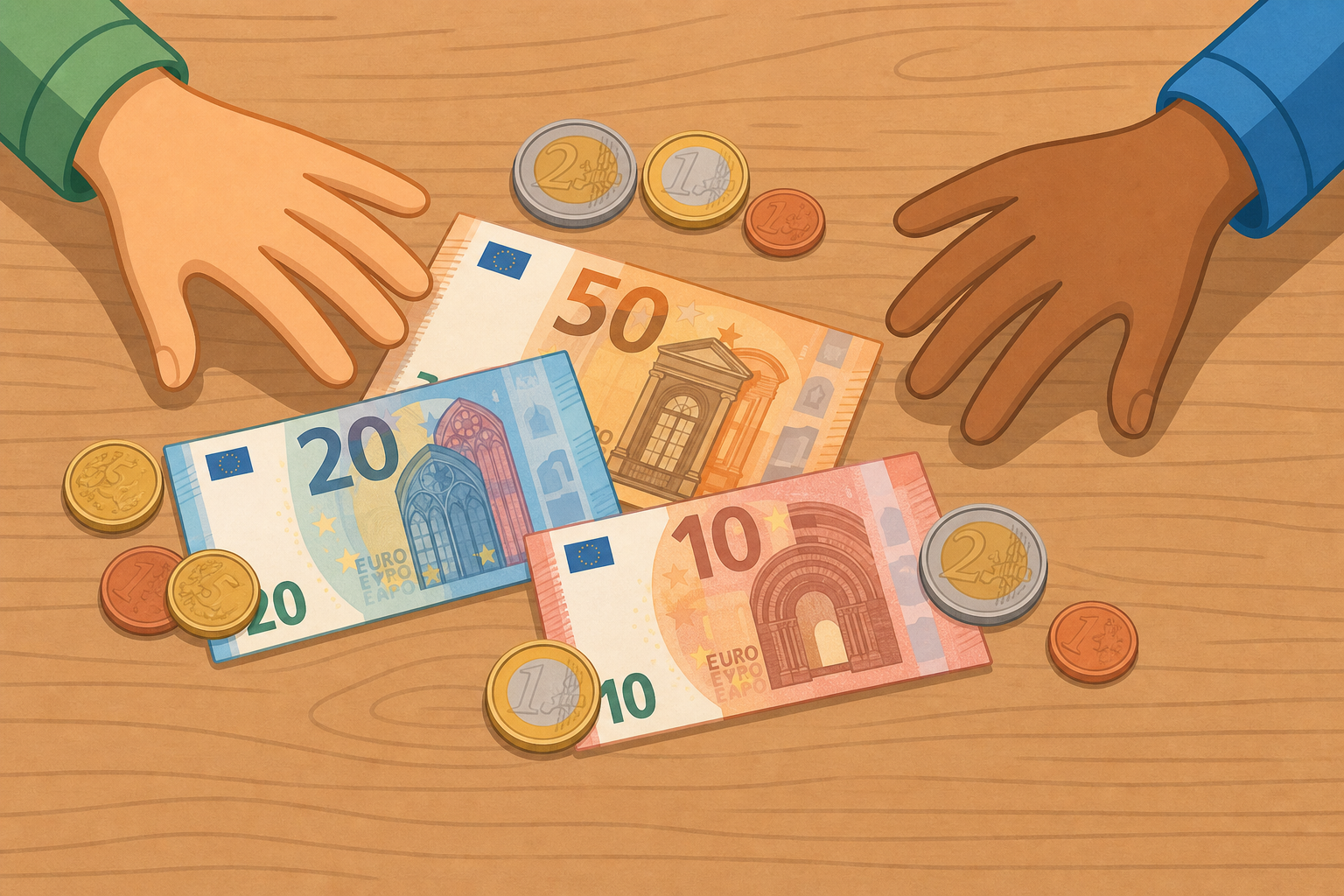
Here is the question: share €30 between two people in the ratio 2:3. Before we work anything out, how many equal parts do you think €30 needs to be split into?
Watch four amounts being shared, one after another. Each bar is the whole amount, cut into equal parts. For each one we talk through the same three moves in order: count all the parts, divide the total by that count to find one part, then multiply to find each share. Say each answer before it appears on the bar, and notice how the moves stay the same even as the ratios change.
Now we build the shares together on the ratio bars. We work through these one at a time at the board as a class: share €60 in 1:5, then €72 in 3:5, then €50 in 2:3, and finally the three-way €120 in 1:2:3.
One pupil sets each share at the board while everyone else watches, agrees, or corrects out loud — that is your job at each round. For every problem we say the three moves aloud before we set the bars: count the parts, divide the total, multiply each share. The three-way one at the end has six parts, so the value of one part is smaller than you might guess, watch for it.
In your maths copy, work these two shares that we have already seen at the board: share €40 in 3:5, then share €50 in 2:3. Set each one out in three lines: count the parts, divide the total by the part-count, then multiply each share by its parts. Keep the three moves clear so they are easy to check.
You're previewing this lesson. Get full access to this lesson and hundreds more — each one ready to teach, with interactive activities, printable resources and pupil progress tracking built in.