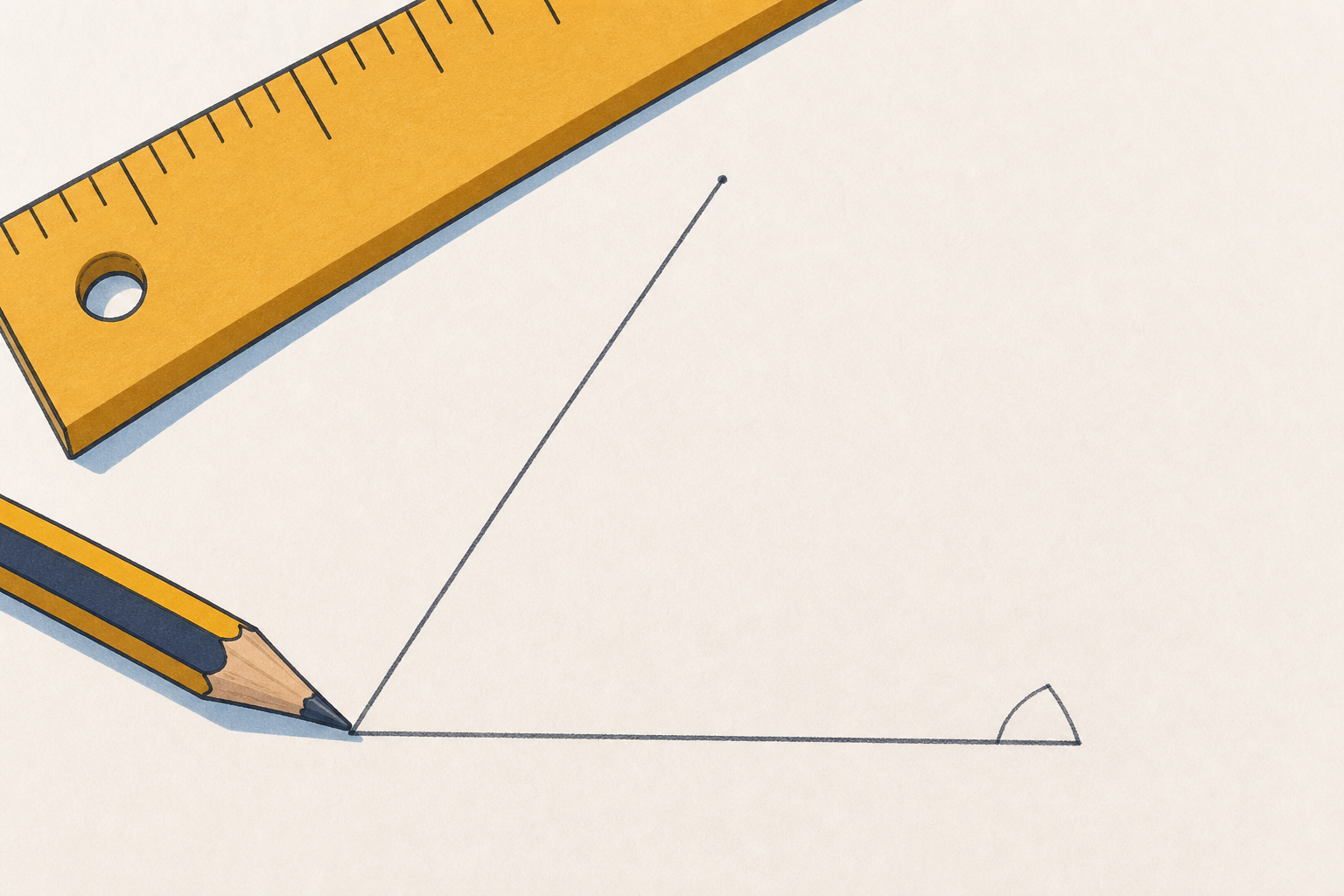
Imagine a triangle with one side already ruled and one angle already marked, but the last corner not yet joined.
To finish that triangle, some parts you would construct (draw carefully with your compass and ruler), and some parts you would work out (figure out with maths). Which is which?
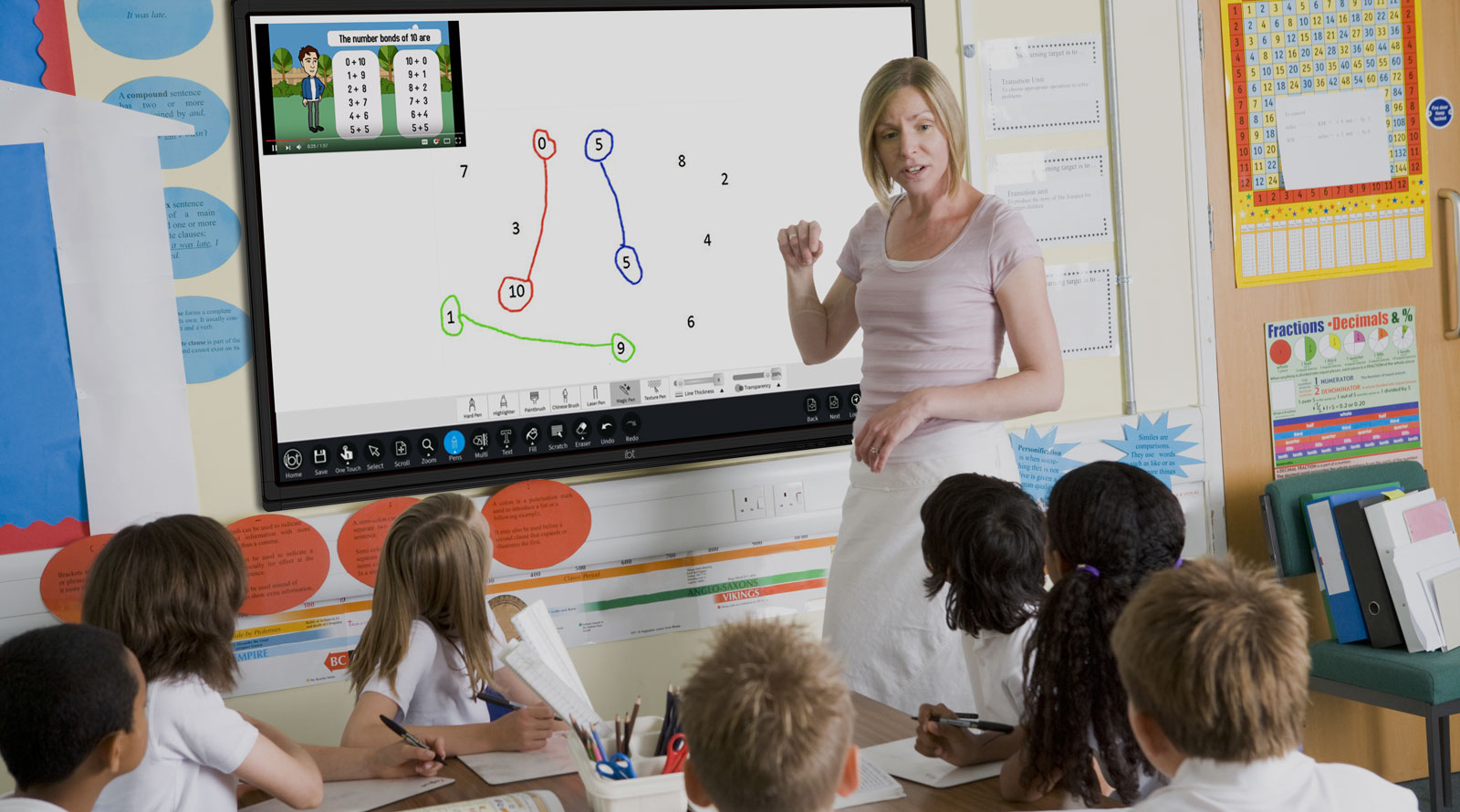
Look at the triangle on the board, reconstructed from three given sides (6 cm, 5 cm, 4 cm) using compass arcs. The two arcs cross to fix the last corner, so only one triangle can close.
Now watch what happens with the angles. Once we know two of the triangle's angles, we do not need a protractor for the third. All three angles add to 180°, so the third one is 180° take away the other two. That is an angle we work out, not one we measure.
Now we work through one full review task together: construct a triangle from its three sides (7 cm, 6 cm, 5 cm), then find its angles. We will measure two of them with the protractor. For the third, we do not measure at all: we take the two we found away from 180° (180° − first angle − second angle), then check it with the protractor to see it matches.
We build in this order: rule the 7 cm base, swing a 6 cm arc from one end, swing a 5 cm arc from the other, join the crossing point, then measure and reason the angles.
In your maths copy, complete the review task with your own ruler, compass and protractor: construct the triangle from the three sides (7 cm, 6 cm, 5 cm), measure two angles, then work out the third by taking those two away from 180°. Check that all three angles add to 180°.
Ring the angle you worked out rather than measured.
You're previewing this lesson. Get full access to this lesson and hundreds more — each one ready to teach, with interactive activities, printable resources and pupil progress tracking built in.