1 - Start ~5 mins
Welcome
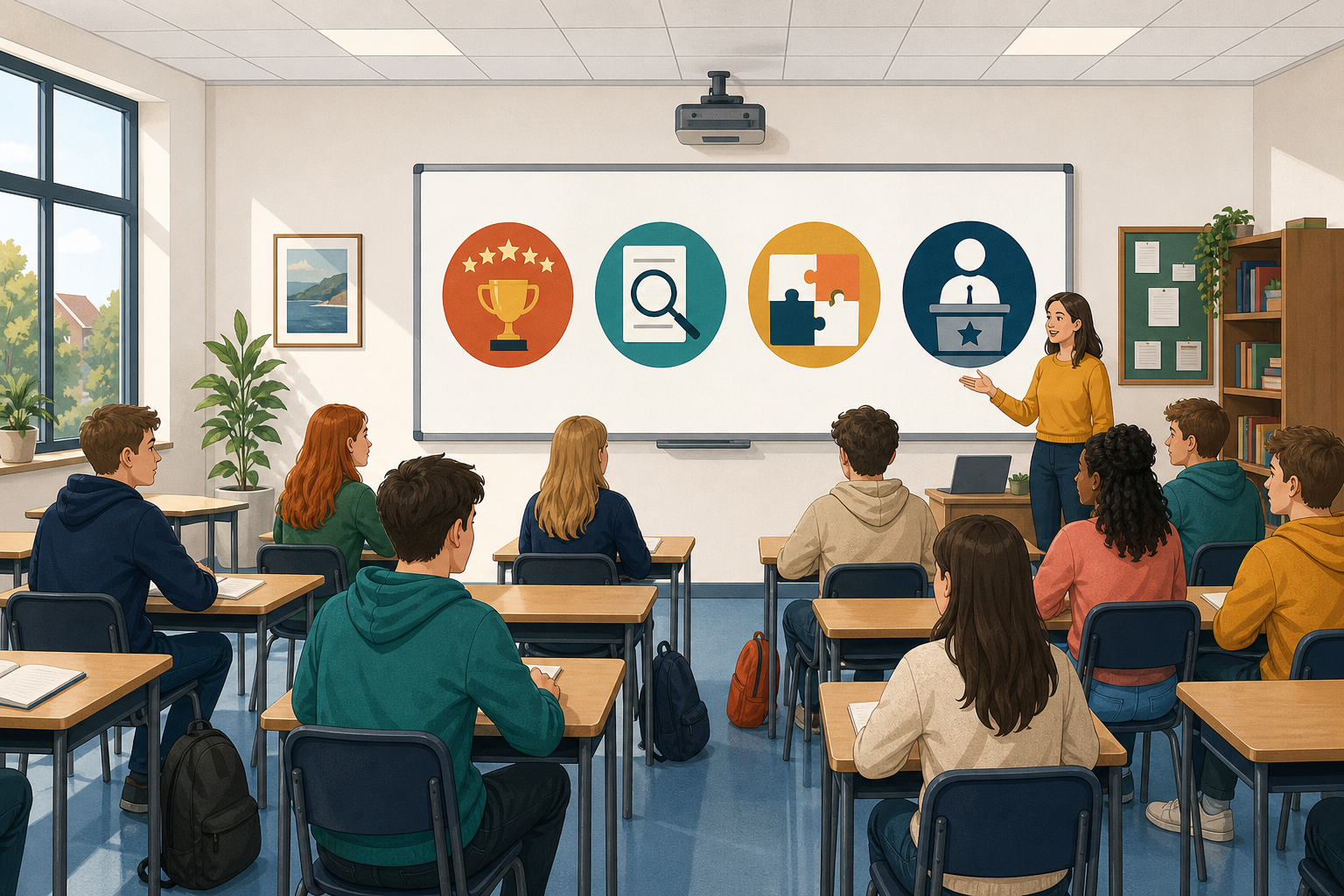 You already have a search log, a reference list, and authorship notes for your investigation. Today you stop asking “is this a blog or an official site?” and start asking a sharper question: what can I verify about this claim? Reliability, Accuracy, Validity, and Authority (RAVA) give you four checks that work on any source type.
By the end of this lesson, you will be able to:
- Apply Reliability, Accuracy, Validity, and Authority criteria
- Challenge gut trust with a Flip Your Instinct drill
- Grade investigation sources on all four criteria with short justifications
Warm-up
Think of the last webpage or post you trusted at a glance. Was it because of the logo, the layout, the author, or something you could actually check? Keep that example in mind.
Kit check (about 60 seconds)
Open your portfolio folder {{code:Project_Portfolio}}, then the specialism folder you have been saving this investigation into, {{code:09_specialism/sm4}}, and confirm you can see the search log you built earlier, {{code:sm4_search_log}}, and your reference list, {{code:sm4_references}}. If your search log or references are not ready, tell the teacher straight away — you will use the class worked-example source plus whatever sources you do have. At least two of the sources you grade later must still be ones you found yourself for your own investigation.
2 - Key Concepts ~6 mins
RAVA is four separate checks. A source can pass one and fail another. Your job is to grade each check honestly, then decide how much weight that source deserves in your investigation.
| Concept | Why it matters | Example |
|---|---|---|
| Reliability — can you trust this source to be consistent and careful over time, not just once? | One lucky accurate line is not enough; you need a track record of careful work | A GAA strength coach who regularly cites sports-science papers is more reliable than a one-off anonymous tip post |
| Accuracy — do the facts, figures, and quotes check out against other independent evidence? | Wrong numbers travel fast; your investigation is only as strong as the facts you repeat | A claim about Leap Card refund rules should match what you can verify on the operator’s own help pages or Citizens Information |
| Validity — does the evidence actually support the conclusion being sold? | A true fact used for the wrong claim is still a weak source for your question | A chart of summer rainfall in Galway is accurate weather data, but it does not prove a fundraiser will sell out on a wet Saturday |
| Authority — who is speaking, and what expertise or role gives them standing on this topic? | Job titles and logos impress; named expertise and primary sources persuade | A dietitian writing under their own name with cited research can outrank a glossy “official-looking” page with no named author |
| Source type is not source quality — blog, news site, or .gov domain does not decide the grade on its own | Badge-trust is the habit RAVA is designed to break | — |
Worked example: one graded source
Imagine your Something Real project needs a fact about small-event insurance in Ireland. You find a short post on a community-organiser blog. The writer names themselves, links a broker association guide, and dates the post. A quick check shows the linked guide still matches the key point.
| Criterion | Grade | One-line reason |
|---|---|---|
| Reliability | medium-high | Named writer with a consistent topic history |
| Accuracy | high on the checked claim | Matches the linked primary guide |
| Validity | medium | Useful general guidance, not a quote of your exact venue policy |
| Authority | medium | Practitioner experience plus a cited industry source, not a solicitor’s advice |
That is the standard of note you will write on your own sources later: four grades, each with one plain-English reason. Leave this mini-table on the board during Portfolio Build.
3 - Build Our RAVA Checklist ~15 mins
As a class, build a living RAVA checklist you can reuse on every investigation source. Starter chips are suggestions only. A line goes on the list only when the class agrees it is something you can actually do while checking a source.
Before you leave this step: copy three agreed checks under each of the four headings into the top of the document you will create next ({{code:sm4_source_grading}}). That way the class list sits beside you when you grade, even if the board is cleared.
Our RAVA source-check list
4 - Common Issues ~3 mins
Common Issues
| Issue | Solution |
|---|---|
| I keep grading the source type instead of the claim | Cover the logo with your hand and re-run RAVA on the claim, author, evidence, and what you can verify |
| All four scores look the same on every source | Force a difference: pick the weakest criterion and write why it is lower. Real sources rarely score identically on all four |
| I gave the same reason for Reliability and Authority | Reliability = have they been careful on this topic over time? Authority = what role or expertise gives them standing on this claim? Write two different reasons |
| I cannot finish four checks in 30 seconds during Flip Your Instinct | That is expected. Capture gut rank first, then one verification note per source. The goal is the gap, not a perfect essay |
| My investigation sources do not fit neat “good” or “bad” labels | Use medium grades with reasons. A useful source can be strong on accuracy and weak on authority |
5 - Flip Your Instinct ~10 mins
Portfolio Build: Section 1
- Open {{code:Project_Portfolio}} → {{code:09_specialism/sm4}}. Create a new document called {{code:sm4_source_grading}}.
- Word Online / Microsoft 365: go to {{code:onedrive.com}}, open {{code:09_specialism/sm4}}, click {{btn:New}} → {{btn:Word document}}, rename to {{code:sm4_source_grading}}.
- Google Docs: go to {{code:drive.google.com}}, open {{code:09_specialism/sm4}}, click {{btn:New}} → {{btn:Google Docs}}, rename to {{code:sm4_source_grading}}. Download as .docx later only if your school requires Word format for submission.
- Paste or type the three agreed checks per heading from our class RAVA checklist at the top of the file.
- Section 1 — Flip Your Instinct: using the four pairs on the board (do not research before ranking), gut-rank them 1 = most trusted to 4 = least. Then spend about 30 seconds verifying each and write a short gap note (gut rank → after-check rank, and what fooled you or held up).
- {{code:sm4_source_grading}} is saved inside {{code:09_specialism/sm4}}
- Class checklist headings are at the top of the file
- All four pairs have a gut rank, a short verification note, and a clear note on whether instinct matched the check
Flip Your Instinct pairs (use these exact four — also on the board)
Give each pair a rank on gut feeling alone before you look anything up, because the whole point is to see whether your instinct survives a check; only then verify each one quickly and write down the gap. Your teacher will model Pair B first so you can see the format.
- Pair A. Claim: “Ten minutes of foam rolling after training usually reduces next-day soreness for field-sport players.” Source: a named GAA strength-and-conditioning coach writing on their own blog, with a link to a peer-reviewed sports-science abstract.
- Pair B. Claim: “This herbal tea reverses inflammation in seven days.” Source: a polished wellness page with a stock “Dr” title in the byline, tidy layout, and a short “research” list; every page has a shop link, and a 30-second check shows the citations do not open to primary studies and no real named clinician is contactable.
- Pair C. Claim: “Student grant appeal deadlines are always six weeks from the decision letter.” Source: a polished page that copies Citizens Information styling, but the web address is not a known public-service domain and no contact body is named.
- Pair D. Claim: “Local weekend markets in your county are growing every year.” Source: a tidy news-style article that only quotes one market promoter and repeats figures from that promoter’s press release, with no second dataset.
Sample gap line (from the teacher model): Gut 1 → after check 4. Gap: trusted the title and layout; verification found no real author or primary source.
Unlock the full learning experience
You're previewing this lesson. Get full access to this lesson and hundreds more — each one ready to teach, with interactive activities, printable resources and pupil progress tracking built in.
This lesson is copyright of 123Learn.ie 2017 - 2025. Unauthorised use, copying or distribution is not allowed.