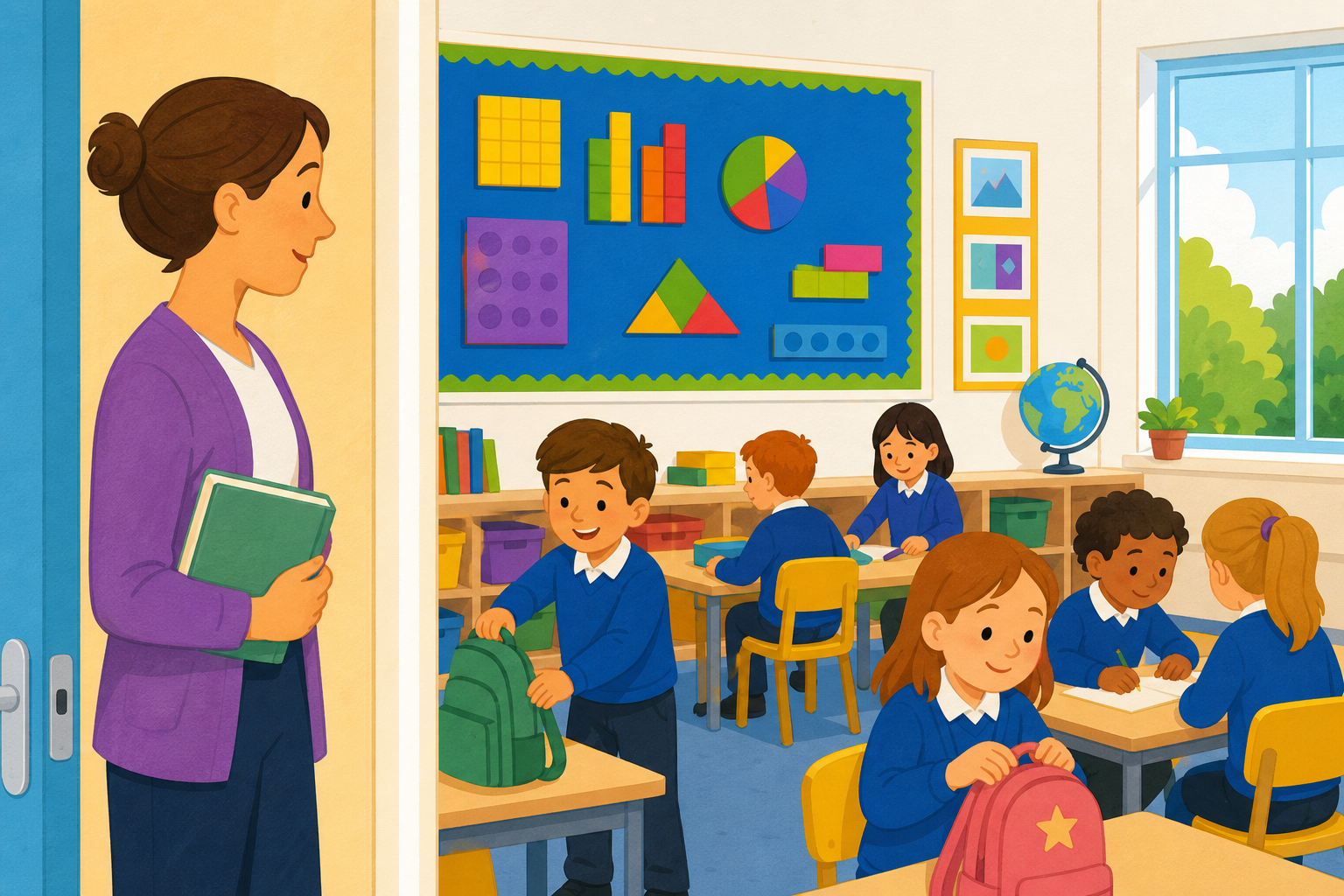
How many pupils are in our class today? Is that number closer to ten, or closer to a hundred?
Have a think, then put up your hand. We are going to look at how every two-digit number is made from a number of tens and a number of leftover units.
Take three hands-up answers, not open call-outs. Write each suggested two-digit number on the board and read it aloud as so many tens and so many units (e.g. twenty-four is two tens and four units). Give five seconds of quiet think-time before any hands go up.

Watch the place-value blocks. Two ten-rods sit in the tens column and four single cubes sit in the units column. That makes twenty-four.
Now four ten-rods sit in the tens column and there are no cubes at all in the units column. Put up your hand: what number is this?
This time there are no ten-rods, just seven single cubes in the units column. The tens column is empty.
Eight ten-rods in the tens column and six cubes in the units column. Read it with me: eighty-six.
Walk each example aloud, one at a time, narrating the tens column first, then the units.
Now it's our turn — let's build some numbers together using the T and U columns.
When I call out a number under 100, one of you will come up to the board and build it with ten-rods and single cubes. The rest of us will check — how many tens, how many units?
This round is for talking it through together — pupils take turns at the board and the class agrees or corrects out loud.
Call a number under 100, send one pupil up to build it, then ask the class how many tens and how many units? before confirming. Rotate four pupils through. Between turns, revoice a pupil's answer back to the room (so two tens and four units is twenty-four) to keep the watching class thinking. Watch for the slip where a pupil builds the units count as ten-rods (e.g. building 24 as four rods and two cubes) — head it off by asking which column comes first when we read left to right.
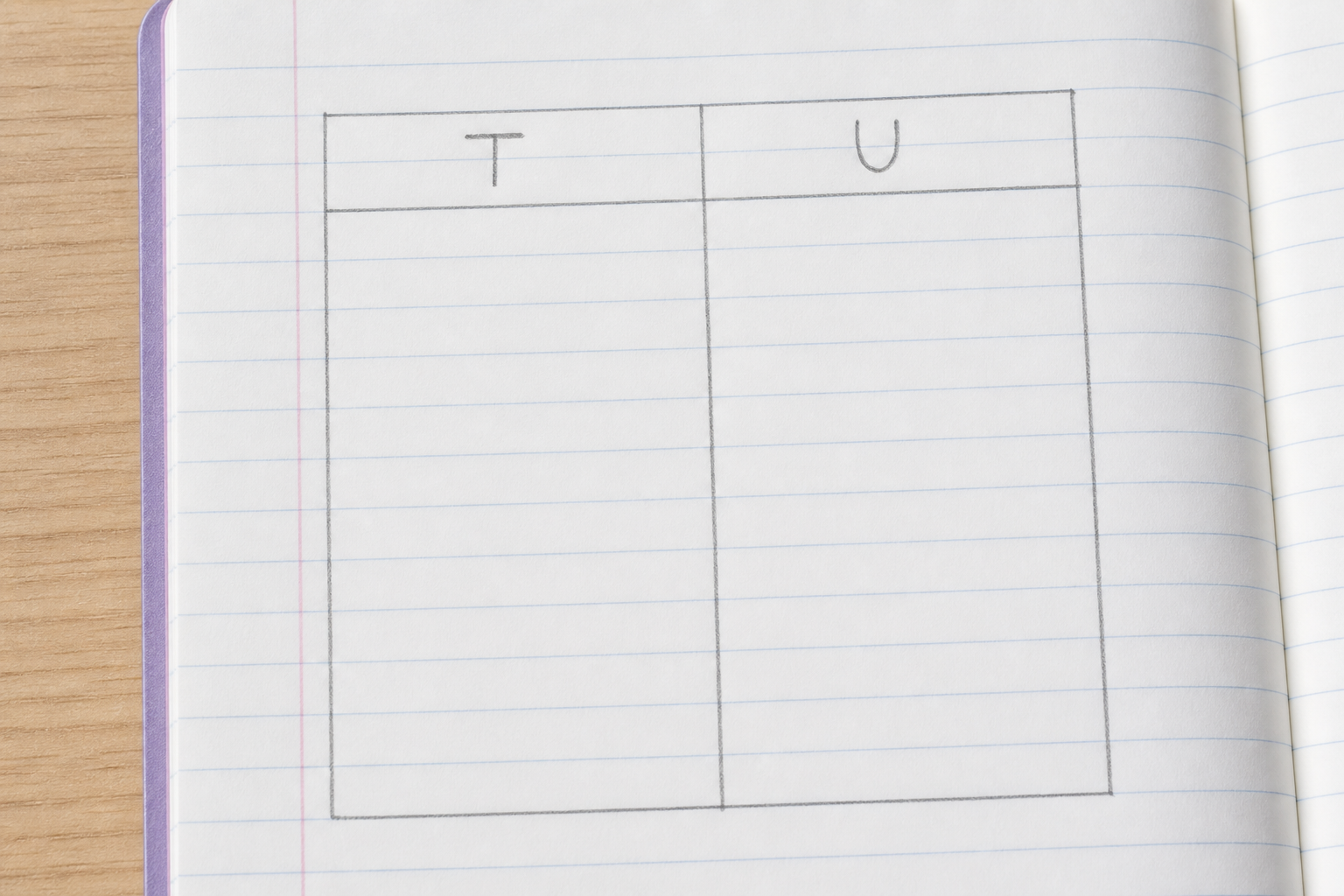
In your maths copy, draw two place-value columns and label them T and U.
Then write each of these numbers into the columns, one under the other:
Read each number aloud after you write it.
Walk the room glancing at the column labels and whether each digit lands in the right column (the 7 goes in the units column with nothing in tens) — this is whole-class copybook practice, not marking.
Today we build these numbers together at the board: 30, then 47, then 80, then 99.
For each one, work out how many tens and how many units make the number, build it, and check it.
This round is the practice bank — pupils take turns at the board, check each answer, and the class confirms before moving on. Keep the board work brisk rather than over-explaining.
For each target ask how many tens and how many units make this number? before the pupil builds. Watch 99 closely — nine ten-rods and nine cubes is the high end and pupils sometimes lose count of the rods; have the class count the rods aloud in tens (10, 20, 30…). Fast finishers watch the board and mouth the tens count.
Why does where a digit sits — in the tens column or the units column — change what it is worth?
Think about the 4 in 47 and the 4 in 74. Same digit. Is it worth the same amount?
Listen for pupils naming the position as what decides the value, not the digit on its own. Revoice a strong answer: so the 4 in the tens column means forty, but the 4 in the units column means only four — same digit, different place, different value. Head off the idea that a bigger-looking digit always means a bigger number.
Today you built two-digit numbers from tens and units, and you saw that where a digit sits decides what it is worth.
Next time we add a new column on the left — the hundreds — and build numbers all the way up to 1,000.
Recap the two columns (tens on the left, units on the right) and that an empty column still holds a place. Preview the hundreds column briefly without teaching it yet.
You're previewing this lesson. Get full access to this lesson and hundreds more — each one ready to teach, with interactive activities, printable resources and pupil progress tracking built in.