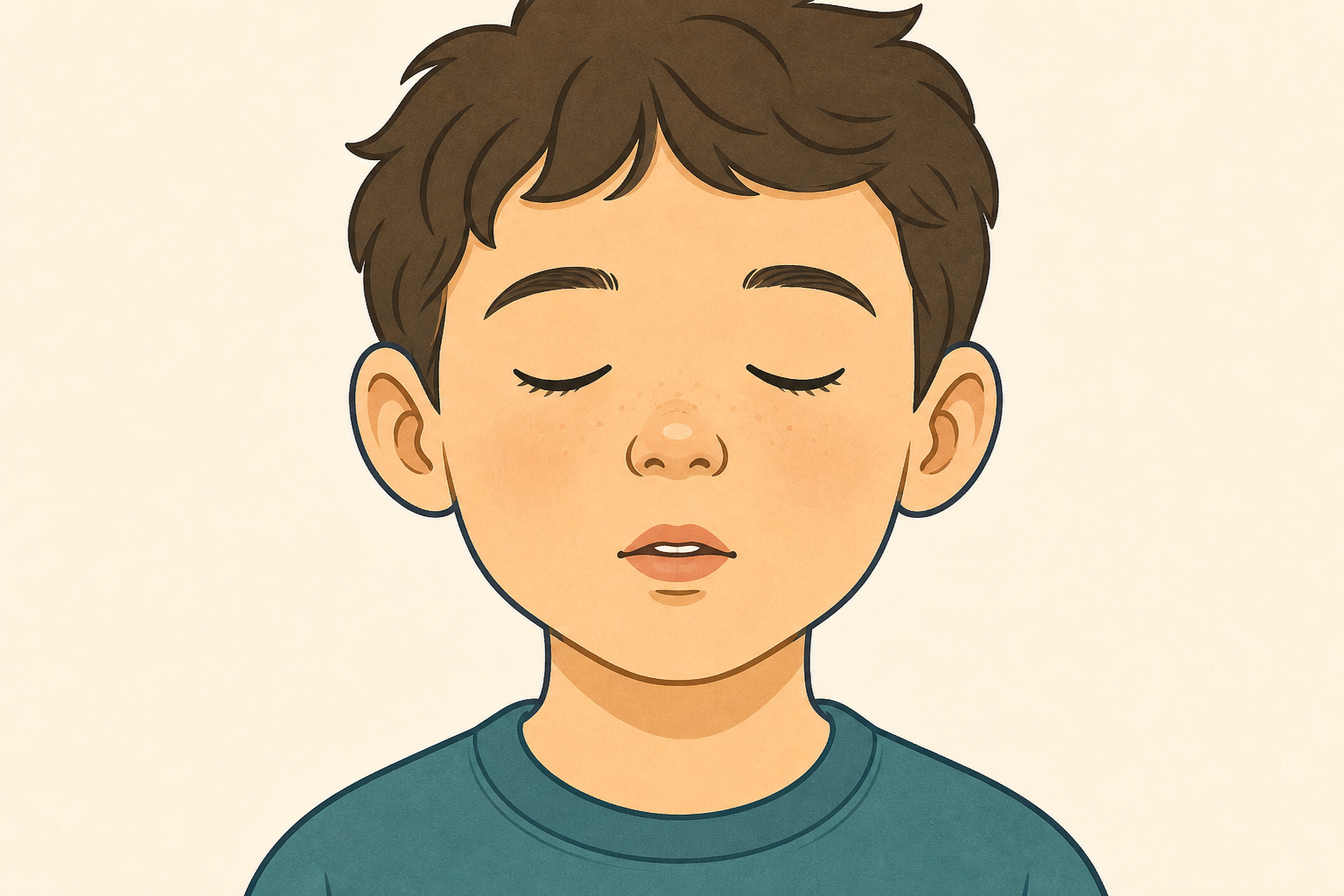
 Close your eyes for a moment. What can you still notice? A sound in the room? The feel of the chair? A smell from lunch?
Scientists use their senses carefully to find things out. Today we investigate like scientists.
 Today's big word is senses: the ways our body notices the world.
On the board is a child figure. Labels: eyes, ears, nose, hands. Help us put each label on the part we use for that sense. Which part helps us hear? Which helps us feel if something is rough?
Now look carefully at this leaf or scrap of fabric. What do your eyes notice when you slow down?
A careful observation uses clear science words, like cool, smooth and round.
Which body part helps each sense?
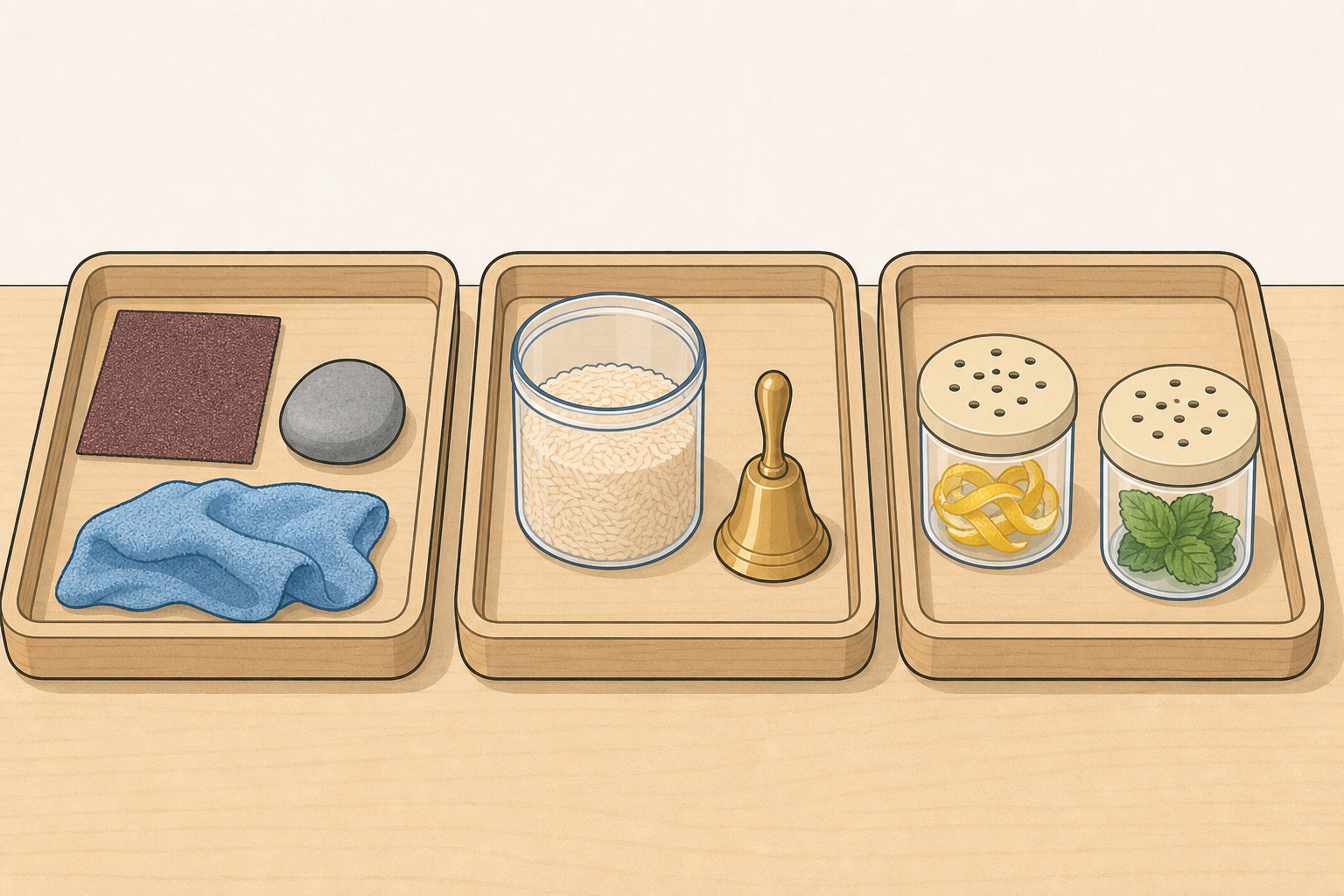 Three stations are ready. Take your Investigation Journal page with you.
Your group will visit each station. When you hear the clap or timer, move to the next one.
At every station, write or draw one careful observation before you move on.
The card on your table tells you what to do at that station, and the science words you can use are on the cards beside it. The board lists everything set out for the whole round.
Look back at the notes and drawings on your Investigation Journal page from the stations.
For each one you still have, name the sense you used, then write your careful observation in science words. Use the word bank on the board if you need help.
Aim for one touch, one sound and one smell observation you really noticed. If one box is empty, make the words you already wrote clearer instead of making something up.
Let's share like scientists.
What careful observation did your group make at the touch station? At the sound station? At the smell station?
Which science words helped most? Did anyone's observation surprise the group?
Unlock the full learning experience
You're previewing this lesson. Get full access to this lesson and hundreds more — each one ready to teach, with interactive activities, printable resources and pupil progress tracking built in.
This lesson is copyright of 123Learn.ie 2017 - 2025. Unauthorised use, copying or distribution is not allowed.