 Look at this empty drinks can. How many teaspoons of sugar do you think were hiding inside when it was full? Hold up your fingers to show your guess.
Today we become label detectives. We will read the numbers on packaging, turn grams of sugar into teaspoons, and rank everyday drinks and snacks fairly.
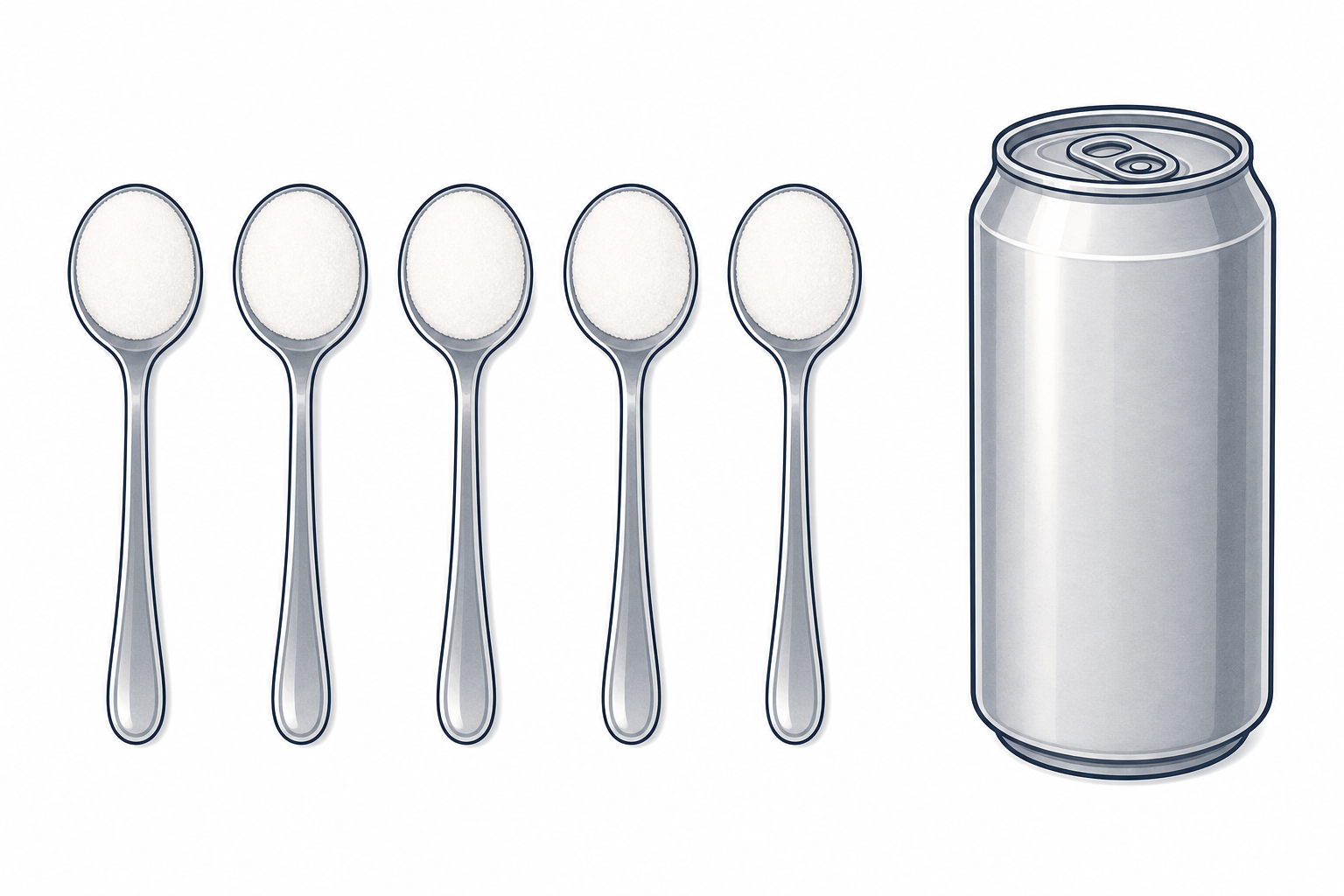
 That can has a secret panel of numbers: the nutrition label. That is our detective evidence for sugar and salt.
Grams are hard to picture, so we turn sugar into teaspoons: about 4 grams fills one level spoon. If a drink has 20 grams of sugar, how many teaspoons is that?
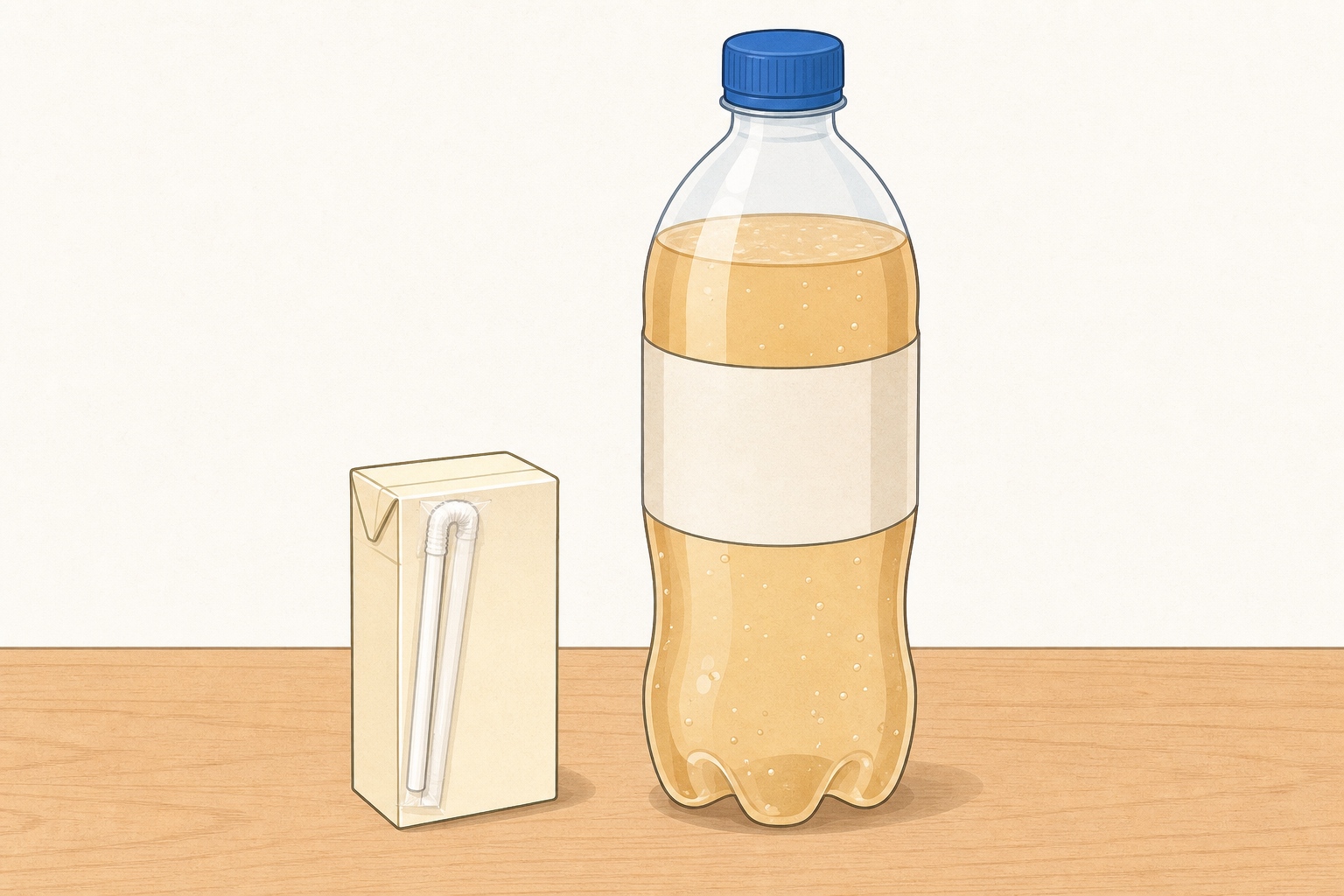
Later we will only rank drinks with drinks, and snacks with snacks. Picture a tiny juice carton next to a huge bottle: the bottle can look "worse" just because it is bigger. A fair ranking uses the same unit each time, for example sugar per 100 ml for every drink.
We will predict how many teaspoons of sugar hide in each everyday drink, then reveal the answer together on the board.
For each drink: call out your prediction first. After we reveal, we will turn grams into teaspoons and notice any label claims that might fool us.
Sugar detective: drinks
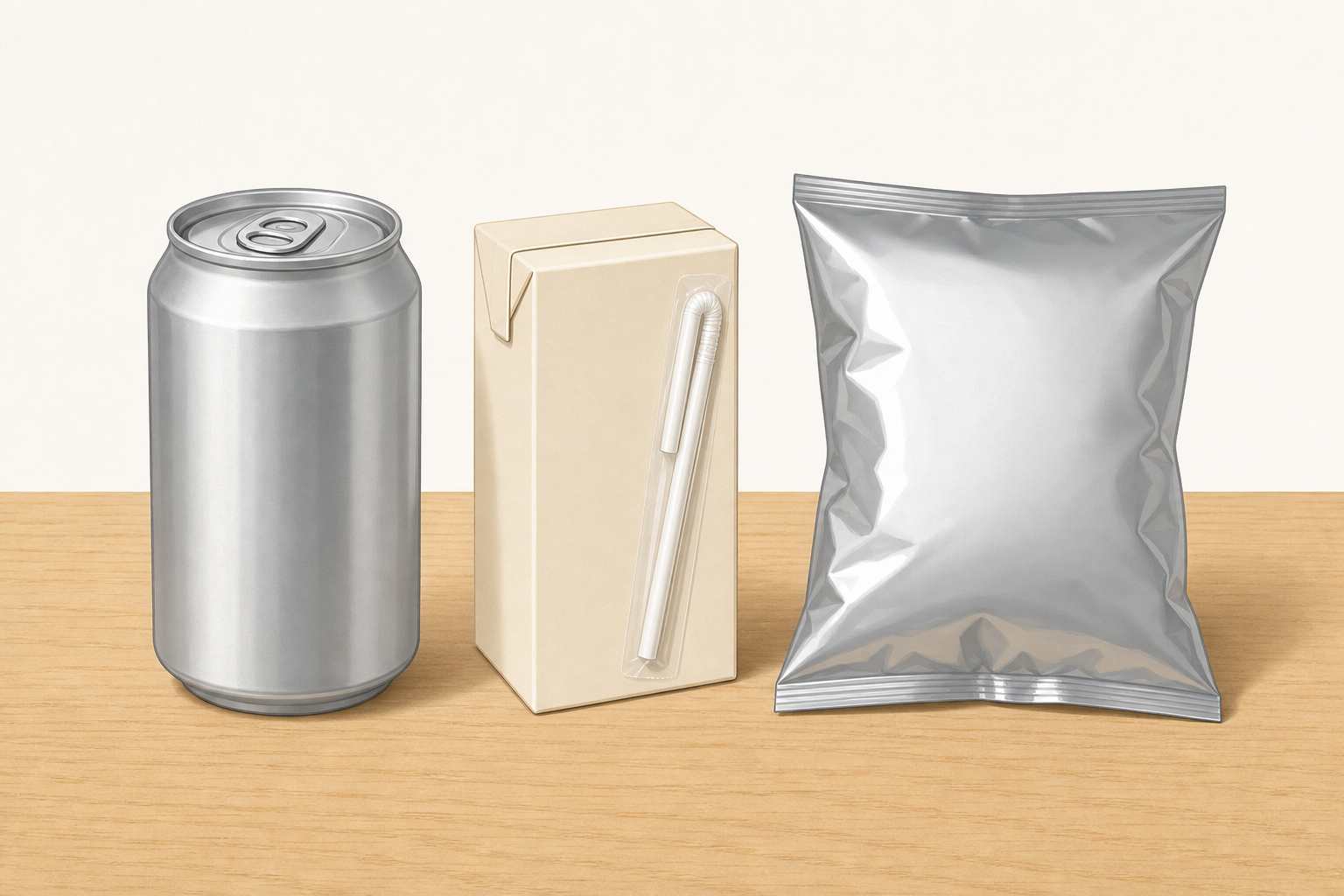 Your group gets three clean empty packs of everyday drinks and snacks, and a paper Investigation Journal page to write on. The card below sets out the order of work.
Handle the packs safely: they are clean and empty, so there is nothing to taste and nothing to open. Tell your teacher if anyone at your table has a food allergy, and wash your hands when you finish.
Every pack needs its sugar written down first, because that is what we rank later; salt only needs one number, so find it quickly and move on. Write the unit beside every number, and keep the packs on the table in front of you, because the class lines come next.
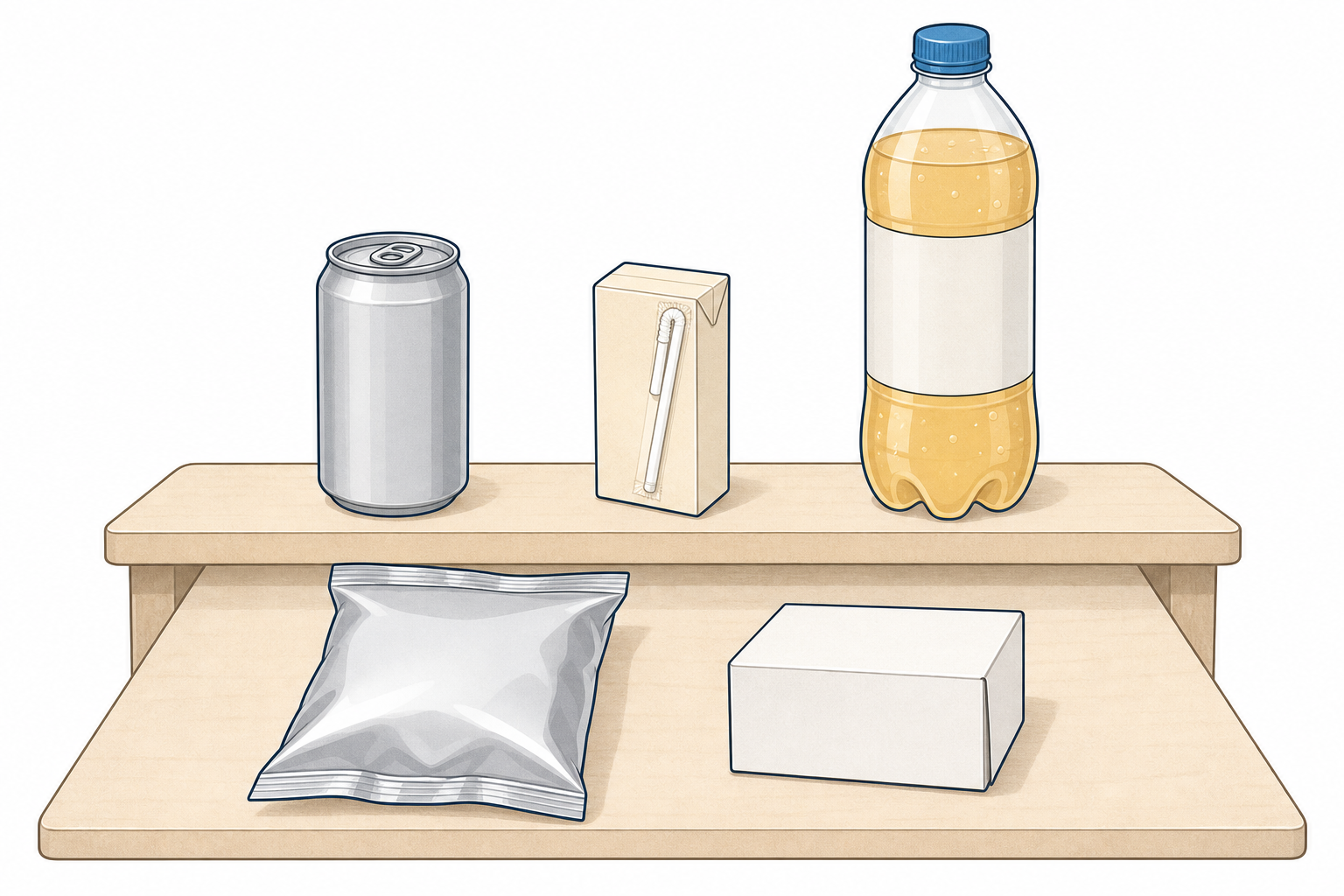 As a class we make two fair sugar lines, not one mixed pile.
The drinks line uses sugar per 100 ml (least to most). The snacks line uses sugar per 100 g (least to most). Only packs that have that fair-unit number on the journal page go on the line.
Groups bring standout packs to the bench. Everyone else is a judge: watch each placement, then agree or challenge using the label numbers and the rule. After the two sugar lines settle, notice which items also climbed high for salt.
Unlock the full learning experience
You're previewing this lesson. Get full access to this lesson and hundreds more — each one ready to teach, with interactive activities, printable resources and pupil progress tracking built in.
This lesson is copyright of 123Learn.ie 2017 - 2025. Unauthorised use, copying or distribution is not allowed.