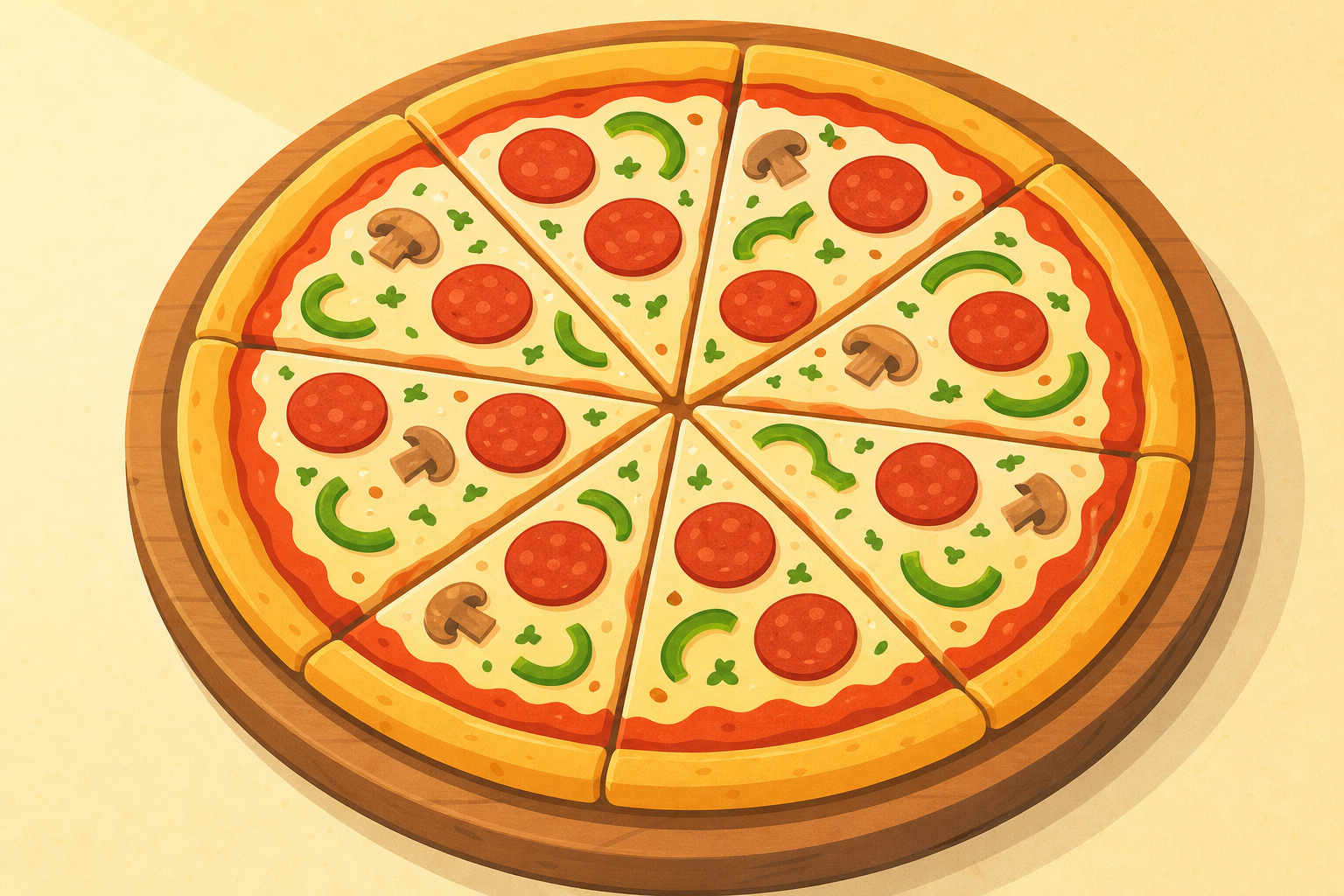
Here is a pizza already cut into eight equal slices. If eight people share it fairly, how could you describe the one slice each person gets? There is no wrong answer here, it is just a sharing question, so say it in your own words.
Hands up: have you ever shared a pizza or a cake fairly so everyone got an equal piece? How many pieces did you cut it into?
Take three hands-up answers, not open call-outs. Pupils only need to describe the slice in their own words, such as one piece out of eight. Accept that warmly; the formal word one eighth is introduced on screen in the next step, so do not push for it here. Revoice whatever they offer toward the idea of equal sharing.
Watch this pizza cut into five equal parts. One part is one fifth. The five tells us the whole was cut into five equal pieces.
Now the pizza is cut into eight equal parts. One part is one eighth. More pieces means each piece is smaller.
Here the pizza is cut into ten equal parts, and three of them are shaded. That is three tenths. The bottom number, ten, names the pieces; the three tells us how many we have shaded.
Point at each pizza in turn and say the fraction aloud with the class.
Now we build fractions together on the board. One pupil comes up to cut the pizza and shade the slices; everyone else reads the fraction aloud and checks that all the pieces are the same size. When a fraction is called, the pupil at the board cuts the pizza into that many equal parts and shades the right number, then we all read it aloud together.
This step is a Try Together: you lead from the board while the whole class reads and checks aloud, so keep it conversational rather than silent practice.
Name a fraction (a fifth, an eighth, a tenth), invite a pupil to the board to set the slices and shade, then have the whole class read it aloud. Watch for the slip of shading the wrong count when several parts are named (e.g. shading two when you said three tenths). Revoice a strong answer: so the bottom number told us how many to cut, and the top number told us how many to shade.
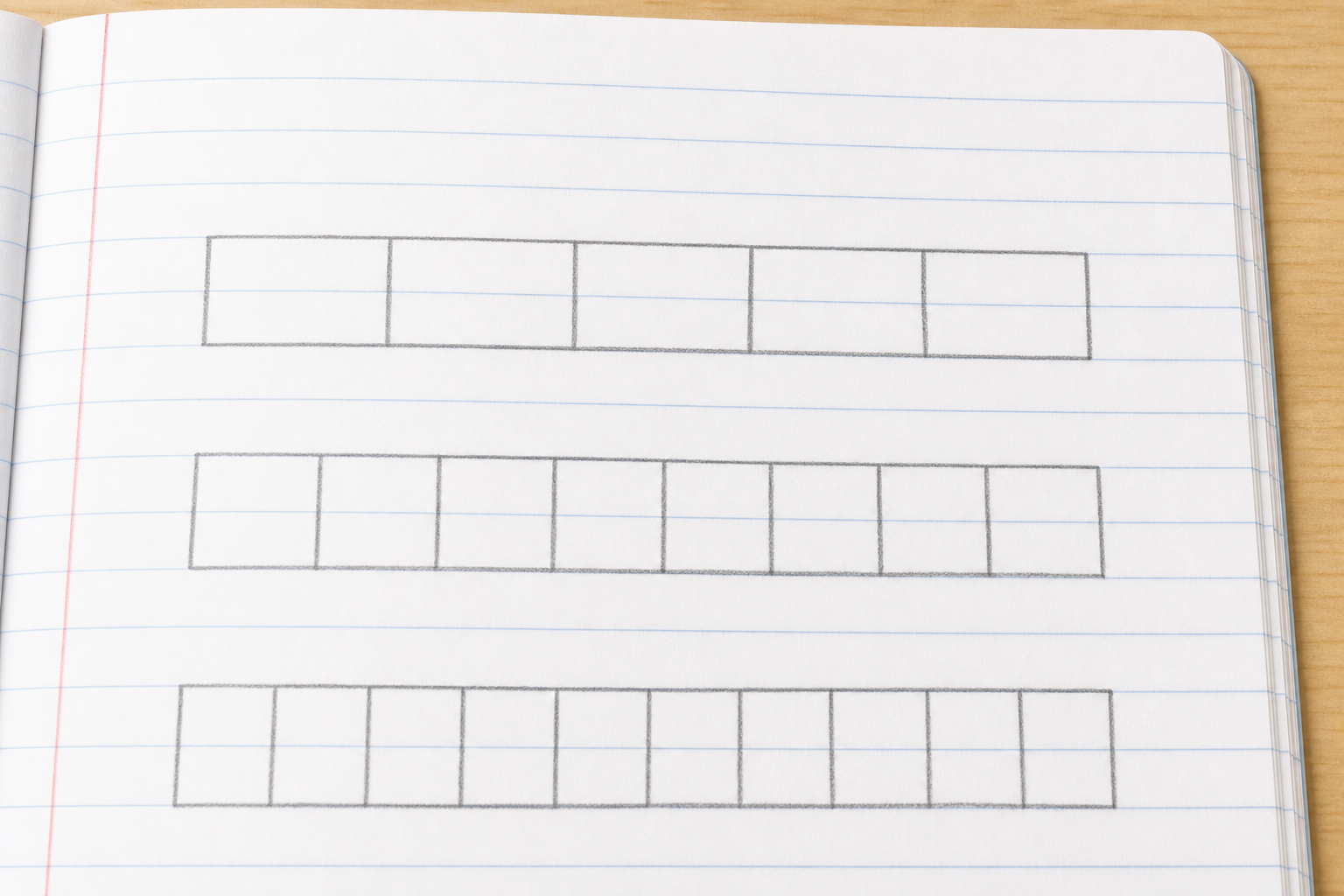
In your maths copy, draw three bars. Cut one into fifths, one into eighths and one into tenths. Shade one part of each, and write its name underneath: one fifth, one eighth, one tenth.
Walk the room, glance for equal-sized pieces and correct labels — this is whole-class copybook practice, not marking. A ruler helps keep the bar pieces even.
Today we work through these together: show one fifth, then one eighth, then three tenths, then five eighths. The more pieces we cut, the smaller each one is, so check your slices carefully each time.
This round is the practice bank — pupils take turns at the board, check each answer, and the class confirms before moving on. The board re-cuts the pizza to the named denominator for every challenge (five, then eight, then ten, then eight again), so each pupil starts from a fresh whole. Keep the board work brisk rather than over-explaining.
Use the Check button after each build so the class sees the ✓. For three tenths and five eighths, pause and count the shaded slices aloud together before checking. Fast finishers can mouth the next fraction or simply watch the board.
Which is bigger, one fifth or one tenth? How can you tell just by looking at the pieces? And what changes about each piece when we cut the same pizza into more parts?
Listen for pupils linking the bigger bottom number to smaller pieces. Revoice a strong answer: so when we cut the same pizza into ten instead of five, each slice has to be smaller. Head off the common slip that a bigger bottom number means a bigger piece.
Next we will find fractions like these on a number line, between 0 and 1.
Recap the three new fraction names quickly and check pupils can read a fraction with several parts shaded before moving on.
You're previewing this lesson. Get full access to this lesson and hundreds more — each one ready to teach, with interactive activities, printable resources and pupil progress tracking built in.