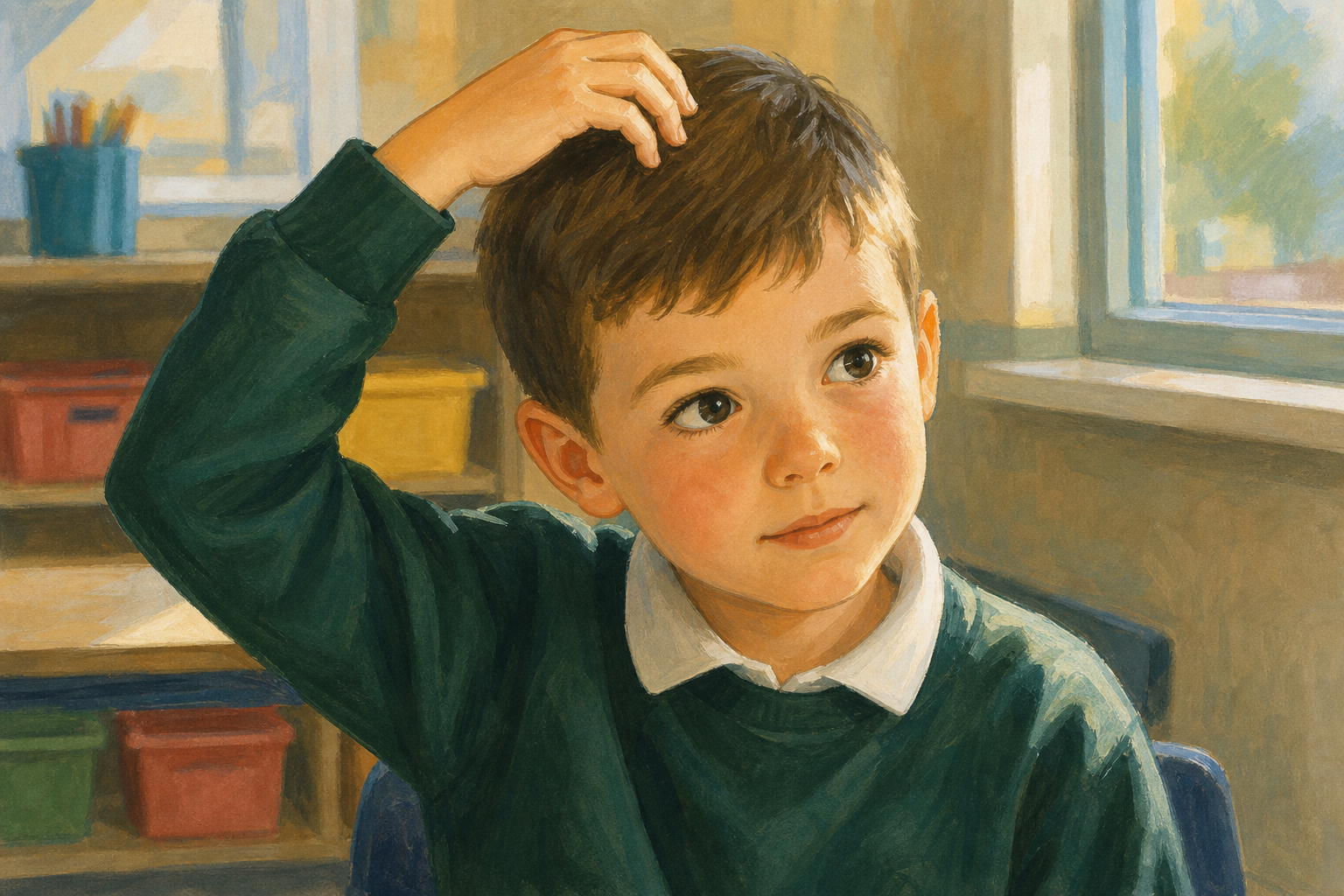
Let's wiggle! Can you touch the top of your head? Now can you touch the bendy part in the middle of your arm? Hmm, does that part have a name? Today we are going to be body-part detectives and learn the names of lots of parts of our bodies.
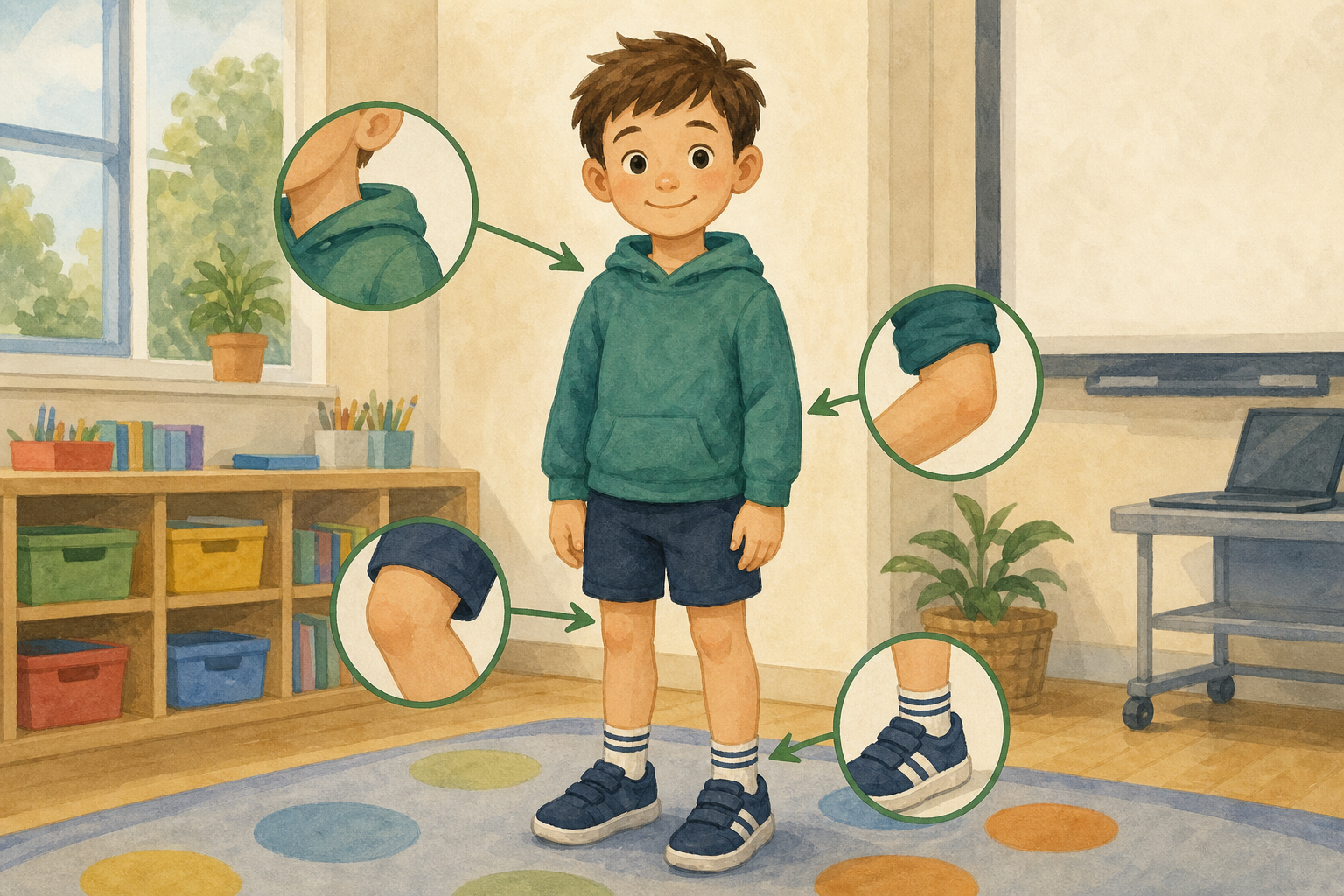
Keep this light and playful. Call out one or two body parts and have the class touch them. Does anybody know what we call the bendy part in the middle of our arm? Take a few guesses, then say we will find out together.
Let's learn our new body words! Watch the teacher and copy each action.
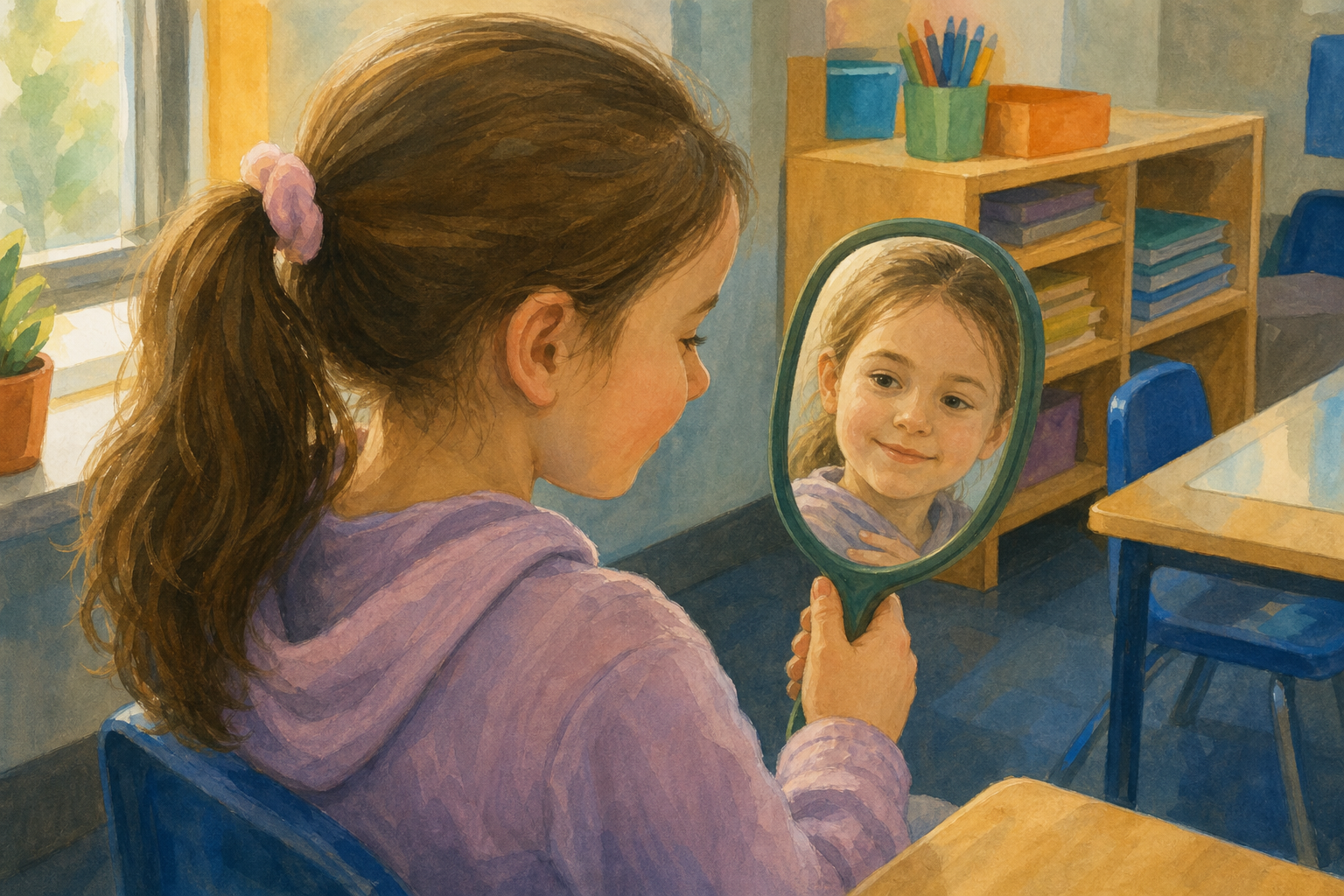
Elbow is the bendy part in the middle of your arm. Bend your elbow to wave at a friend!
Knee is the bendy part in the middle of your leg. Bend your knees and hop like a frog!
Ankle is where your foot joins your leg. Wiggle your ankle so your foot goes up and down!
Shoulders are at the top of your arms, beside your neck. Lift your shoulders up to your ears, then drop them down!
This table is the teacher's reference for Senior Infants. What pupils see on screen is one word with one picture and one action at a time; the children do the action with you rather than reading the table. Read each row aloud and use the Example cell as your action script. Touch each part on yourself as you name it, then ask the class to touch it on themselves. Where is your elbow? Find it now!
| Concept | Why it matters | Example |
|---|---|---|
| Elbow — the bendy part in the middle of your arm | You bend your elbow every time you reach, wave or eat your lunch | Bend your elbow to bring your hand up to wave at a friend |
| Knee — the bendy part in the middle of your leg | Your knees bend so you can sit down, run and jump | You bend your knees when you hop like a frog |
| Ankle — where your foot joins your leg | Your ankle lets your foot move up and down so you can walk and run | Wiggle your ankle to make your foot go up and down |
| Shoulders — the top of your arms, beside your neck | Your shoulders let your arms swing and lift | Lift your shoulders up to your ears, then drop them down |
Add the other words the lesson uses too: head (the top of you), neck (joins your head to your shoulders) and knees/ankles. A doctor and a physiotherapist know the names of all our body parts so they can help us when a part is sore.
Let's look in the mirror and find our body parts! When the teacher says a body part, can you find it, touch it and say its name? Let's find our head, our neck, our shoulders, our elbows, our knees and our ankles. Look in the mirror and watch yourself wiggle each part!
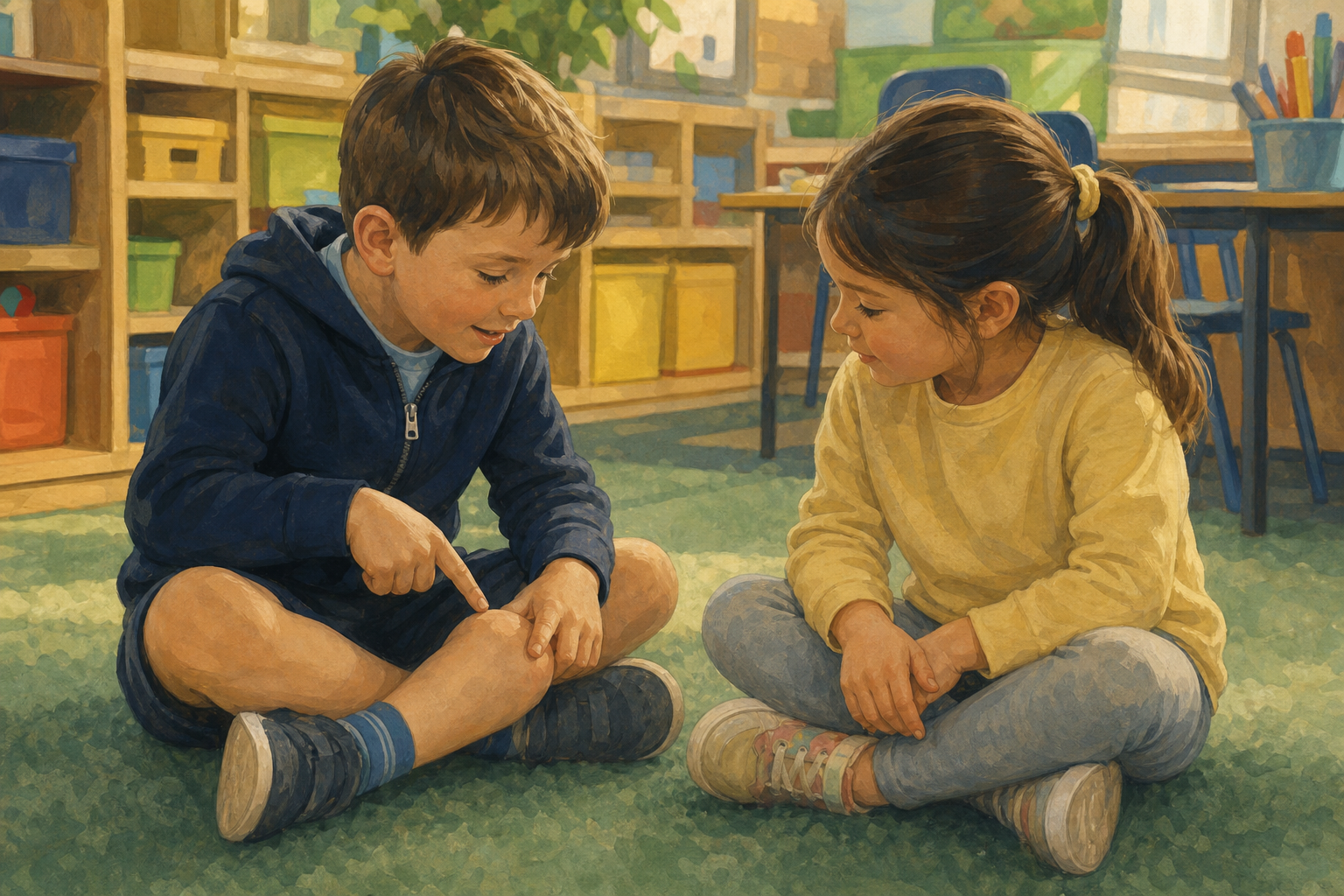
Pass round a few mirrors or use one big mirror in turns. Call a part, the class touches it and says its name aloud, then looks in the mirror to see it move. Watch for the common mix-up between knee and elbow (both bendy) and head and neck. Point to your neck. Now your shoulders. Are they the same? No!
This is an observation activity: pupils look closely at themselves and name what they see.
Now let's play a moving game! When the teacher calls a body part, touch it as fast as you can. Head! Neck! Shoulders! Elbows! Knees! Ankles! Can you keep up? Let's speed up and see who can find each part the quickest.
Don't forget to say the name out loud as you touch it.
Note: this is not the familiar song. The song uses head, shoulders, knees and toes. Our game swaps in the new target words, so you must call neck, elbow and ankle explicitly and often — do not fall back into singing the song or you will miss the new words this lesson teaches.
An action carousel: call body parts one at a time, then in pairs (shoulders and knees), getting faster. Pupils touch and name each part on their own bodies — no props needed. Mix in the new words (neck, elbow, ankle) with familiar ones. Say the word as you touch it!
Differentiation: slow the pace and stay with three parts for children who need it; add a wrong-on-purpose call (touch your elbow while you touch your knee) for those ready for a challenge.
Look at the picture of the child on the board. The word cards are jumbled up! Listen to the teacher read each card out loud, then help put it on the right part. Let's find where head goes at the top, then neck, shoulders, elbows, knees and ankles. Point to the part on your own body first, then we will move the card!
Drive this interactive activity on the IWB. A picture of a whole child appears with six word labels to drag: head, neck, shoulders, elbows, knees and ankles. Senior Infants cannot yet read these words, so always read each card aloud before it is moved — the children match by knowing the body part and hearing the word, not by decoding text. Call a child up to drag one label while you say the word, and have the rest of the class point to that part on their own bodies and check. Is that right? Where is the neck really?
Reveal answers as the class agrees. This replaces any need for a body outline — the figure is already on screen.
We learned so many body-part names today! Let's see if we remember. Can you touch your elbow? Your ankle? Your shoulders? Tell your friend beside you one new word you learned today. What is your favourite bendy part?
Display-only, oral wrap-up. Call a few parts and have the class touch and name them. Then think-pair-share: each child tells a partner one new word. Revoice the new ones: We learned elbow, ankle, shoulders and neck. A doctor knows all these names so they can help us when a part hurts.
Home noticing prompt: tonight, ask someone at home to name a body part you point to.
You're previewing this lesson. Get full access to this lesson and hundreds more — each one ready to teach, with interactive activities, printable resources and pupil progress tracking built in.