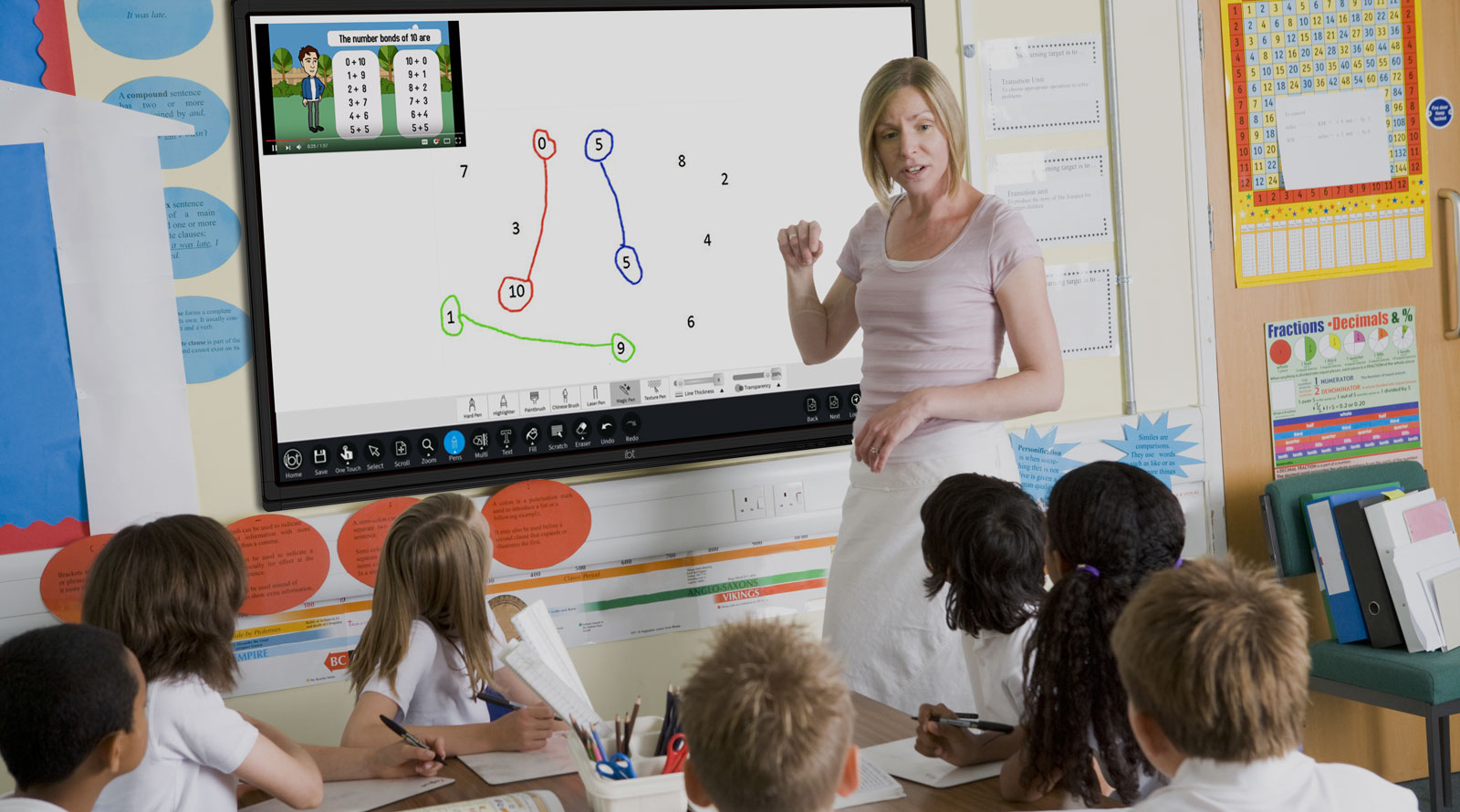
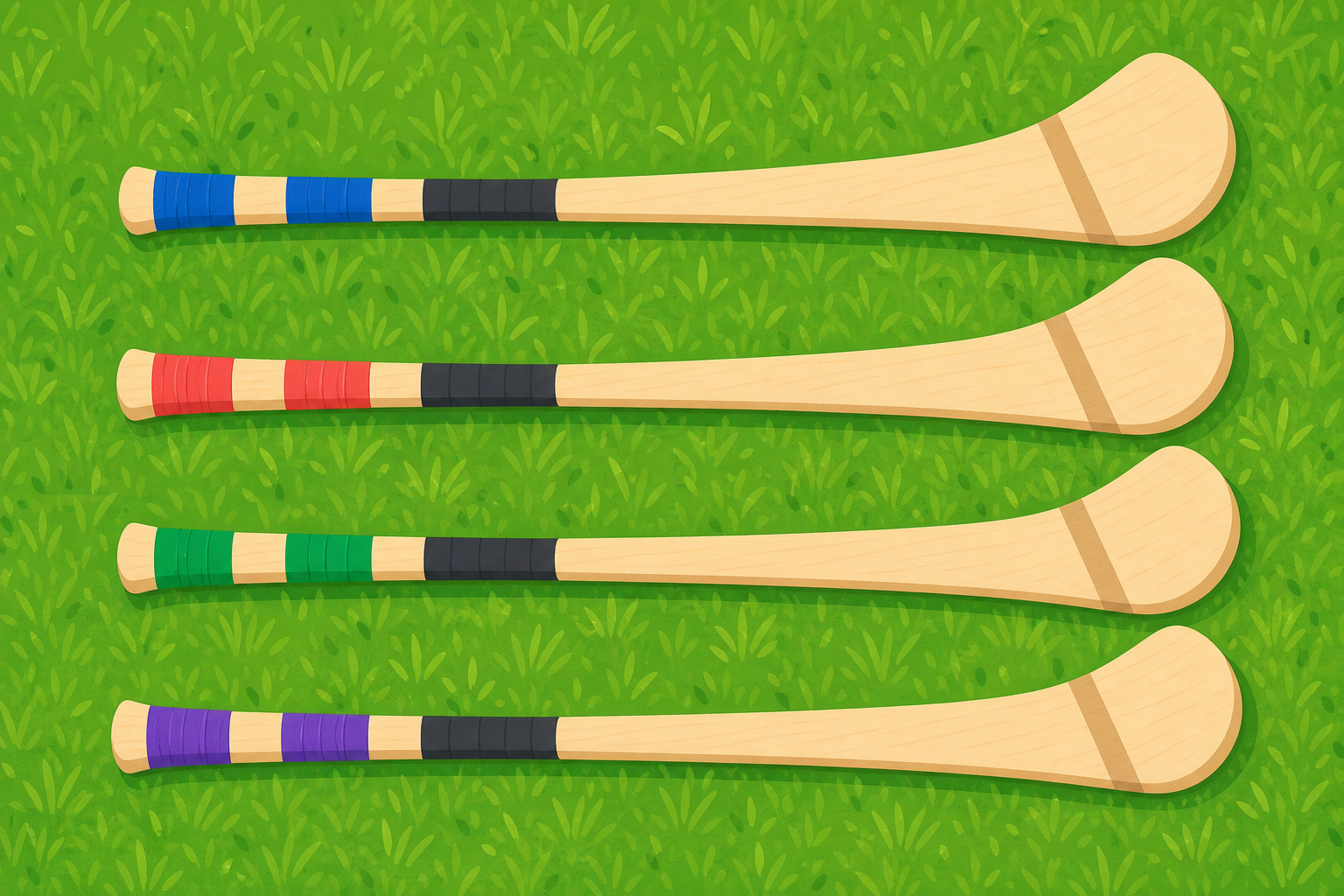
Look at these four hurleys on the screen. Each one has two grip bands wrapped around the handle. Hands up: how could we count how many grip bands there are altogether, without pointing at every single one?
There are four groups, and every group has the same number in it: two. When the groups are all the same size, there is a quick way to count them, and that is what we will learn today.
The hundred square shades the count for you: first twos, then tens, then fours. Read each count aloud and watch which numbers light up and what shape they make on the grid. Before the tens appear, predict how many columns you will see.
Now we shade the counts one table at a time on the board: first the multiples of 2, then the multiples of 10, then the multiples of 4. One pupil comes up and shades on the board while the rest of us watch and skip-count aloud together to check the total, and we read off the multiplication fact it shows.
Watch what stays the same and what changes as we move from one table to the next, so you can predict the pattern before it appears.
First watch one full table written on the board so you can see the method: start at the top with 1 × 2 = 2, then under it 2 × 2 = 4, and keep going one fact under the other until 10 × 2 = 20. That is the 2-times table written in full.
In your maths copy, write the 2-times table in full the same way, one fact under the other, all the way to ten twos. Beside it write the 4-times table in full, and beside that write the 10-times table in full, each all the way to ten.
Now look at the 2s and the 4s carefully and ring every answer in the 2s that also appears in the 4s.
You're previewing this lesson. Get full access to this lesson and hundreds more — each one ready to teach, with interactive activities, printable resources and pupil progress tracking built in.