 You already know how to judge whether a source looks reliable. Today's question is different. When something online is wrong, was it an honest mistake, or did someone mean to mislead you?
You will sort cases into misinformation, disinformation, or true but misleading, and explain each choice. Then you will talk about why intent, meaning what the person was trying to do, changes how you should respond.
- Misinformation is false information shared by someone who thinks it is true, so it is an honest mistake.
- Disinformation is false information made up or shared on purpose to fool people, so it is a trick.
- True but misleading means real facts are used to give you the wrong idea.
The difference between misinformation and disinformation is intent, meaning what the person was trying to do. True but misleading is about the content: the facts are real, but they give the wrong picture, and that can be shared by mistake or on purpose.
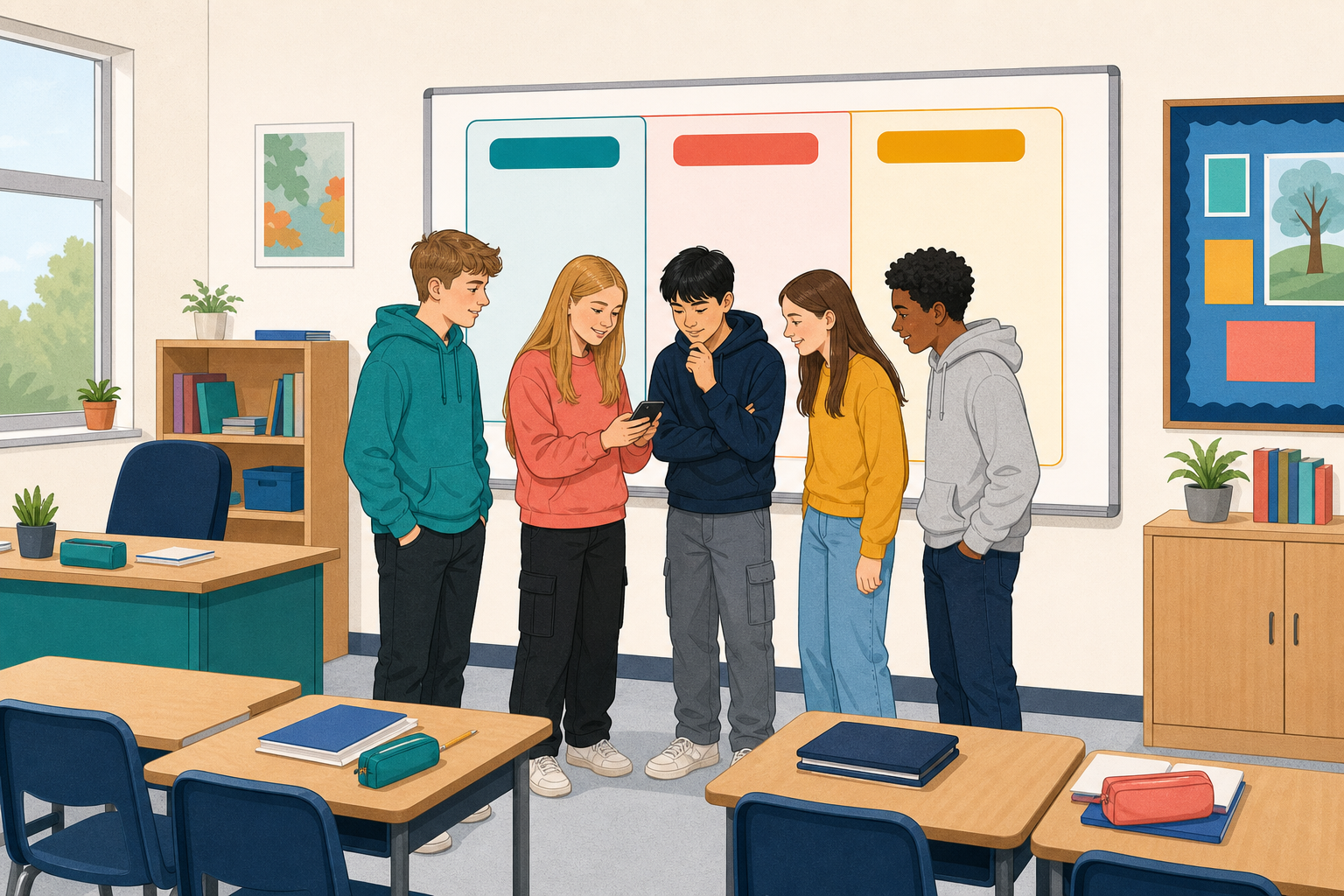 Work with a partner. One of you makes up a one-line false claim for a group chat, and the other says whether it sounds like a mistake or a trick, and why. Do not make it about anyone you know.
"Bus is cancelled tomorrow, my cousin said."
"Free concert tickets if you share this link."
Or make one up about a wrong match time, a shop that is not really closing, or a mixed-up exam date.
Your teacher will use the activity below on the board to sort the first case with the class, so you do not need to drag anything yet. In the next step, Class Play, you will sort all six cases on your own device, so leave the sort on your own screen until then: a drag shows the answer. Each case goes into the bucket that fits it best.
For every case, be ready to answer these questions.
- What is false, wrong or twisted here?
- Does it look like an honest mistake, a trick done on purpose, or a true detail used to mislead?
- What extra evidence would make you change your mind?
Your reasons matter most, so be ready to explain your choice.
Mistake, trick, or true but twisted?
Your teacher will put a game code on the board: type it in on your device to join. Now everyone sorts all six cases on their own device. The first is the one you just did, so round 1 is a warm-up.
You can change your answer until the time runs out. You also choose how sure you are: just checking, fairly sure, or certain. The more sure you say you are, the more points you win if you are right, and the more you lose if you are wrong. Your answers count towards your team's score, and the game puts you in a team at random.
When a round closes, the board shows how the class answered and which bucket the case belongs in. Then your teacher will ask why, because explaining your answer matters more than getting it right.
Class Play
Unlock the full learning experience
You're previewing this lesson. Get full access to this lesson and hundreds more — each one ready to teach, with interactive activities, printable resources and pupil progress tracking built in.
This lesson is copyright of 123Learn.ie 2017 - 2026. Unauthorised use, copying or distribution is not allowed.