STE
Intermediate
75 mins
Teacher/Student led
+90 XP

What you need:
IWB/Projector/Large Screen

Microhabitats and Adaptation

Survey minibeasts across three school-ground microhabitats, record which creatures live in each, and explore how their bodies suit them to their homes.
Teacher Class Feed

Load previous activity

    1 - Getting Started ~5 mins

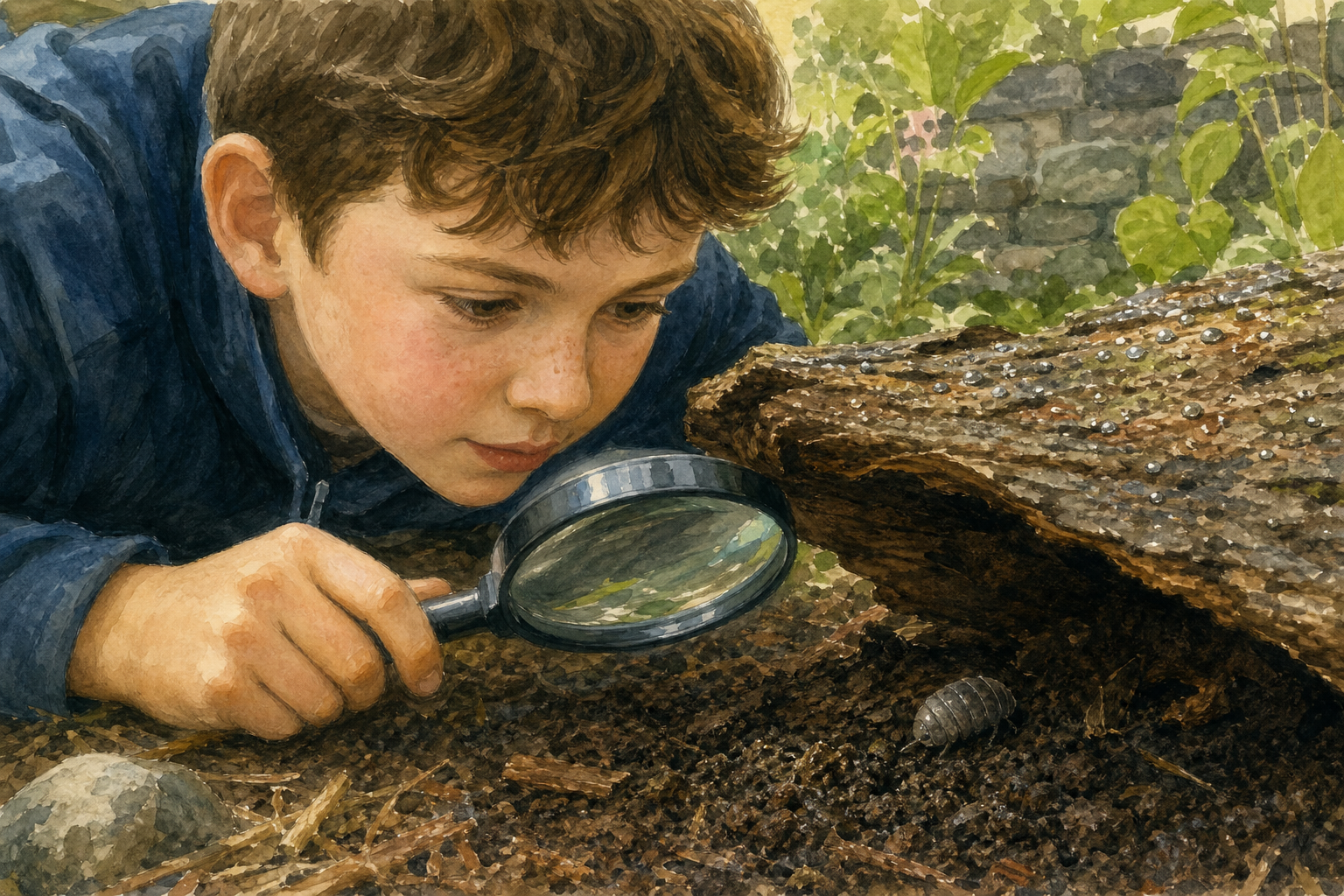
    Illustration for Getting StartedWhere do you think you would find a woodlouse: out in the open sunshine on a wall, or in the dark damp under a log? And where would a sun-warmed wall spider rather be? Hands up your guess.
    Today's mission

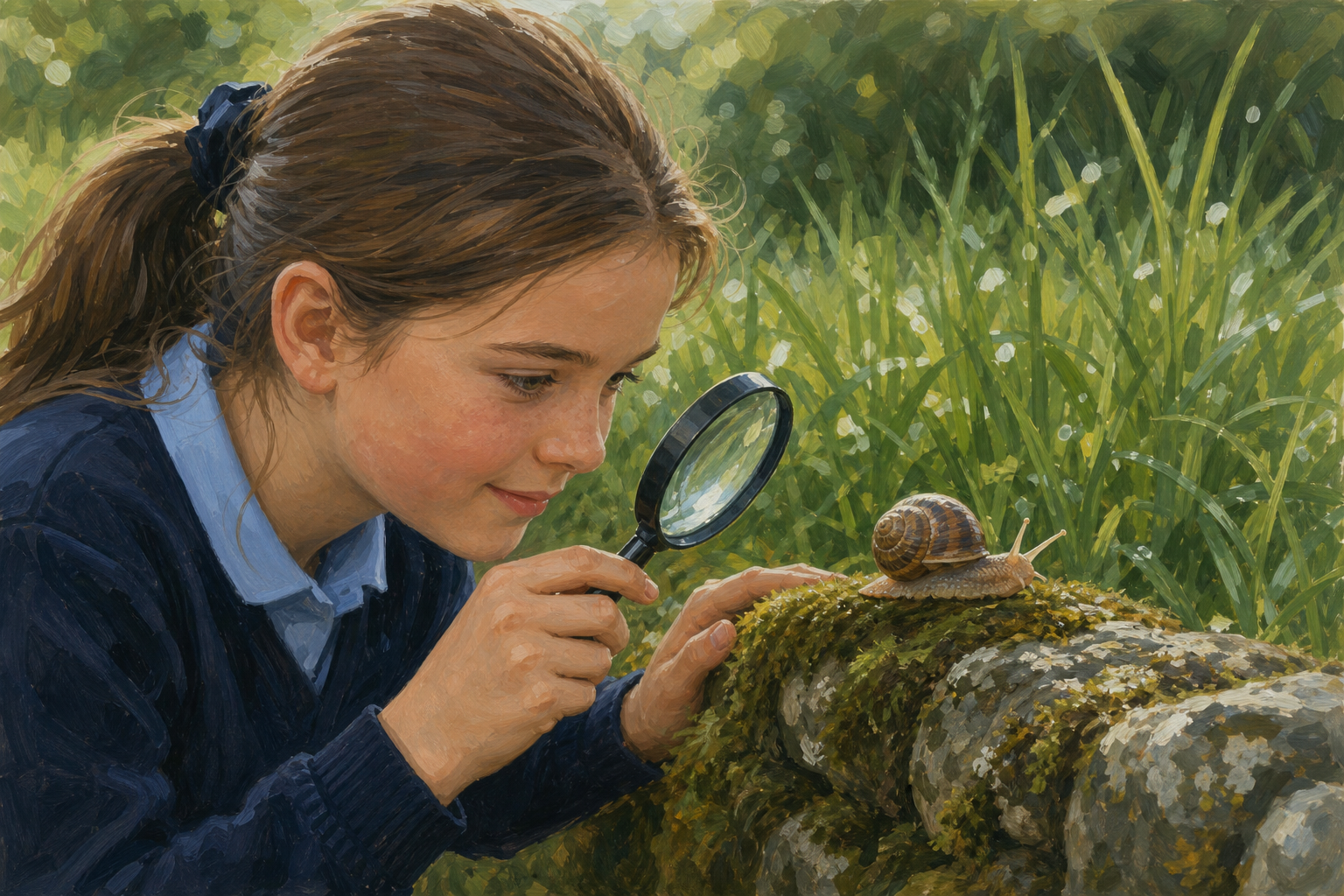
    Today we are going to be field ecologists. We will visit a few different little corners of our school grounds and find out which tiny creatures live in each one, and why those creatures choose those exact spots.

    2 - Question and Predict ~7 mins

    Here is our question for the day: Do different little creatures live in different microhabitats, and why?

    Note

    A microhabitat is a small place with its own conditions: under a log is dark and damp, the long grass is cool and sheltered, and a sunny wall is warm and dry.

    Before we go outside, talk in your group: which creatures do you predict we will find under a log? In the grass? On a wall? Say why you think so.

    3 - What We Are Looking for ~8 mins

    Illustration for What We Are Looking ForBefore we head out, let's learn the three big words for today, then we'll read our minibeast ID sheet together.
    ConceptWhy it mattersExample
    Microhabitat — a small place with its own conditions where particular living things liveDifferent little spots offer different conditions, so different creatures make their homes in eachUnder a log is dark, cool and moist; a sunny wall is warm and dry; the long grass is cool and sheltered
    Adaptation — a body or behaviour feature that suits a creature to where it livesA creature's features are not random: they help it survive in its own spotA worm's soft, smooth body lets it slide through soil; a slug's soft, moist body keeps it in the damp shade
    Suited to its habitat — well matched to a place, so the creature finds the food, shelter and conditions it needsIt explains why we keep finding the same kinds of creature in the same kinds of placeA slug stays in the damp shade under a log because its soft, moist body would dry out on the open sunny wall
    Key point

    In a moment your group will get a printed minibeast ID sheet to take outside. Use it to name what you find, and look for the one feature on each creature that helps it live where it does.

    4 - Minibeast Hunt Across Microhabitats ~29 mins

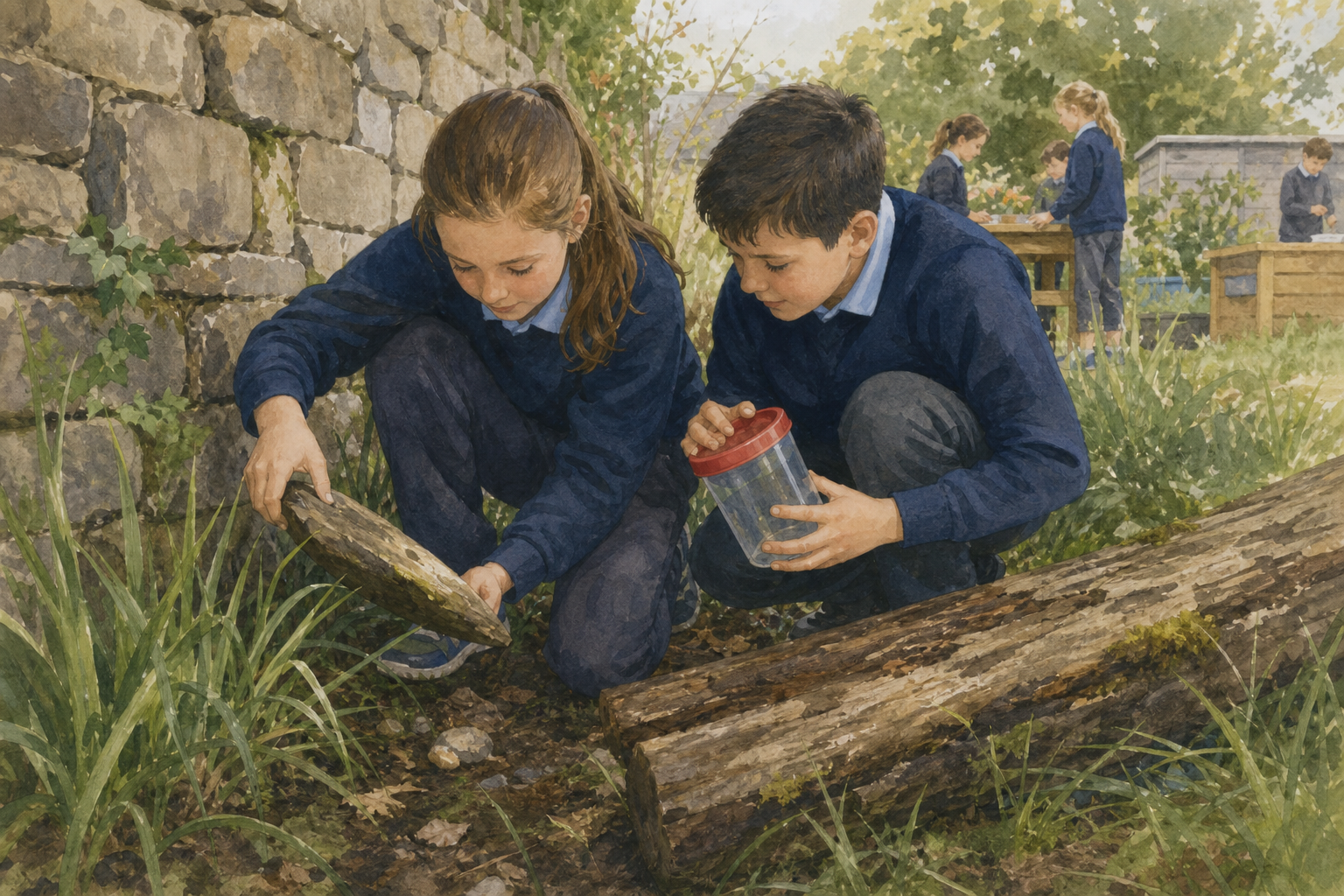
    Illustration for Minibeast Hunt Across MicrohabitatsTime to be ecologists. In your group, visit each of our three microhabitats in turn: under a log or stone, in the long grass, and on a wall or fence. Your teacher will point out the exact spots in our grounds and the order to visit them before we go. At each spot, look carefully with your magnifier and use the ID sheet to name what you find.

    Key point

    On your Observation Sheet, record three things for each creature: where you found it (which microhabitat), what it was, and one note about why it might suit that spot (damp, dark, warm, sheltered).

    Watch out

    Lift logs gently, look, then lay them back exactly as they were. Every creature goes home where you found it.

    5 - Sort the Minibeasts We Found ~8 mins

    Back inside, let's sort the creatures we found by their features. On the screen we have our minibeasts, and we will send each one down a yes/no key to find its group.

    Key point

    The questions are Does it have legs? and then How many legs?, sorting our creatures into no legs, 6 legs, 8 legs and many legs. Call out the answers and watch where each creature lands.

    Sort the minibeasts we found

    6 - Make Sense: Why Lives Where ~6 mins

    Let's pool what we found. As a class, we will fill in which creatures turned up in each microhabitat, then talk about why.

    Key point

    Look at the pattern: were the soft, moist creatures mostly in the damp dark spots? Were the dry-loving ones up on the warm wall? What does this tell us about how a creature's features suit it to where it lives?

    7 - What We Learned ~4 mins

    Today we found that living things are suited to where they live. A creature's body and behaviour, its adaptations, match the conditions of its microhabitat: soft moist bodies in the damp shade, dry-loving bodies up on the warm wall.

    Key point

    Today we found that living things are suited to where they live. A creature's body and behaviour, its adaptations, match the conditions of its microhabitat: soft moist bodies in the damp shade, dry-loving bodies up on the warm wall.

    Discuss with your class: if you found a brand new creature with a flat body and pincers, which microhabitat would you predict it lives in, and why?

    Pupil practice · Investigation Journal
    Module 1 · Living Things: Ecosystems, Biodiversity and a Sustainability Action
    Lesson 1 · Microhabitats and Adaptation
    Download Investigation Journal sheet (PDF)
    End of lesson
    123learn · Online learning platform

    Unlock the full learning experience

    You're previewing this lesson. Get full access to this lesson and hundreds more — each one ready to teach, with interactive activities, printable resources and pupil progress tracking built in.

    Hundreds of curriculum-aligned lessons
    Interactive activities in every lesson
    Printable resources & progress tracking
    Copyright Notice
    This lesson is copyright of 123Learn.ie 2017 - 2025. Unauthorised use, copying or distribution is not allowed.
    🍪 Our website uses cookies to make your browsing experience better. By using our website you agree to our use of cookies. Learn more