Mathematics
Advanced
50 mins
Teacher/Student led
+95 XP
Teacher-led from the board. Pupils do not need a device, but can follow on one.
Measuring Precisely and Ranking by Length
Estimate measurements first, then read length, mass and capacity precisely using the correct instrument and scale divisions. Rank real edges by length and explore where measurement error occurs.
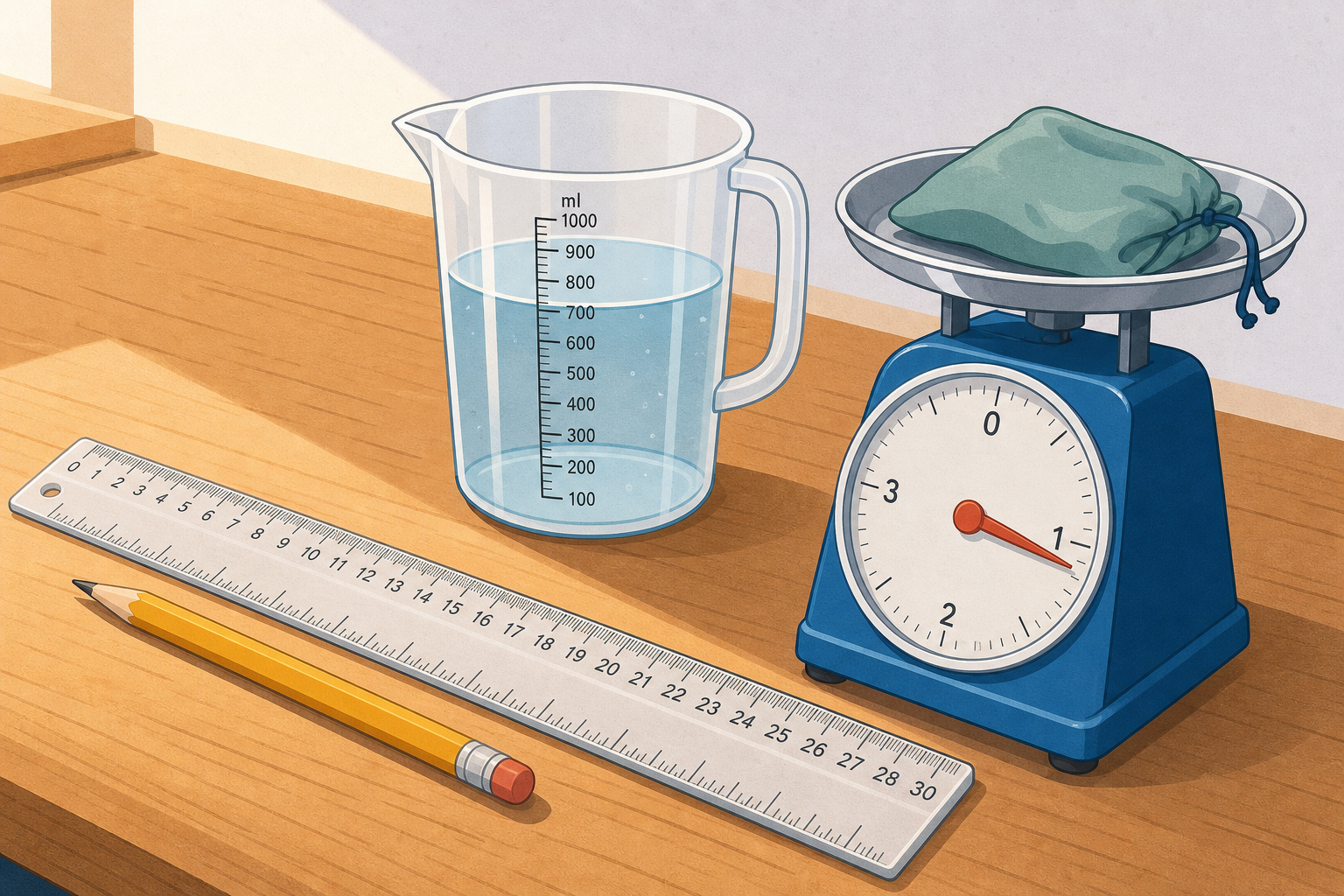 Here are three instruments, and on each one the pointer has stopped between two marks: a ruler measuring a pencil, a jug of water, and a weighing scale with a bag on it. What is each one reading? And how did you decide about the marks that have no number written on them?
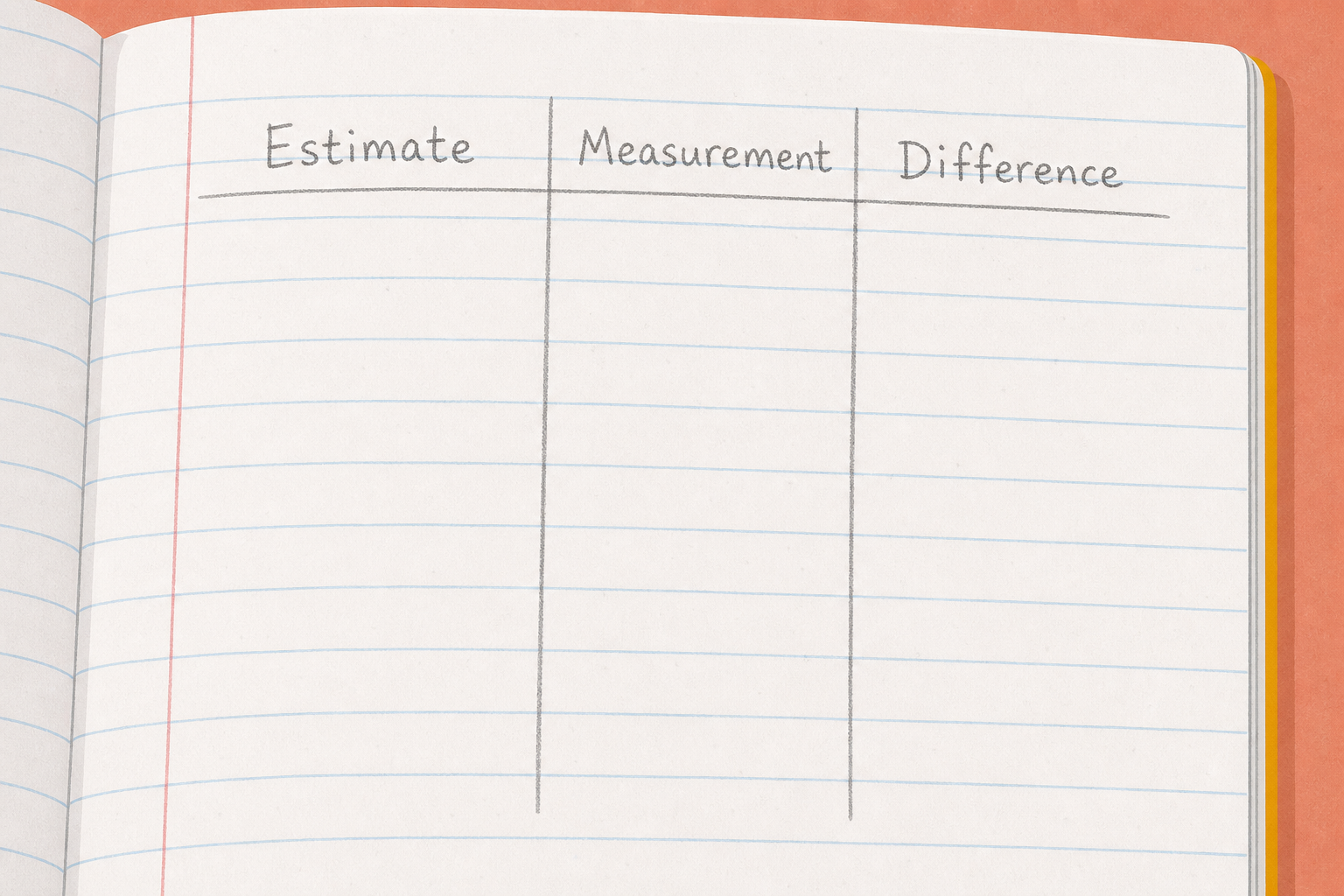 In your maths copy, make three columns: your estimate, your precise measurement, and the difference between them. Record each of your three items — the length, the mass and the capacity — one to a row. Write the unit beside every number.