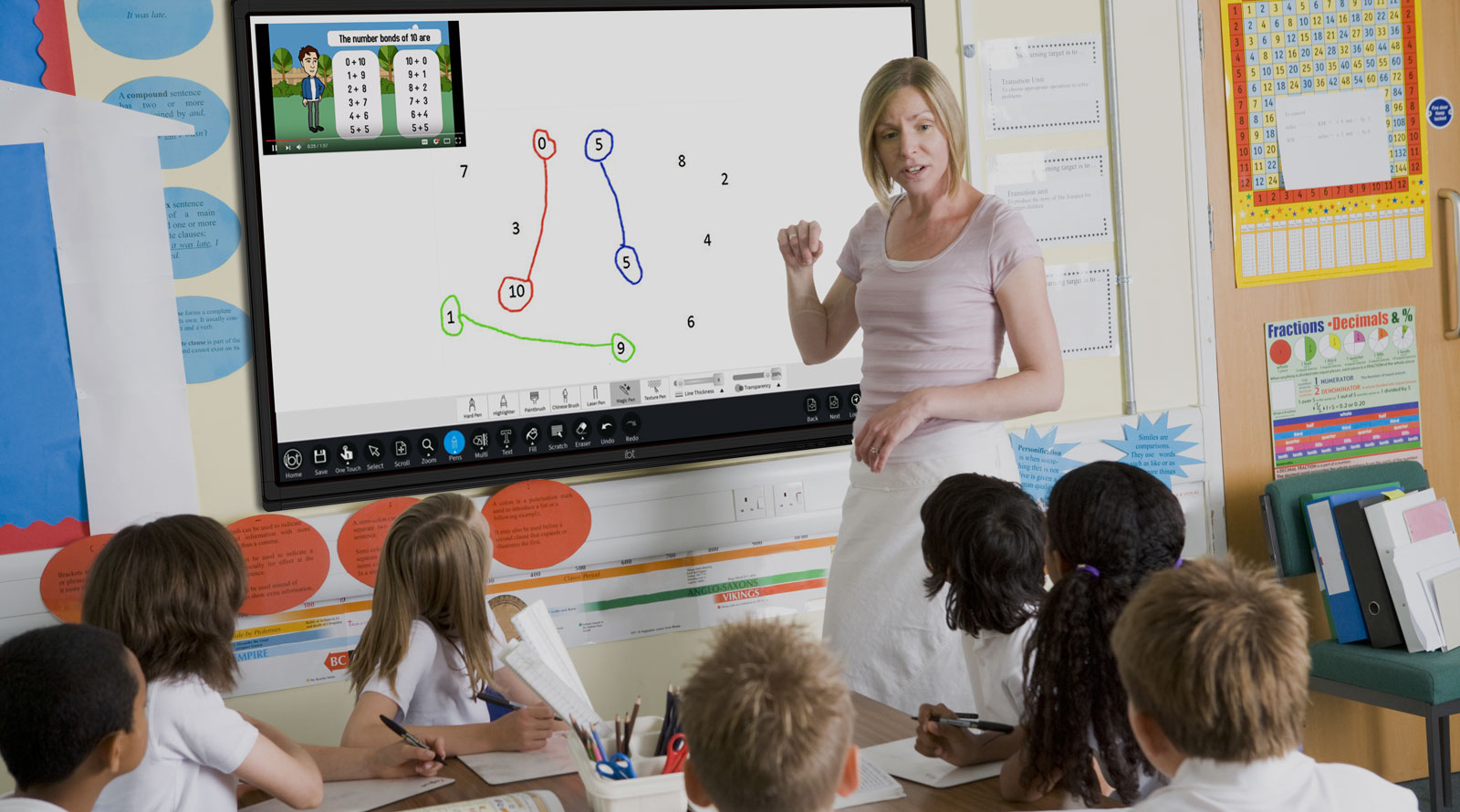
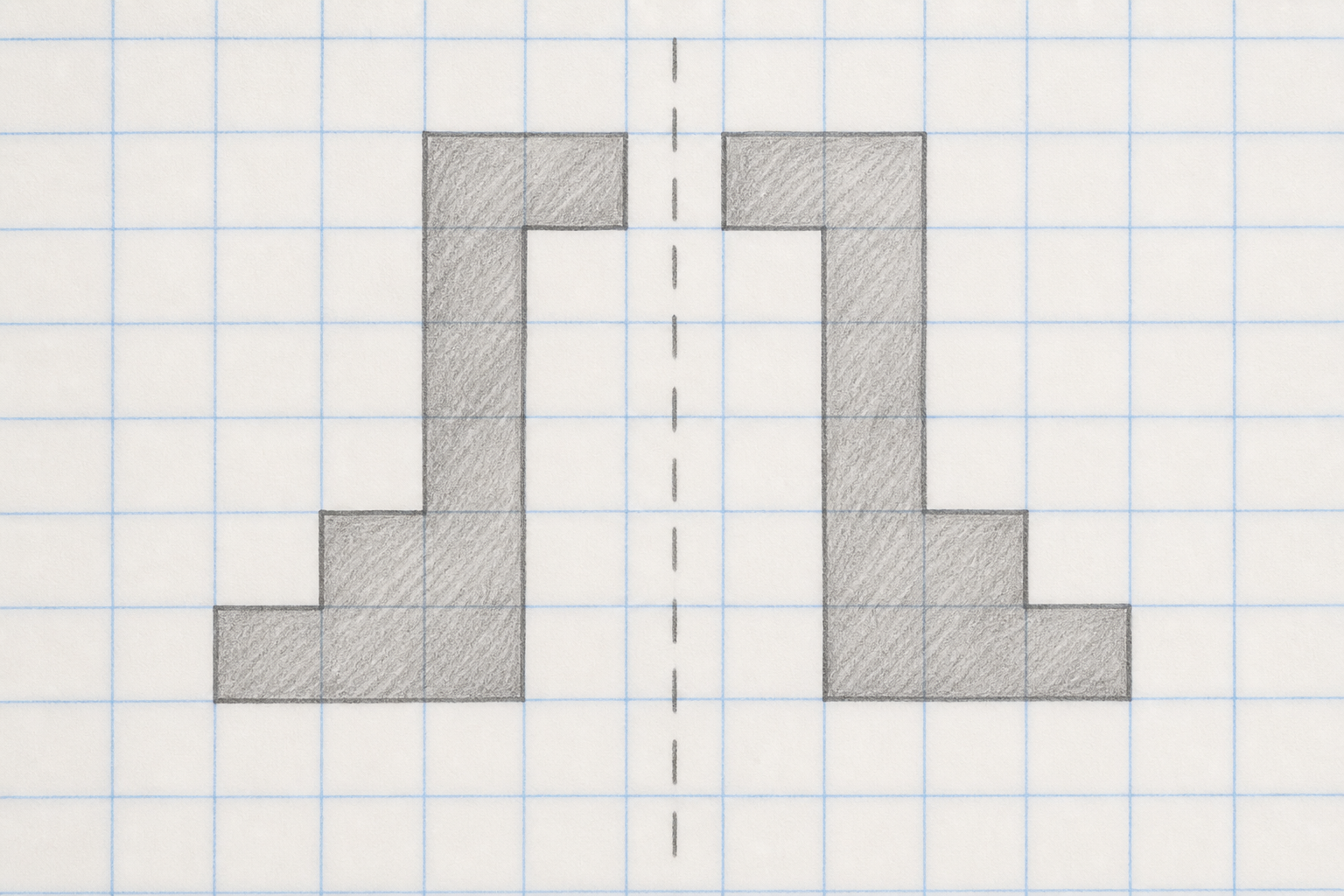
I have a tile design on the grid. It was built by flipping and sliding one small shape, and it has a mirror line down the middle.
Which moves do you think made it: flips, slides, or turns? And where on the grid do you think each piece sits?
Two boards, and they belong together.
First, a symmetrical design. Each shaded square on the left has a matching square the same distance on the other side of the mirror line. Symmetry tells you where the partner square is.
Now three points on the co-ordinate grid. We read each one across first, then up, and write it as (across, up). A grid reference is how you name a square.
Key point Today we need both at once. To flip a point across a mirror line you have to find where it lands, and then say its name so somebody else can find it too.
Here are two points, A and B, and B is the mirror image of A. That means a vertical mirror line sits exactly halfway between them. This step is about finding that mirror line.
First say A's and B's grid references out loud, across first, then up. Count the squares from A to B, find the halfway point, and plot it. Then press Check. The mirror line runs straight up and down through the point you plotted, so say how many across it is.
We do three of these together. A pupil plots each one and the class agrees before Check.
Our mirror line is the vertical line at 5 across, and you can see it on the grid.
How a reflection works. Count the squares from the point to the mirror line. Count that same number of squares past the line on the other side. That is where the point lands. The up number never changes in a vertical mirror, only the across number does.
We do these one at a time. Say the new reference aloud, across first, before the pupil at the board taps it in, and the class agrees before we start the next one:
You're previewing this lesson. Get full access to this lesson and hundreds more — each one ready to teach, with interactive activities, printable resources and pupil progress tracking built in.