STE
Beginner
60 mins
Teacher/Student led
+85 XP

What you need:
IWB/Projector/Large Screen

Living, Once-living or Never-living?

Sort objects into three groups: living things, things that were once alive, and things that have never been alive. Use observation and questioning to justify each choice.
Teacher Class Feed

Load previous activity

    1 - Getting Started ~5 mins

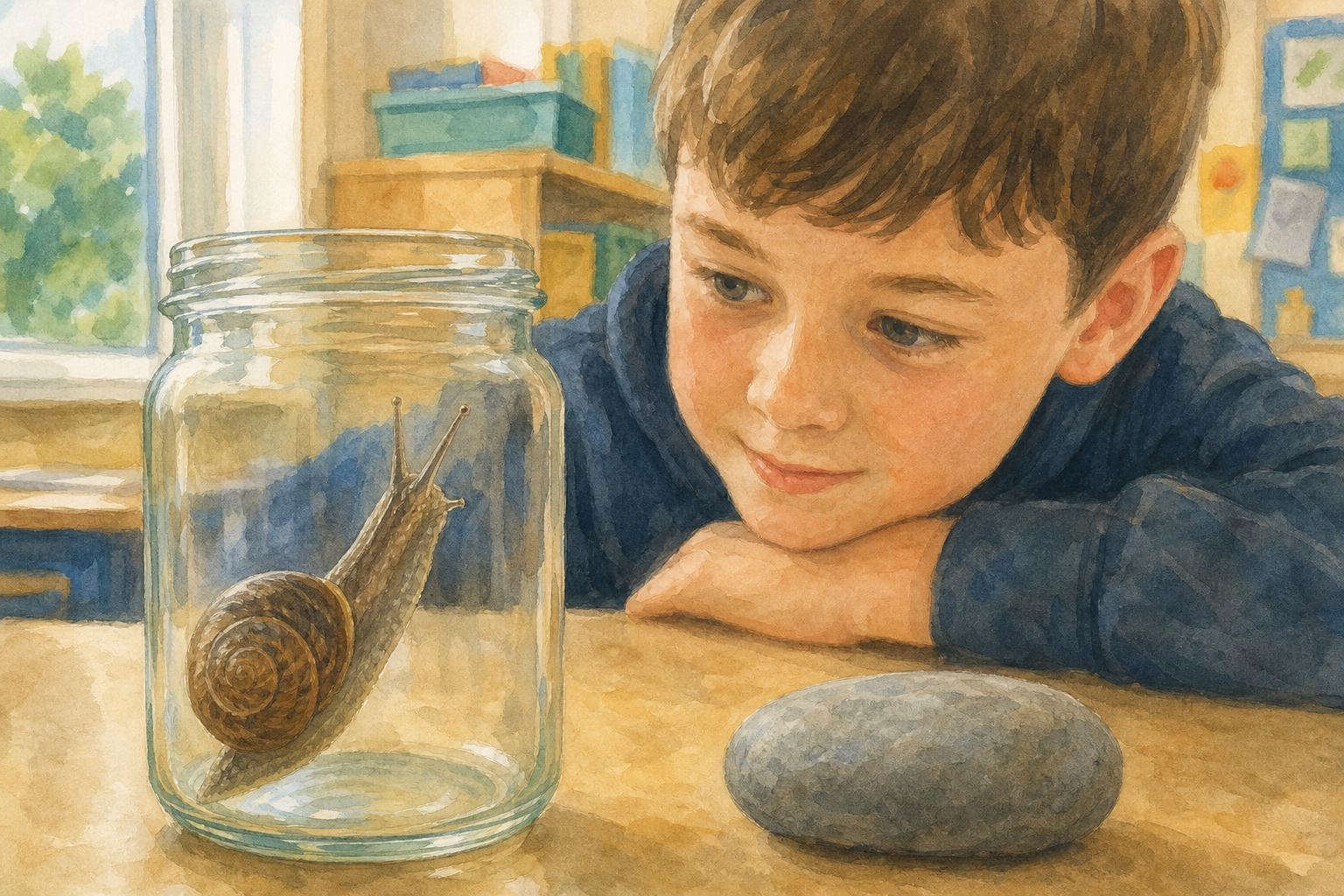
    Illustration for Getting StartedLook at the snail in the jar. Is it alive? How can you tell? Now look at the stone beside it. Was the stone ever alive? Today we are going to be careful scientists and sort lots of things into three groups: things that are living, things that were once-living, and things that are never-living. The tricky part is the middle group, so get your wondering brains ready!
    2 - Our Three Groups ~6 mins

    Scientists sort things to understand them. We have three groups today. Read them with your teacher and look at the clue and the example for each one.

    ConceptA clueExample
    Living — alive right nowIt moves, grows, and needs food and water by itselfA snail crawling across a leaf, or a little plant growing on the windowsill
    Once-living — used to be aliveAsk: where did it come from? It grew on a plant or an animalA fallen oak leaf, a feather, or a wooden lolly stick (wood comes from a tree)
    Never-living — never aliveIt was never part of a plant or animal: people made it or it is a rockA stone from the yard, or a plastic toy made in a factory

    3 - The Teacher Sorts One Tray ~7 mins

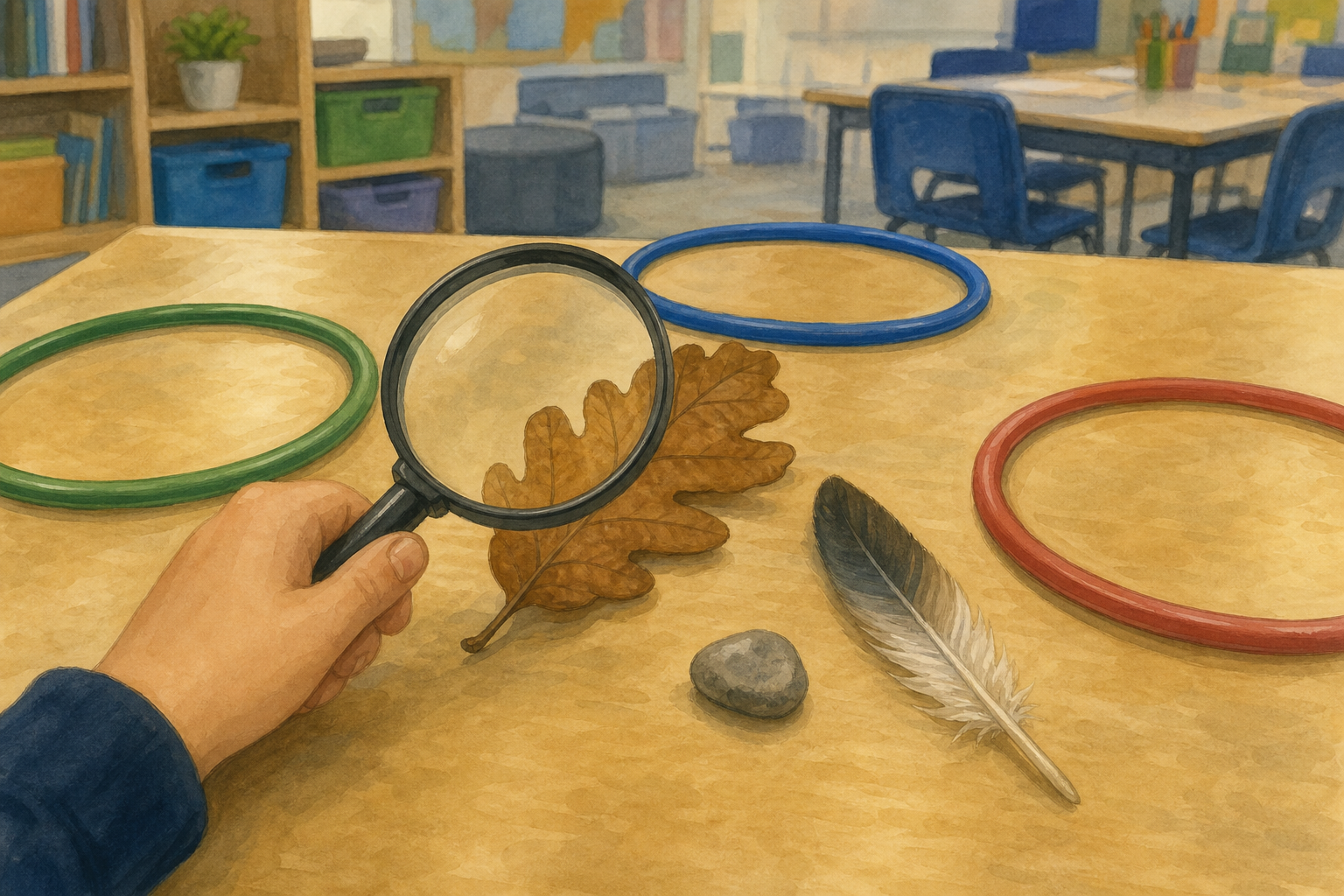
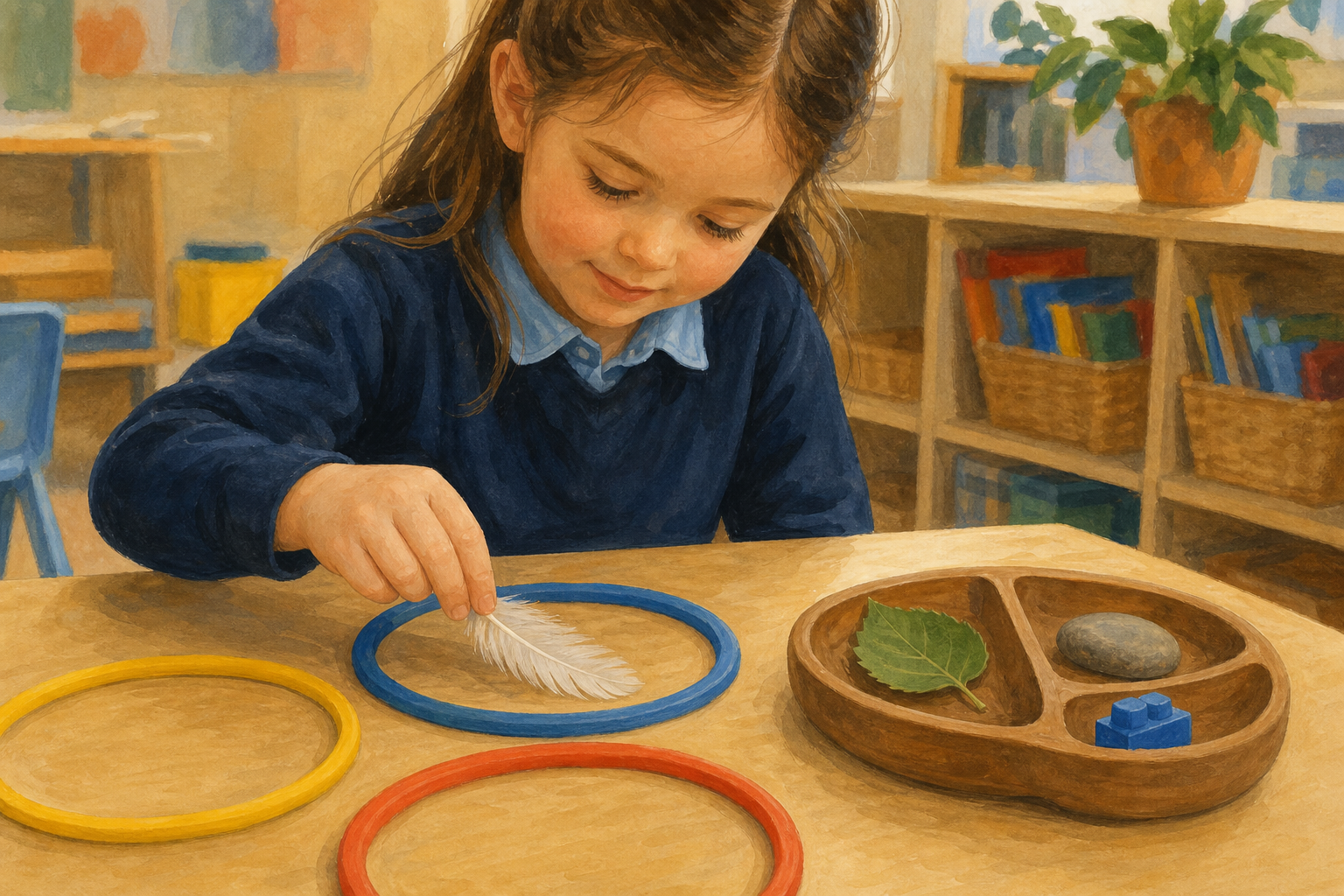
    Illustration for The Teacher Sorts One TrayWatch carefully. I am going to be a scientist and sort some things into the three hoops. I will tell you what I notice and what I think for each one.
    Tip

    Let's listen to how a scientist thinks out loud before we have a go ourselves.

    4 - Sort Your Tray ~14 mins

    Illustration for Sort Your TrayNow it is your turn. In your group you have a tray of things: a small plant, a card with a snail photo, a fallen leaf, a feather, a stone and a plastic toy. Use the magnifier to look closely.

    Key point

    For each thing, talk to your group: What do you notice? Where did it come from? Was it ever alive? Then place it into the right hoop: living, once-living or never-living. Be ready to say why you put each one where you did.

    When you finish, on your Investigation Journal page draw one tricky thing and draw a line to show which hoop it went in.

    5 - Check with the Sorting Tree ~8 mins

    Let's check our thinking together on the board. Six things are waiting on screen: a plant, a snail, a fallen leaf, a feather, a stone and a plastic toy.

    The rule today

    We will take them one at a time. First, tell your group your answer to this one question: Is it alive right now? Then we will put our hands up to vote before we move it.

    Living, once-living or never-living?

    6 - What Did We Find Out? ~5 mins

    Let's talk together about what we sorted.

    Think about: Which group was the trickiest, and why?

    Discuss with your class: What is one thing you noticed that helped you decide a tricky item was once-living?

    7 - What You Covered ~3 mins

    Great sorting today, scientists! Here is what we found out:

    • Living things are alive right now: they grow, need food and water, and move or change by themselves.
    • Once-living things were once part of a plant or an animal, like a fallen leaf, a feather or a wooden stick.
    • Never-living things were never alive, like a stone or a plastic toy.
    • The clue for the tricky middle group is asking: where did it come from?
    At home

    At home: find one once-living thing and one never-living thing around your house and tell an adult how you know which is which.

    Pupil practice · Investigation Journal
    Module 1 · Living Things: Needs, Senses, Plants and Life Cycles
    Lesson 2 · Living, Once-living or Never-living?
    Download Investigation Journal sheet (PDF)
    End of lesson
    123learn · Online learning platform

    Unlock the full learning experience

    You're previewing this lesson. Get full access to this lesson and hundreds more — each one ready to teach, with interactive activities, printable resources and pupil progress tracking built in.

    Hundreds of curriculum-aligned lessons
    Interactive activities in every lesson
    Printable resources & progress tracking
    Copyright Notice
    This lesson is copyright of 123Learn.ie 2017 - 2025. Unauthorised use, copying or distribution is not allowed.
    🍪 Our website uses cookies to make your browsing experience better. By using our website you agree to our use of cookies. Learn more