Mathematics
Intermediate
38 mins
Teacher/Student led
+80 XP

What you need:
IWB/Projector/Large Screen

Line Symmetry: Finding Lines of Symmetry

Explore lines of symmetry by folding shapes so their two halves match exactly. Test whether folds are true lines of symmetry and discover that shapes can have one, many, or no lines of symmetry.
Teacher Class Feed

Load previous activity

    1 - Getting Started ~4 mins

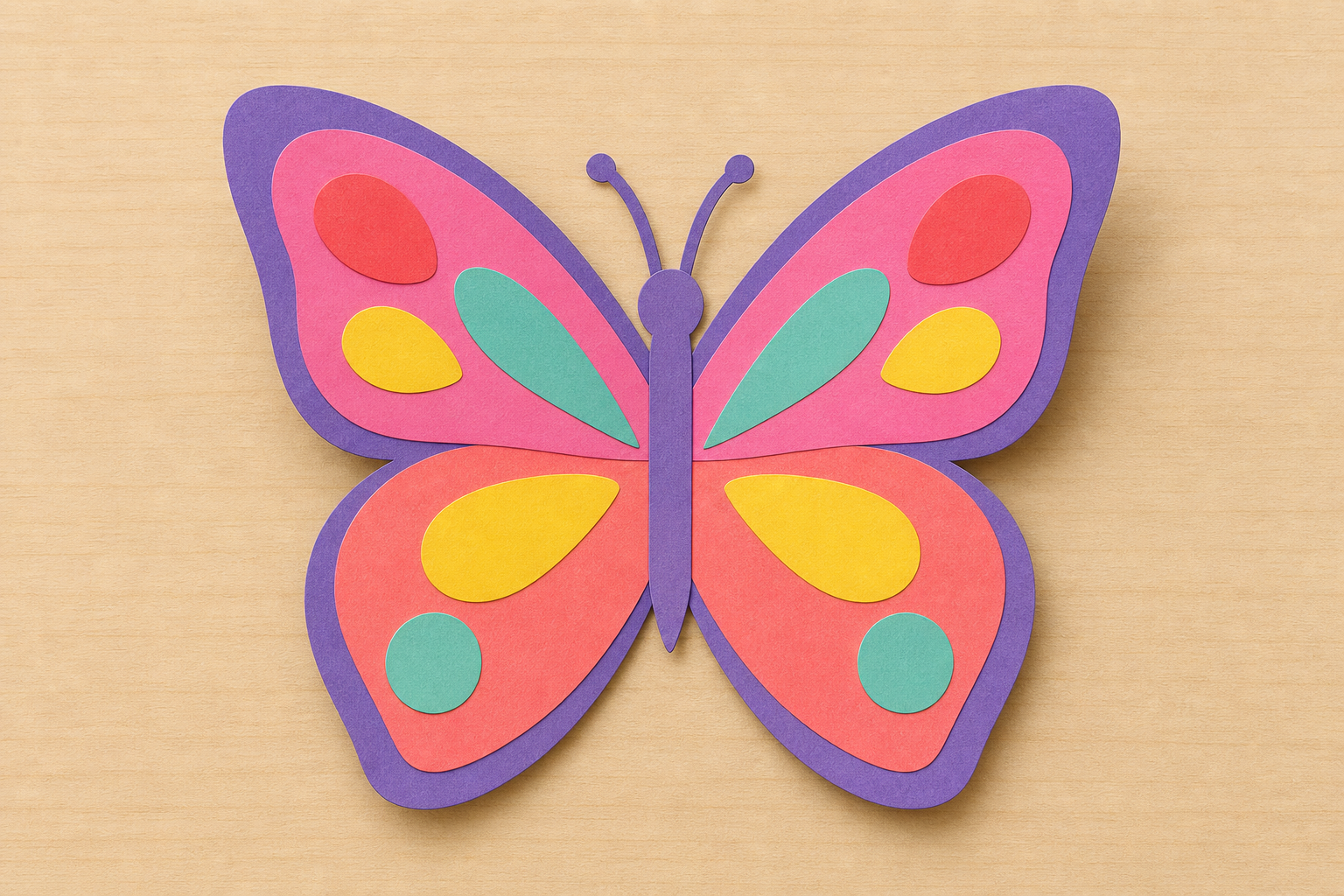
    Illustration for Getting StartedLook at this paper butterfly. If we folded it right down the middle, both wings would land exactly on top of each other.

    Where else could you fold a shape so the two halves match perfectly? Have a think before any hands go up.

    2 - Watch and Notice ~8 mins

    Illustration for Watch and Notice

    A square folds down the middle

    Watch the square on the board. There is a fold straight down the middle where both halves land exactly on top of each other. That fold is a line of symmetry. We also call it a mirror line, because each half is a mirror image of the other.

    A square has more lines than just this one. Watch me fold a paper square side to side, and then corner to corner. Each time, both halves still match. A square has four lines of symmetry in all.

    The letter A folds just once

    Now watch the letter A. There is one fold, straight down the middle, where the two halves match. When I try a slanted fold, the halves miss each other, so that slanted line is not a real line of symmetry.

    So some shapes fold to match in lots of ways, and some only fold to match once.

    3 - Try It Together ~9 mins

    Today we explore: drag the mirror line onto where you think the shape folds down the middle. Then we check, does each half land exactly on top of the other?

    On the board we will try a letter T and a heart. Then we will fold paper shapes together to find the folds that do not go straight up and down.

    Find the fold line

    4 - Draw the Lines in Your Copy ~3 mins

    COPYBOOK MOMENT

    In your maths copy, draw a square and a rectangle. Then use your ruler to draw every line of symmetry you can find on each one.

    Underneath each shape, write how many lines of symmetry it has.

    5 - Class Challenge ~7 mins

    Today we work through these shapes together: a heart, then a rectangle. For each one, find the lines of symmetry, the folds where both halves match exactly.

    Note

    At the end we will think together about a circle. How many ways could you fold a circle so the halves match?

    How many lines of symmetry?

    6 - What Did We Notice? ~3 mins

    MATHS TALK

    How can you test whether a fold is a true line of symmetry? What must the two halves do?

    7 - What's Next ~2 mins

    What we learned today

    • A line of symmetry, also called a mirror line, folds a shape into two halves that land exactly on top of each other.
    • We test a fold by checking the halves cover each other, not just by drawing any straight line.
    • Some shapes have one line of symmetry, some have several, and a circle has too many to count.

    Coming up

    Coming up

    Next we will use the mirror line to complete symmetrical pictures, building the matching half square by square.

    Pupil practice
    Module 8 · Symmetry, Location and Transformation Algebra
    Lesson 84 · Line Symmetry: Finding Lines of Symmetry
    Download Activity Book page (PDF)
    End of lesson
    123learn · Online learning platform

    Unlock the full learning experience

    You're previewing this lesson. Get full access to this lesson and hundreds more — each one ready to teach, with interactive activities, printable resources and pupil progress tracking built in.

    Hundreds of curriculum-aligned lessons
    Interactive activities in every lesson
    Printable resources & progress tracking
    Copyright Notice
    This lesson is copyright of 123Learn.ie 2017 - 2025. Unauthorised use, copying or distribution is not allowed.
    🍪 Our website uses cookies to make your browsing experience better. By using our website you agree to our use of cookies. Learn more