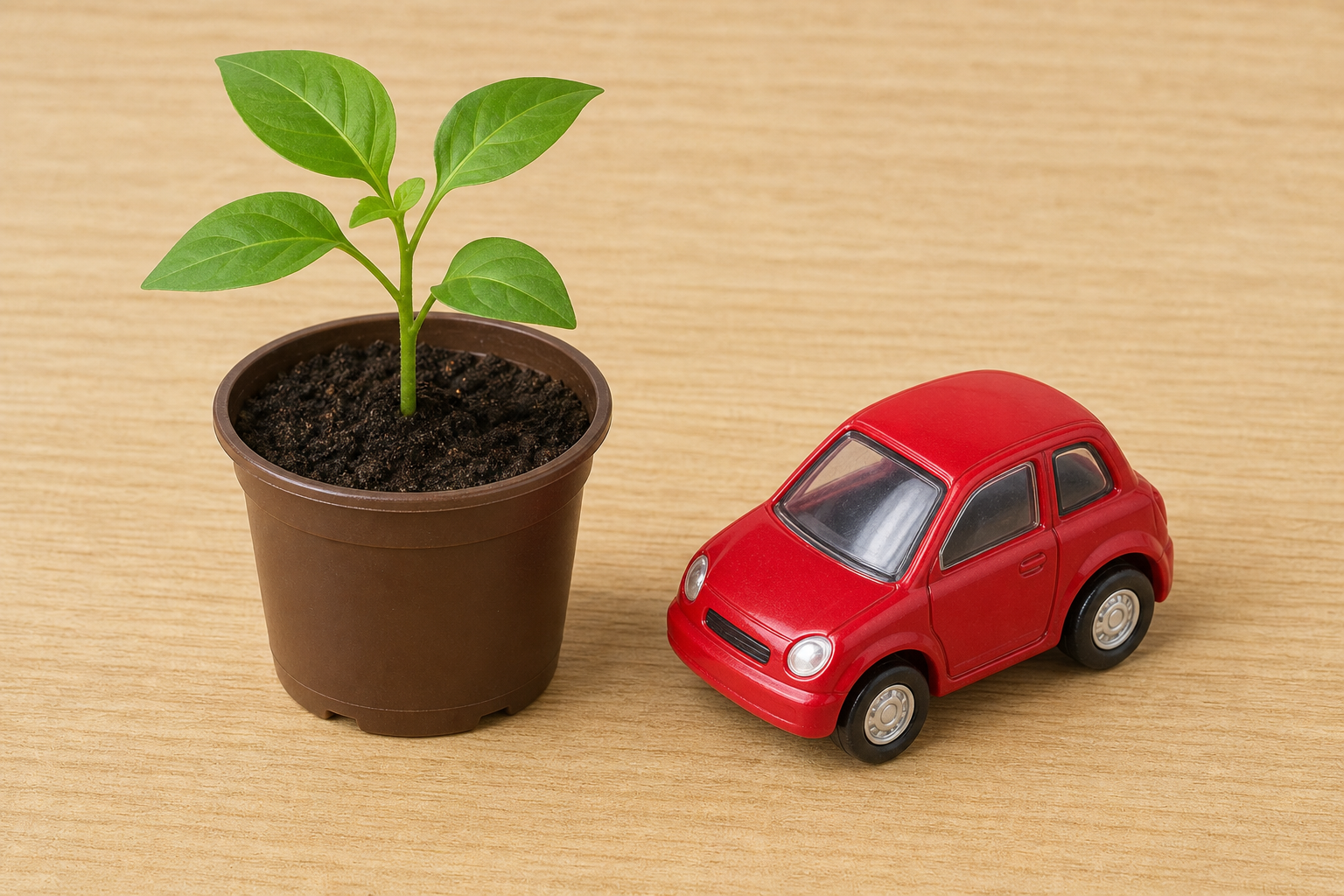
Look at what I am holding. In one hand I have a little plant in a pot, and in the other I have a stone. One of these is alive and one is not. How can we tell which is which? Hands up if you have a guess. Today we are going to be living-thing detectives and find out how we can tell living things from non-living things.
Hold up a small potted plant and a stone (or any safe living and non-living item to hand). Pose the question and take a few guesses — do not confirm answers yet. Keep this light: it is just the curiosity beat. One of these is alive. How could we tell?
Living things are alive. They grow bigger, they need food and water, and they can move or change. A snail crawls along, a daisy opens in the sun, a puppy grows into a dog. Non-living things are not alive. A stone never grows. A toy car cannot eat or drink. A teddy stays the same forever.
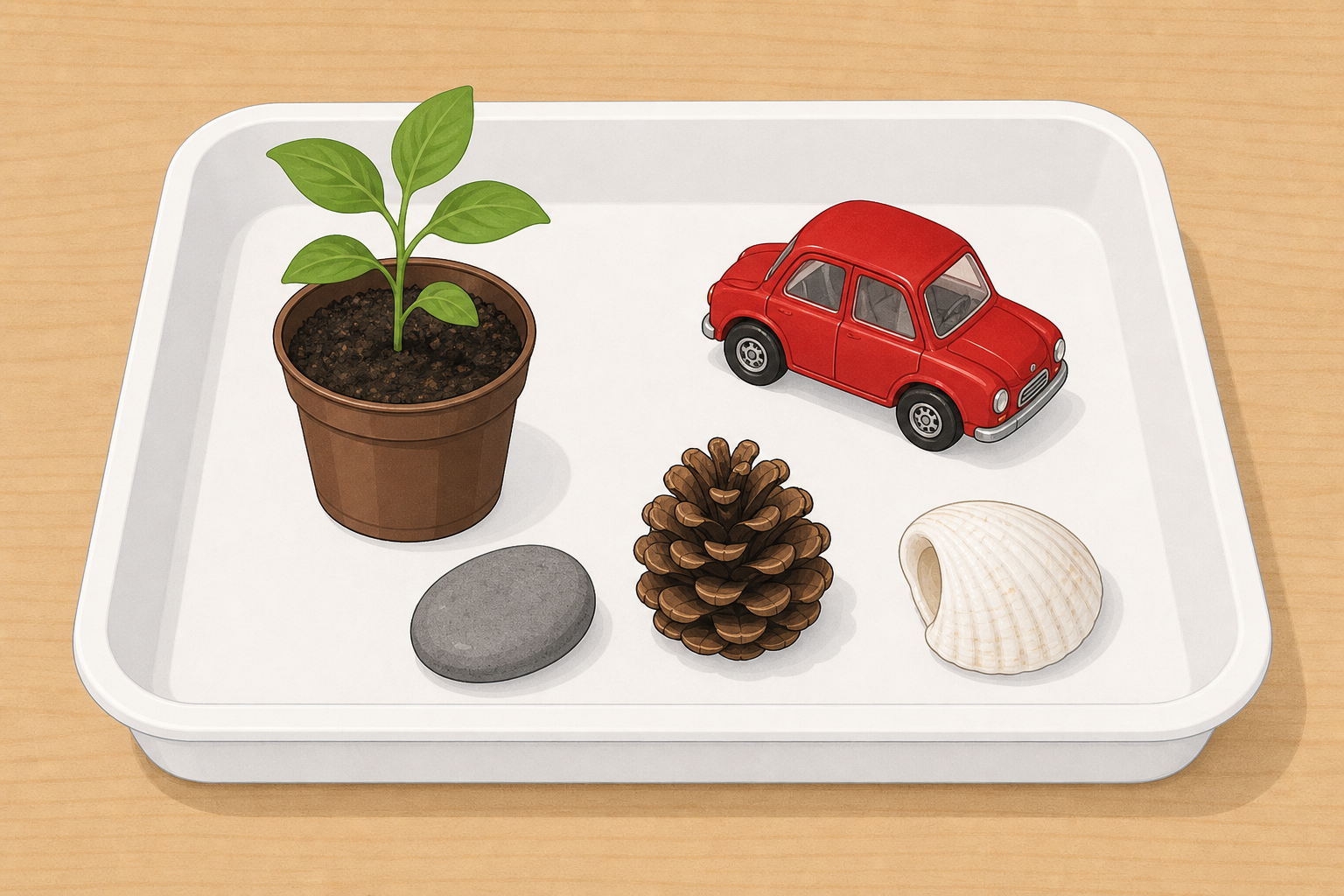
Let's predict together. Look at the tray of things. Which ones do you think are living? Which are non-living? Say one reason out loud to the person beside you.
This is the question-and-predict beat. Show the tray of real objects and photo cards (plant, snail in a tub, stone, toy car, daisy, teddy). Ask pairs to predict and give a reason — I think the snail is living because it moves. Predictions are never wrong; they start the science.
Common misconception to watch for: children often think anything that moves (a car, a clock) is alive, or that a plant is not alive because it stays still. Note these now — the sort will help untangle them.
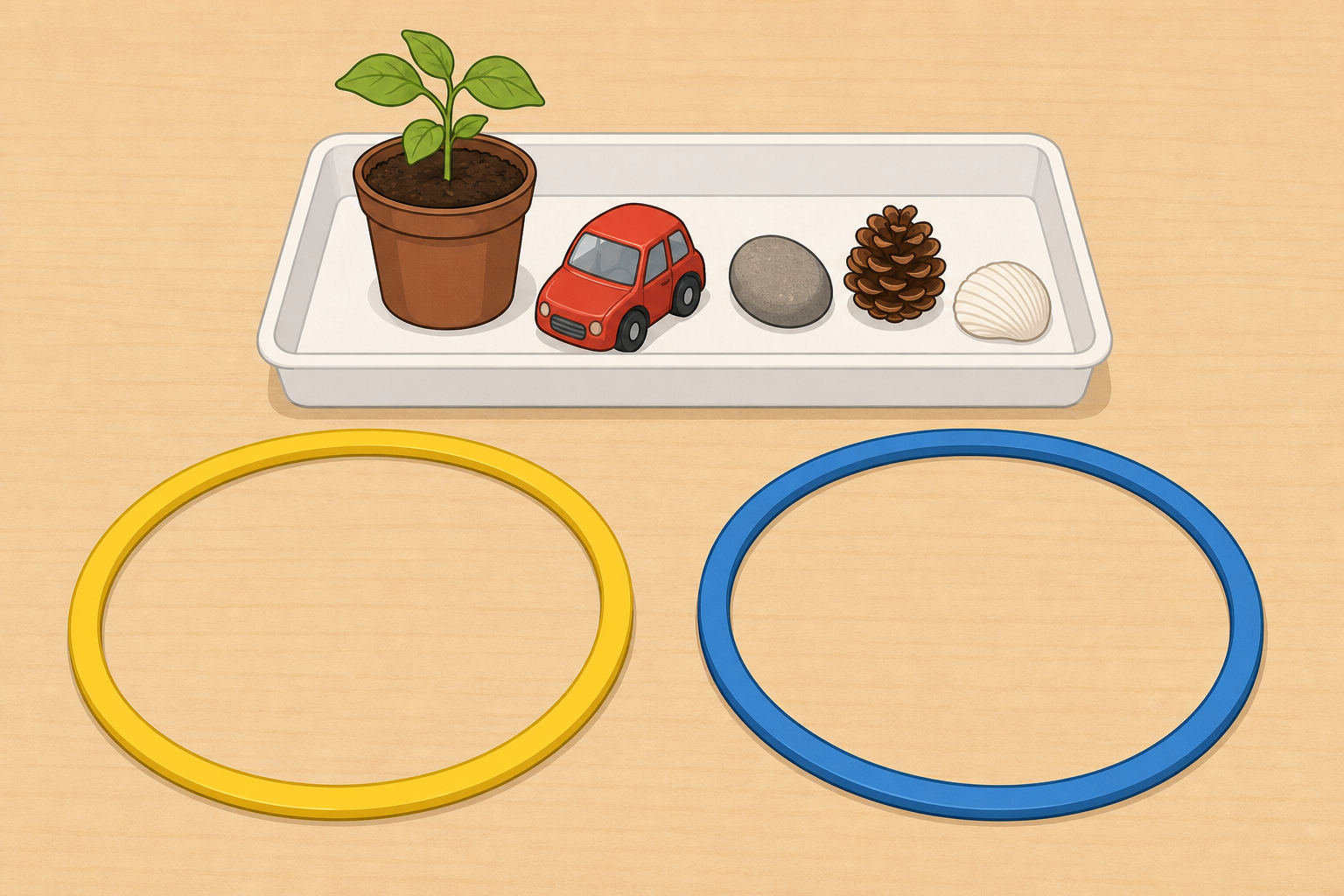
Now we will sort everything for real. We have two hoops on the table — one for living things and one for non-living things. Pick up each thing, look closely, and talk about it: Does it grow? Does it need food and water? Can it move or change? Then place it gently in the right hoop.
Handle the snail very gently and keep it in its tub. When you are sure where something goes, say your reason out loud, like a real detective.
Set up: two sorting hoops per group; the tray of real safe objects and the living/non-living photo cards shared out. Children handle each item, talk through the three tests (grows? needs food and water? moves or changes?), then place it.
Watch for: the snail and daisy are the rich talking points — a snail moves, a daisy grows and drinks water. The teddy looks like a living thing but is not alive. Ask does the teddy ever grow? does it eat?
Differentiation: support pupils by giving them the easy items first (stone, plant); stretch others by asking them to explain a tricky one (the toy car moves but is it alive?).
Wash hands after handling the snail and return it gently outdoors after the lesson.
Let's check our sorting together on the screen. Six things appear — a potted plant, a snail, a stone, a toy car, a daisy and a teddy. For each one we answer the detective question: does it grow, eat, drink, and move or change by itself? If yes, it is living. If no, it is non-living. Call out where each one belongs and watch it drop into the right group.
Drive the sorting-tree on the IWB. The six items are potted plant, snail, stone, toy car, daisy, teddy. The single yes/no question is Is it alive — does it grow, eat and drink?, sorting into two groups: living and non-living. Pupils call out the answer for each; fold in the watchers by asking are they right? why?
Misconception to head off: the toy car and the snail both move, but only the snail grows, eats and drinks. Use this pair to make the point that moving alone does not make something alive.
Now draw what you found out. On your page there is a living side and a non-living side. Draw two or three things you sorted on the correct side. Beside one of them, draw or write one reason it goes there — maybe it grows, or maybe it never eats.
Hand out the Investigation Journal page (a living · non-living sorting grid). Pupils draw the things they sorted on the correct side and mark one reason for at least one of them. Sentence starter to say aloud: The snail is living because…
Keep it short and concrete — drawing the sort is how the children record their thinking at this age.
Let's talk about what we noticed. Which things were easy to sort? Which were tricky? The teddy looked alive but it never grows or eats, so it is non-living. The snail and the daisy are living because they grow, need food and water, and can move or change.
Your noticing task at home: find three living things and three non-living things around your house, and be ready to tell us one of them next time.
Display-only make-sense and wrap-up. Revoice pupil thinking: moving alone does not make something alive — a car moves but never grows or eats. Surface the toy car and teddy as the trickiest, and confirm why each is non-living.
Set the home noticing task aloud: find three living and three non-living things at home. Pack the kit away, wash hands, and return the snail gently outdoors.
You're previewing this lesson. Get full access to this lesson and hundreds more — each one ready to teach, with interactive activities, printable resources and pupil progress tracking built in.