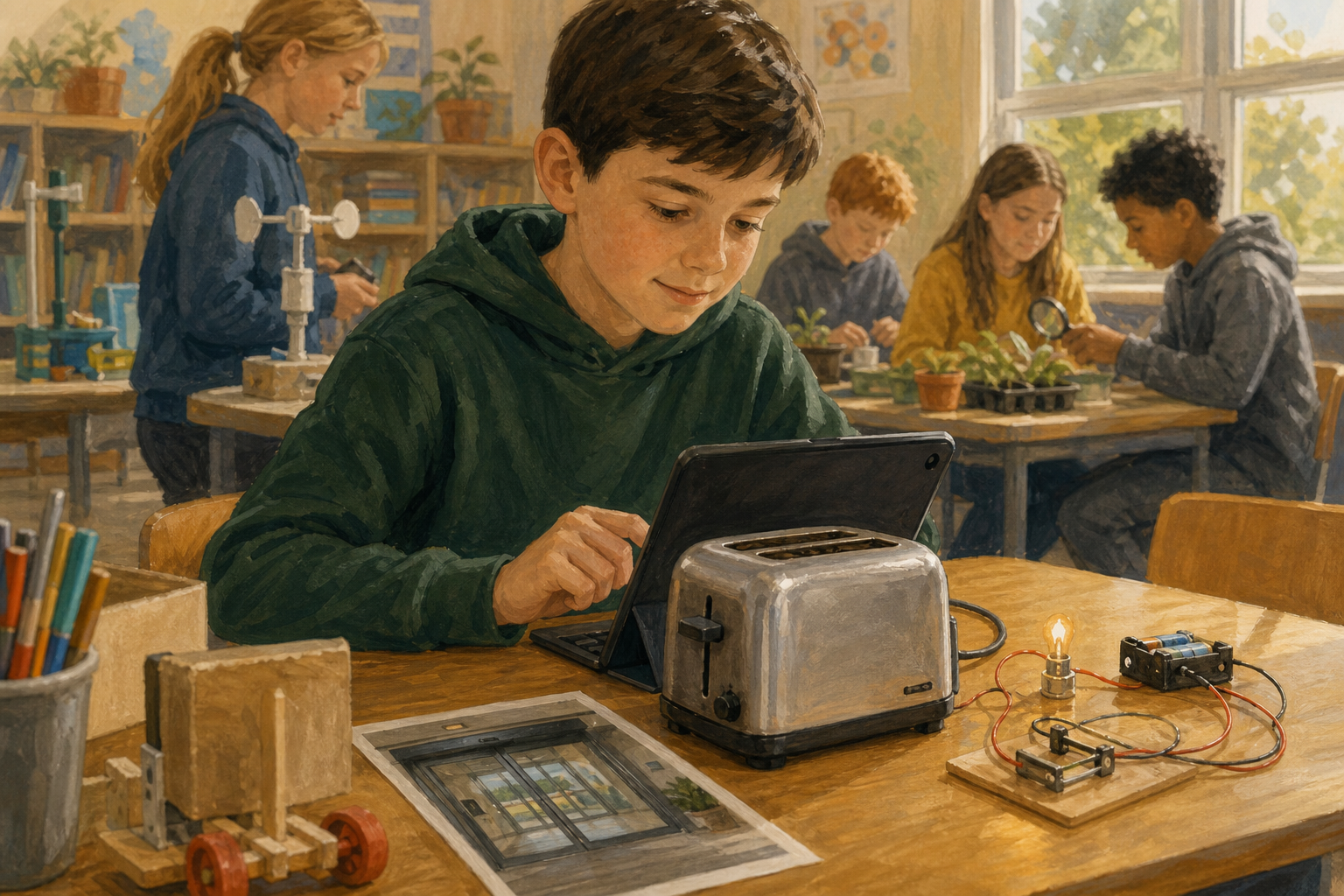
 Look at these three everyday things: a toaster, a tablet, and an automatic door at a shop. They look nothing alike. What could they possibly have in common?
Talk with the person beside you for thirty seconds. Be ready to share one idea.
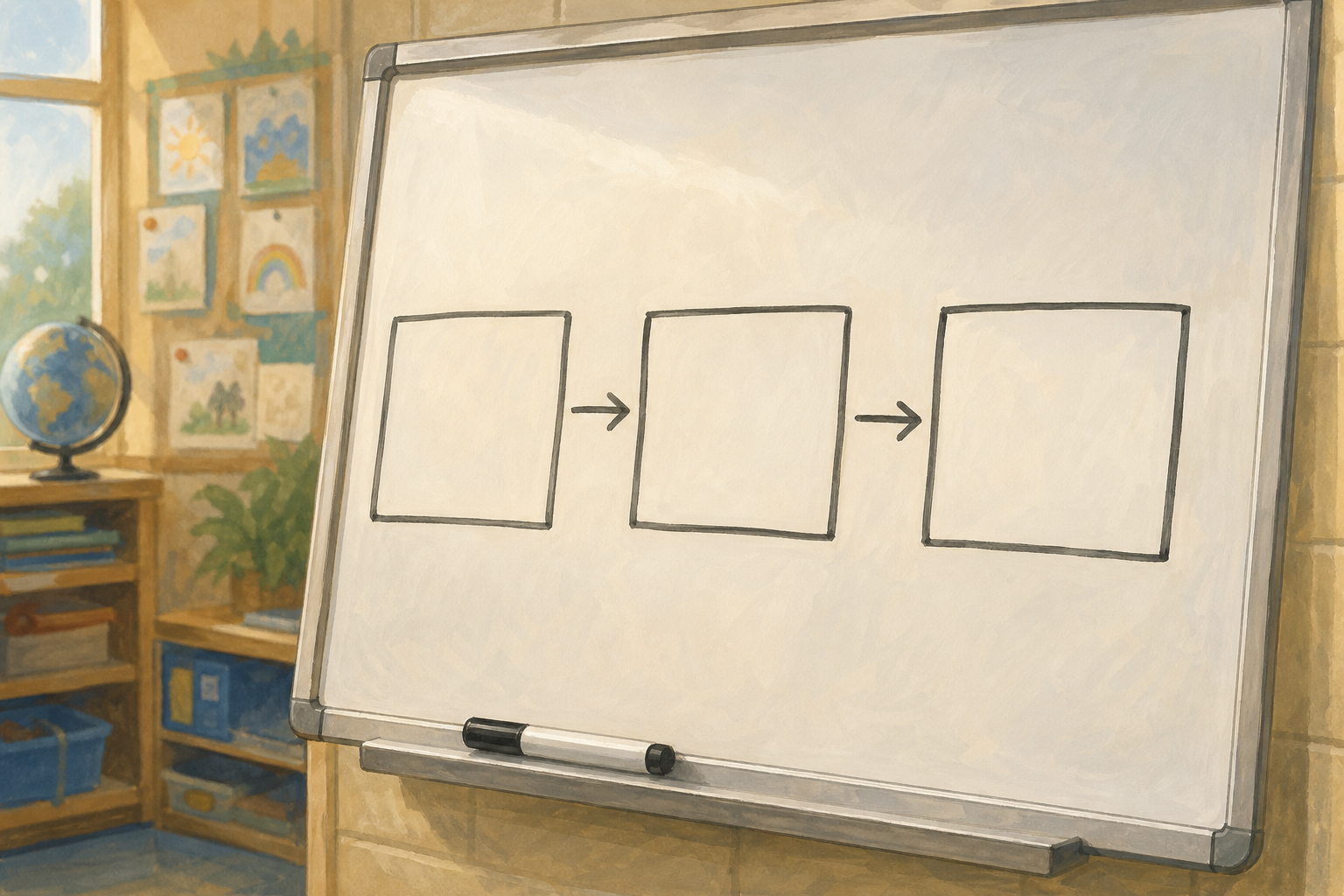 Watch how we map a toaster on the board. What goes in? What happens inside? What comes out?
We will use three short labels for those parts: input (what goes in), process (the work in the middle), and output (what comes out).
A toaster is not a digital device. Technologists still map it this way. Digital systems, such as a tablet, a Leap card reader or our interactive whiteboard, use the same three labels, with electronics or software doing the process in the middle.
In your group, you will get one device card: toaster, tablet, or automatic door. Read it together. Agree: what are the inputs, what is the process, and what are the outputs?
Make a quick three-box sketch on scrap paper so you can remember your map. Be ready to share your device with the class. If another group has the same device and disagrees, that is useful: we will sort it out together.
Now we take one of today's three devices and sort it out together on the board. Six cards will appear, and you help decide which column each one belongs in.
If your group mapped the door, you open the suggestions. Everyone else is a judge: for each card, work out whether it is going in, happening in the middle, or coming out, using the same three headings you used on your own sketch. These are the door's cards, so you are not trying to match them to a toaster or a tablet map.
Map an automatic door as a system
We will take three questions one at a time. There is not one magic yes or no: share a reason, and it is fine to think aloud.
Every question is about a device you have already mapped today, so keep your three-box sketch beside you and use it when you answer.
Unlock the full learning experience
You're previewing this lesson. Get full access to this lesson and hundreds more — each one ready to teach, with interactive activities, printable resources and pupil progress tracking built in.
This lesson is copyright of 123Learn.ie 2017 - 2025. Unauthorised use, copying or distribution is not allowed.