1 - Introduction ~5 mins
Welcome
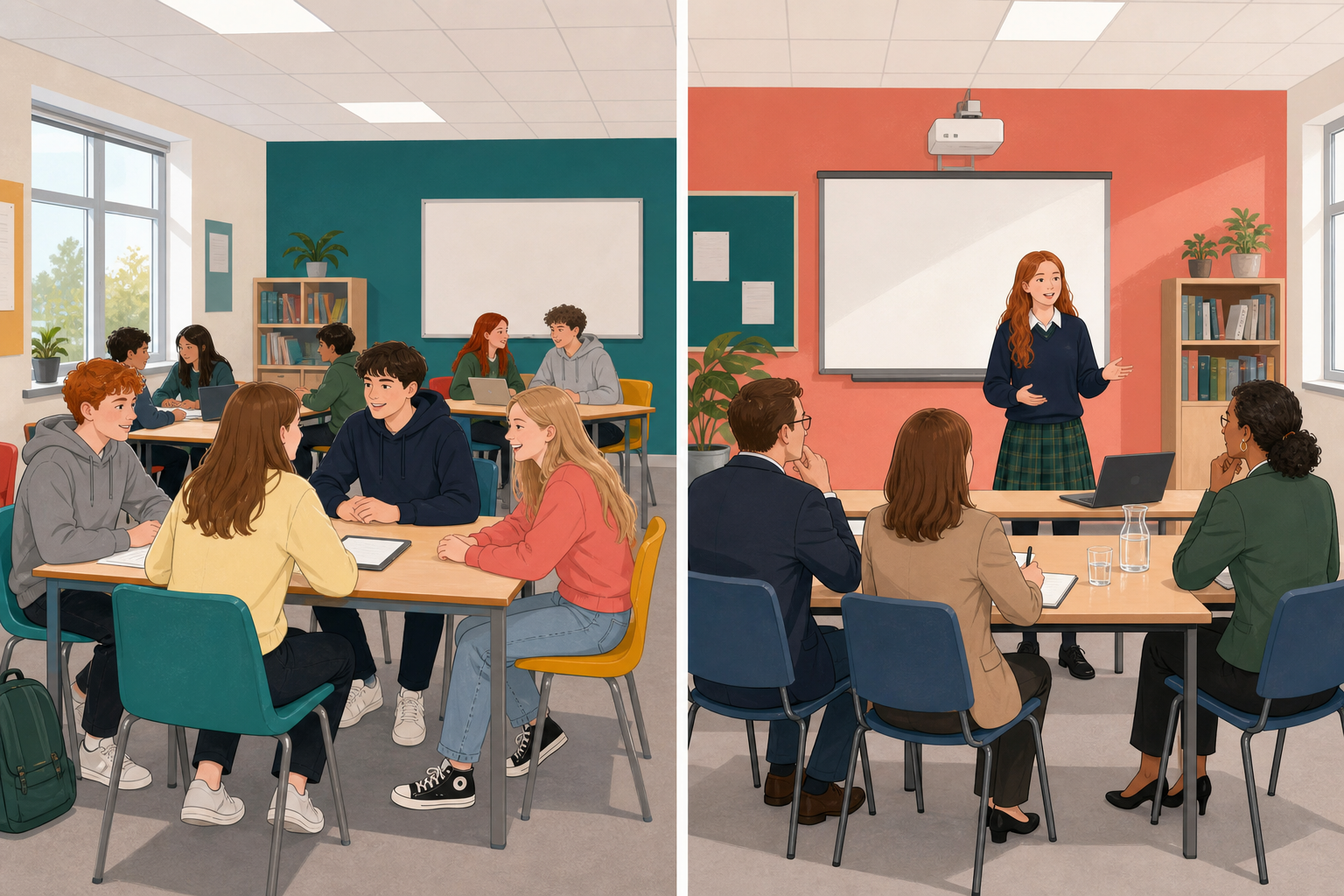 A presentation that lands with your classmates can fall flat in a VET interview, and the reverse is also true. Today you will pin down who is actually in the VET interview room, what they already know, and what they need from you so your Something Real pitch is built for the people who will judge it, not for the people who already know your project.
By the end of today you will be able to:
- Say who is in the VET interview room and what each of them needs from you
- Tell the difference between what classmates need to hear and what the examiner and teacher need to hear
- Write a short Audience Profile for your VET interview
Warm-up
Think of the last time you explained your Something Real project to a friend. Now picture explaining that same project to a stranger who has never heard of you, your school, or your idea. What would you have to add, drop, or say more clearly for the stranger?
If you do not have a stable Something Real project yet, use the teacher-approved starter project for today's profile. You can swap in your own project later.
2 - Key Concepts ~8 mins
These four ideas shape every slide, clip, or infographic you build for the VET interview. They will be talked through with you from the board, and a sample profile will appear one section at a time, so watch the board rather than reading ahead.
| Concept | Why it matters | Example |
|---|---|---|
| Audience — the real people who will see, hear, or judge your presentation | Design choices only work if they match who is in the room | — |
| VET interview audience — the SEC examiner plus your LCA ICT teacher | They verify learning and skill; they are not peers catching up on your project | — |
| Peer audience vs assessor audience — classmates already share context; assessors do not | What works in class can waste interview minutes, and the reverse is true | — |
| Audience profile — a short written picture of who is listening, what they need, and what will convince them | Stops you designing for yourself or your mates when the stakes are assessment | — |
Sample model: The sample Audience Profile on the board comes up section by section (Who / Already know / Need to see / Convince / Lose). Take in each section as it appears. That sample project is only a model — yours must name your Something Real project (or today's starter project).
Template to copy into your document
- Audience Profile: VET interview
- Project:
- Who is in the room:
- What they already know:
- What they need to see:
- What will convince them:
- What will lose them:
- Not for classmates:
3 - Peer Audience or VET Interview Audience? ~13 mins
Sort each statement into the audience it fits best: a peer audience (classmates) or the VET interview audience (SEC examiner plus your teacher). Sort by what that room wants, tolerates, or responds to. Each card has a best-fit audience — be ready to say why you put it there.
The class talks the cards through together first, and only after that do you place them on screen and press Check.
Peer audience or VET interview audience?
4 - Common Issues ~4 mins
Before you write your Audience Profile, check these three stalls. If any of them sounds like you, use the fix on the right.
Common Issues
| Issue | Solution |
|---|---|
| My profile reads as if the examiner already knows my project from class | Rewrite What they already know for a competent stranger: keep LCA/VET rules, drop class-only context, and spell out the problem and product cold |
| My peer lines and VET lines look almost the same | Push tone, assumed knowledge, and evidence apart — classmates share context and slang; the examiner needs structure, proof, and a calm professional tone |
| I only listed who is in the room | Add short lines for What they need to see, What will convince them, and What will lose them, all tied to your Something Real project |
5 - Portfolio Build: Audience Profile ~20 mins
Portfolio build: Audience Profile
Two sample bullets go up on the board first (What they need to see and What will lose them) so you can see the level of detail expected. Then complete these steps for your project:
- Open your {{code:Project_Portfolio}} folder, go into {{code:09_specialism/sm2/}}, and create a new document named {{code:sm2_audience_profile}}.
- Paste the template headings from Key concepts into the document (including Project: and Not for classmates:).
- Fill each section for your Something Real project (or today's starter project) using the sentence starters below. Keep the sample on the board or printout beside you while you write.
- Finish with a short Not for classmates line naming one tone or content choice you will avoid in the VET room.
Sentence starters (use or adapt):
- Who is in the room: The people judging my VET interview are…
- What they already know: They already know… They have never seen my…
- What they need to see: In this presentation they need to see…
- What will convince them: What will convince them is…
- What will lose them: What will lose them is…
- Not for classmates: In the VET room I will avoid… because…
Bullet points are fine — a clear rough profile beats a polished empty page. You can tidy wording later. If a section feels empty, start with What will lose them; most people know what not to do first.
- {{code:sm2_audience_profile}} is saved inside {{code:09_specialism/sm2/}} in your {{code:Project_Portfolio}} (Word Online or Google Docs)
- The profile names the VET interview audience and includes all six required headings: Who is in the room; What they already know; What they need to see; What will convince them; What will lose them; Not for classmates
- Every filled line is tied to your Something Real project (or today's starter project), including what assessors already know versus what they do not
- A reader can tell this is written for assessors, not for a peer class share
Unlock the full learning experience
You're previewing this lesson. Get full access to this lesson and hundreds more — each one ready to teach, with interactive activities, printable resources and pupil progress tracking built in.
This lesson is copyright of 123Learn.ie 2017 - 2025. Unauthorised use, copying or distribution is not allowed.