1 - Getting Started ~5 mins
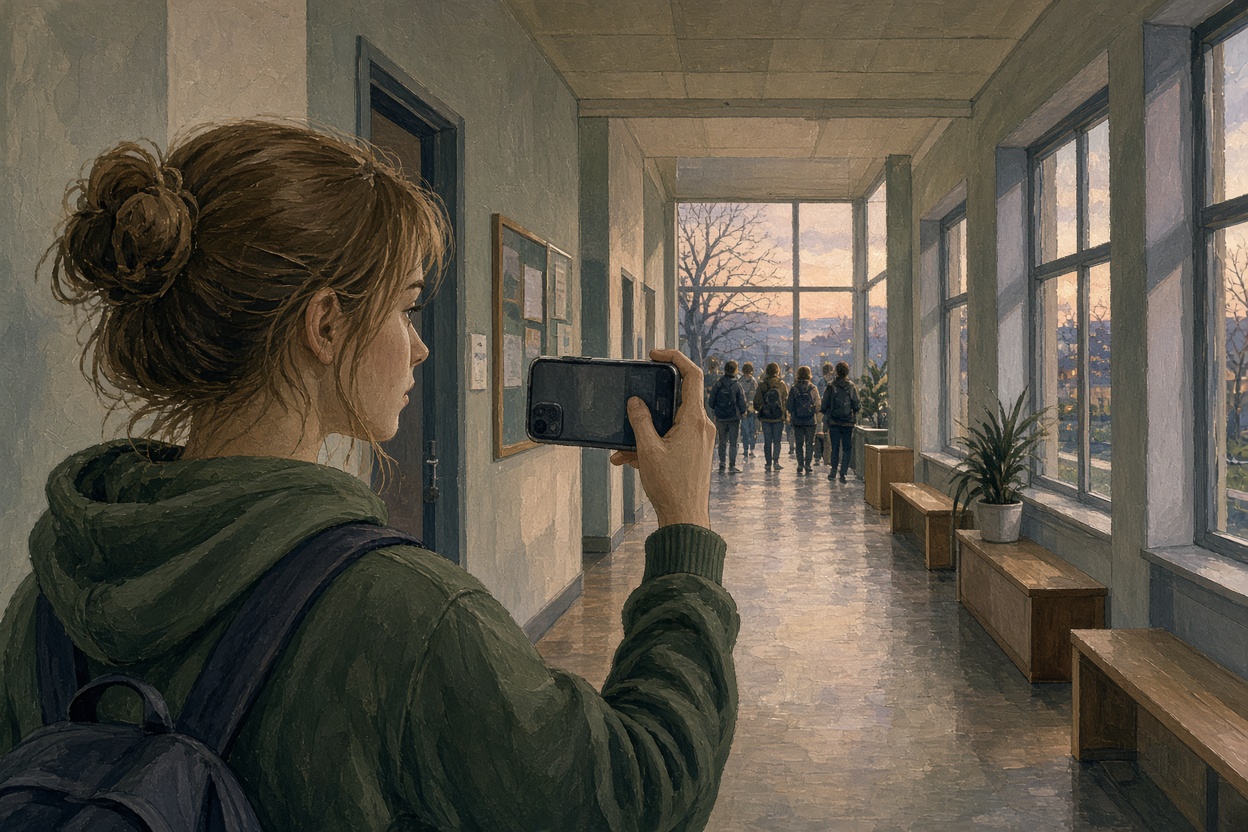 Every shot you have ever watched was chosen by someone. How close the camera sits, what light falls where, and what is left outside the frame are not accidents. They steer your attention and your feeling.
Today you learn the camera vocabulary Section A on the written paper expects you to use. You will practise naming techniques on described stills, say what each one does to an audience, then build a Film Vocabulary Recognition Sheet: six techniques, each with a definition in your own words and one real film example.
2 - What to Look For ~8 mins
These are the six terms you will use today. Learn what each one does, not only what it is called. Your Recognition Sheet later will ask for all six.
| Term | What it means for you | Real example |
|---|---|---|
| Close-up. A face or detail fills the frame. | You are forced to read one thing closely. | A hand hovering over a send button |
| Mise-en-scène. Everything placed in the frame on purpose. | Props, costume and set are part of the meaning. | Packed GAA bag, jersey, bus ticket and toast on a dawn kitchen table; nobody in the room |
| Zoom. The frame tightens or widens without the camera moving. | You are pulled in or pushed back on the same moment. | Thumbs and a glowing screen filling the shot |
| Panning. The camera swings left or right from one spot. | The reveal arrives as movement, not a cut. | A slow pan that finally finds an empty chair |
| Lighting. Where light falls, and what it hides. | It steers notice and mood without dialogue. | A face bright on one side, deep shadow on the other |
| Motif. A repeated image or sound that gathers meaning. | Repetition is a signal, not an accident. | A train whistle returning before every hard choice |
One marked still. Read this description once:
A face fills the whole frame. Rain beads on a jacket collar. Behind her, a bus-stop shelter is a soft blur of orange sodium light. She looks past the camera at something we cannot see.
The close-up leaves you nowhere else to look. The blur strips the street away so only her waiting matters. That is the camera doing work on you.
3 - Mark It Up ~15 mins
Four described stills are below (and in the interactive). For each one, name the camera choice and write one sentence on what it does to the audience. Name the technique and add one sentence on what it does to the audience. You need both parts for every still.
- The send button. A thumb hovers over a bright send icon. The rest of the phone screen is sharp; the bedroom behind it is a soft blur. The frame holds almost nothing except the thumb and the button.
- The corridor reveal. The camera sits at one end of an empty school corridor and swings slowly from the locked classroom doors on the left across to a single open door on the right, where a chair has been knocked on its side.
- Kitchen before leaving. A small kitchen at dawn. A packed sports bag sits open on a chair. A GAA jersey is folded on the table beside a bus ticket and a half-eaten piece of toast. Nobody is in the room. Cool blue light comes from the window; the overhead bulb is off.
- Half a face. A young man's face is lit from one side only. The left half is bright; the right half falls into deep shadow so his eye almost disappears. He does not speak. The background is black.
This is practice for the terms. The Portfolio piece is the Recognition Sheet in the next step.
Name the shot, name the effect
4 - Write Your Response ~24 mins
This is the piece that goes in your Communication Portfolio.
Worked model (read once). A short sequence written for this lesson shows today's terms working together:
Night. A wide view of a small-town main street after rain. The road shines. A single bus shelter sits under a sodium light. One figure waits inside it, small against the shopfronts.
The camera swings slowly along the empty footpath and settles on the shelter. Inside, a teenage girl grips a phone with both hands. The frame tightens until her thumbs and the glowing screen fill almost everything we can see.
Cut. Her face now fills the frame. One side is lit by the phone; the other falls into shadow. She almost presses send, stops, almost presses again.
Cut. A packed sports bag with the GAA crest sits at her feet. A bus pulls in. Doors open. She looks up. The phone screen goes dark.
Wide view, pan, zoom into close-up, split lighting, bag as motif: each choice steers what you notice and feel.
Your task. Complete your Film Vocabulary Recognition Sheet for the six techniques from today. For each one, write a definition in your own words and give one example from a film, series or short you know. Name a specific moment, not only the title. Then write a short Director's note (about six sentences) for one moment from a film you know: name at least three of today's techniques and say what you want each one to do to the audience.
Copy the finished sheet into your portfolio as m3_l85_film_vocab_<your-initials>.
Bank the vocabulary, write the Director's note
5 - Think About It ~3 mins
Talk this through with the person beside you:
- Which technique from today's sheet do you notice most often in the things you actually watch?
- Pick one term you could now use in the oral exam when you talk about a film. What sentence would you say?
The longer thinking can go in your Reflective Journal after class if you want to keep it.
Unlock the full learning experience
You're previewing this lesson. Get full access to this lesson and hundreds more — each one ready to teach, with interactive activities, printable resources and pupil progress tracking built in.
This lesson is copyright of 123Learn.ie 2017 - 2025. Unauthorised use, copying or distribution is not allowed.