1 - Getting Started ~3 mins
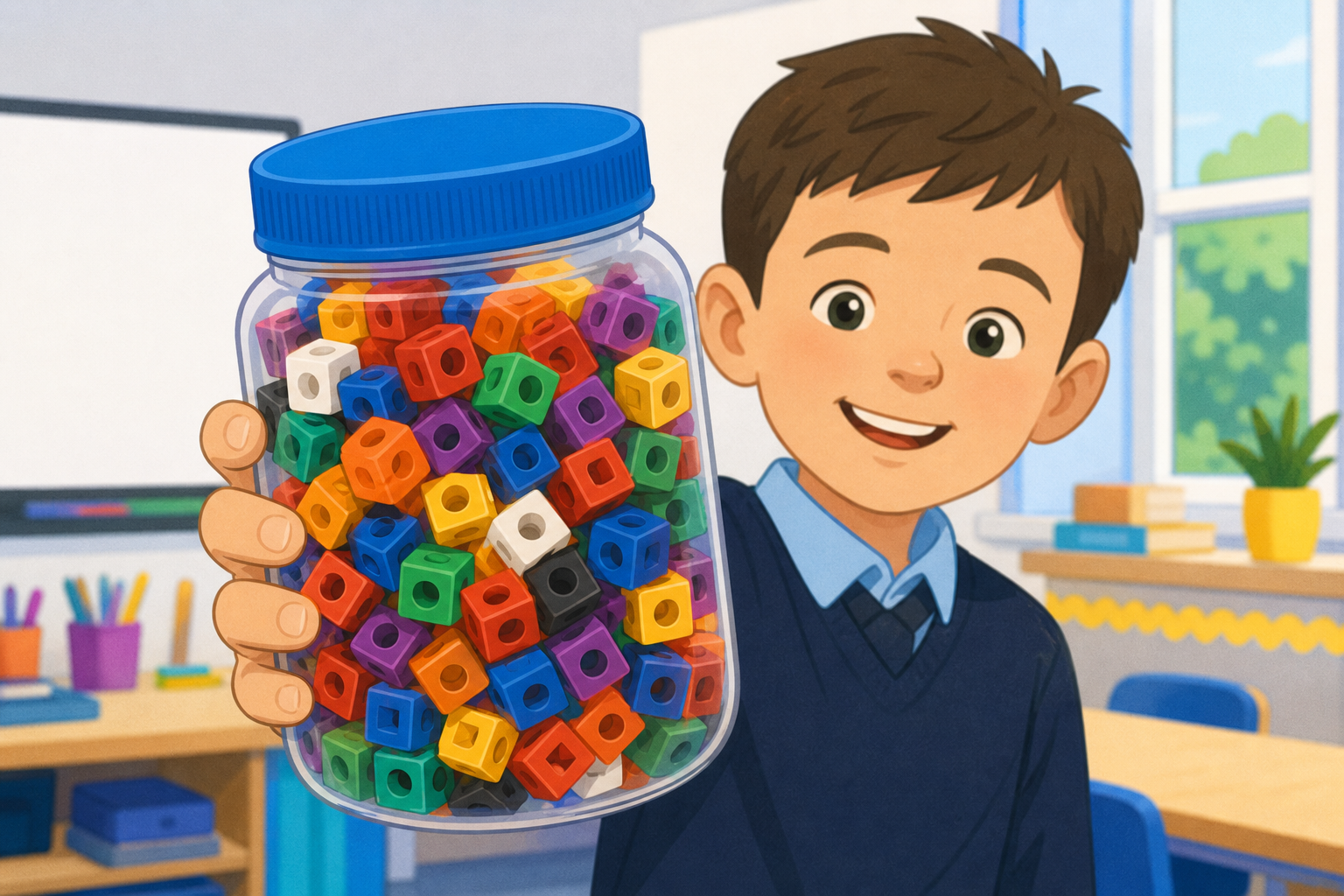 Secret jar time! Look at the guessing jar the teacher is holding up. More than ten cubes, or fewer than ten? Whisper your guess in your head and keep it secret until we ask. No counting yet.
2 - Watch and Notice ~8 mins
An estimate is a careful guess before we count. Watch two spills. First spill: the bulk looks nearly a full ten but not past it, so a careful estimate might be 8 or 9. Then we count to check. The gap is how far the guess was from the real count (close means a good estimate).
Second spill: the bulk looks past ten but not near twenty, so we might say about 15. Then we count and name the gap.
First spill
Second spill
3 - Try It Together ~8 mins
Remember: an estimate is a careful guess before you count. A new set of counters appears. Settle on your own silent estimate. One pupil writes the class estimate on the board. Then we reveal the count. The gap is how far the estimate was from the real count: name the gap together.
Estimate, then count
4 - Class Challenge ~10 mins
We will work through four new sets together. For each one, make a careful estimate first (use a nearby ten that fits the bulk), then check the count and name the gap: how far your guess was from the real count.
Estimate, then count
5 - In Your Copy ~6 mins
On your Estimate, count, gap sheet (or in your maths copy), make three columns: My estimate, Count, Gap. For each of the four sets we just did, write your estimate, the real count, and the gap.
Unlock the full learning experience
You're previewing this lesson. Get full access to this lesson and hundreds more — each one ready to teach, with interactive activities, printable resources and pupil progress tracking built in.
This lesson is copyright of 123Learn.ie 2017 - 2025. Unauthorised use, copying or distribution is not allowed.