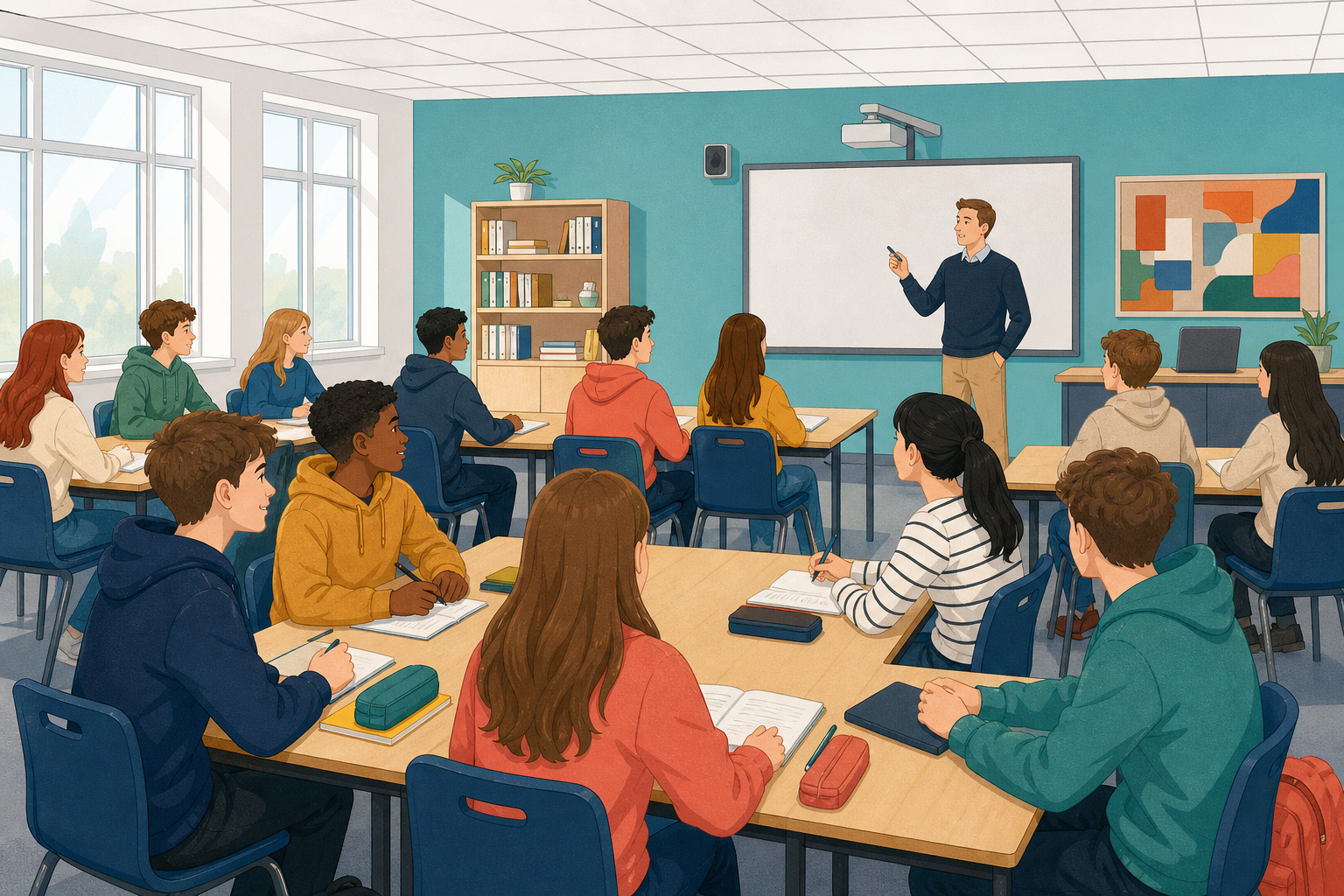
 You already have principles for consent, privacy, fair use and what to do when something goes wrong online. Today those become something the whole class can use: the first draft of your class charter of online rights and responsibilities. By the end you will have real draft statements under shared headings, written as things students can actually do online, ready to refine and adopt next time.
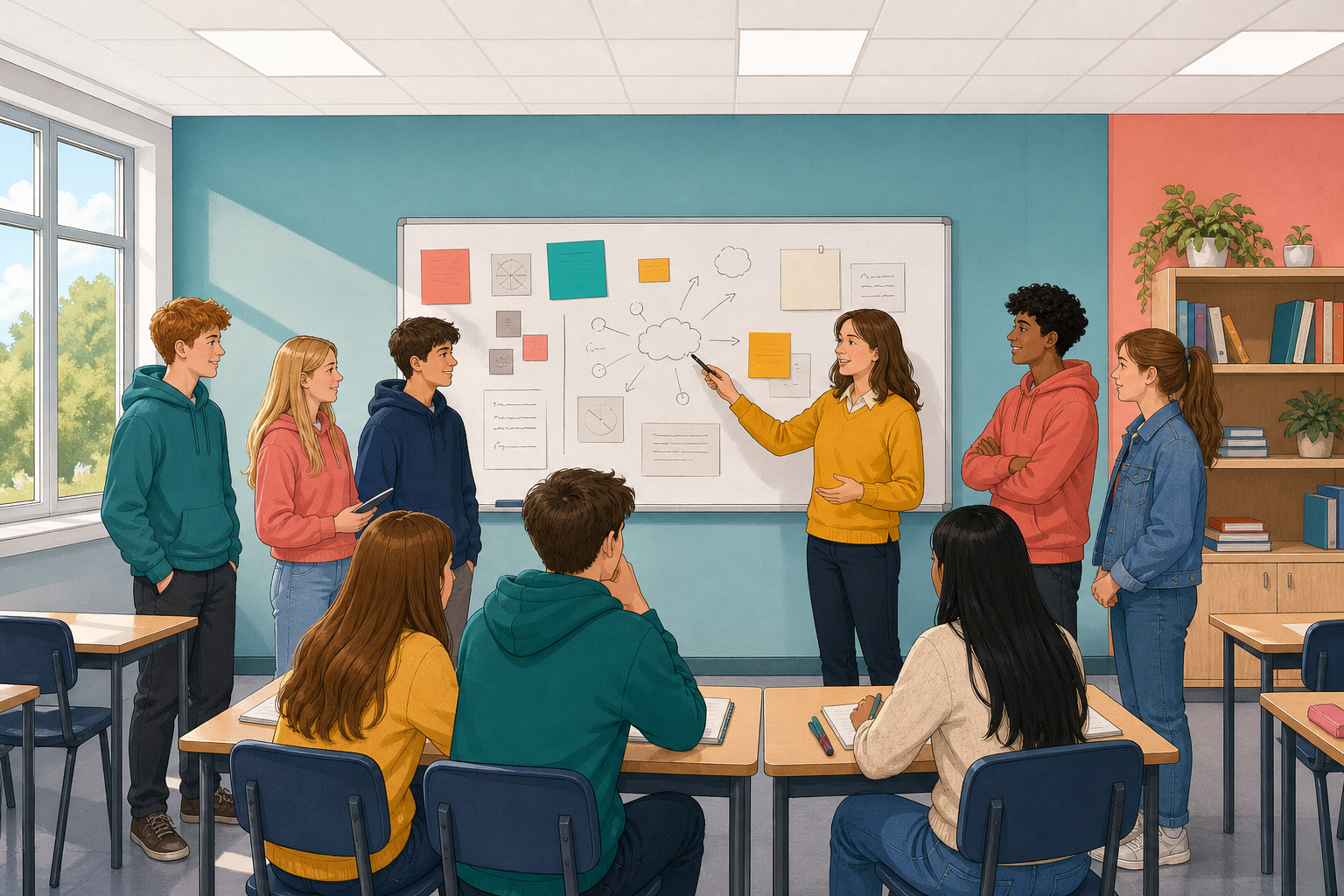 A charter is a short set of rights and responsibilities the class agrees to live by online, both in school and outside it. Rights say what you can expect. Responsibilities say what you will do.
A weak statement sounds like a slogan: "Be nice online." A strong one is something you can check yourself against: "I ask before I post a photo or clip of someone else." or "I can expect others not to share my private messages."
We will draft under five headings drawn from what you have already worked on:
- Respect: how we treat people in posts, comments and messages
- Consent: photos, clips and who gets to decide before something is shared
- Privacy: personal information, private messages and who can see what
- Responding to harm: what we do when something goes wrong
- Fair use: how we source, credit and share other people's work
Your job today is not to polish perfect wording. It is to get clear, workable draft statements on the board that the class can argue over and tighten next time.
As a class, build draft charter statements under the five headings on the board.
- Read the five headings: Respect, Consent, Privacy, Responding to harm, Fair use.
- Look at the starter statements. You may adopt one as-is, reword it, or leave it and write your own.
- After two or three whole-class examples under the first heading, work with the person next to you: write one statement in about 60 seconds, then share it so it can go on the board.
- Keep going in short pair bursts under the other headings. Every statement must be something a student can actually do (or reasonably expect) online, inside and outside school.
- We need at least one draft under every heading before we double up on any heading.
- As a class, mark the ones worth keeping as draft statements. Do not treat them as final yet.
- Aim for at least one or two solid draft statements under each heading before you stop.
Leave gaps if a heading still feels thin. Groups will fill those next.
Draft our class charter
In small groups, strengthen the draft.
- Your group owns one heading (or is assigned one that still looks thin).
- You write two extra draft statements for that heading, each one checkable: something a student can do or reasonably expect online.
- If any line under your heading is slogan-style ("be kind", "think first"), rewrite it as a concrete action. If none are, just add two strong new statements.
- You are ready to offer your keepers so they can be added to the shared draft.
- 5 minutes: write your two statements in your group.
- 3 minutes: two groups read one keeper each aloud.
- 2 minutes: every group gets its keepers onto the shared draft, either by handing them to your teacher or by typing them in.
Whether your group reads aloud or adds its statements silently, your keepers go into the shared draft today, not next time. That way the whole draft is there next session when you merge, vote and adopt.
Look at the draft on the board. The statements that work share a pattern: you can picture a real student doing them, or holding others to them, on a real phone or laptop.
That is the point of a charter. It is not a poster of nice words. It is a short set of rights and responsibilities you can actually use when you post, share, credit, or respond to harm.
Next time you will pitch, merge and vote these drafts into one agreed charter, then decide where it lives and how the class will use it for the rest of the course. Keep today's draft safe the class way.
Unlock the full learning experience
You're previewing this lesson. Get full access to this lesson and hundreds more — each one ready to teach, with interactive activities, printable resources and pupil progress tracking built in.
This lesson is copyright of 123Learn.ie 2017 - 2025. Unauthorised use, copying or distribution is not allowed.