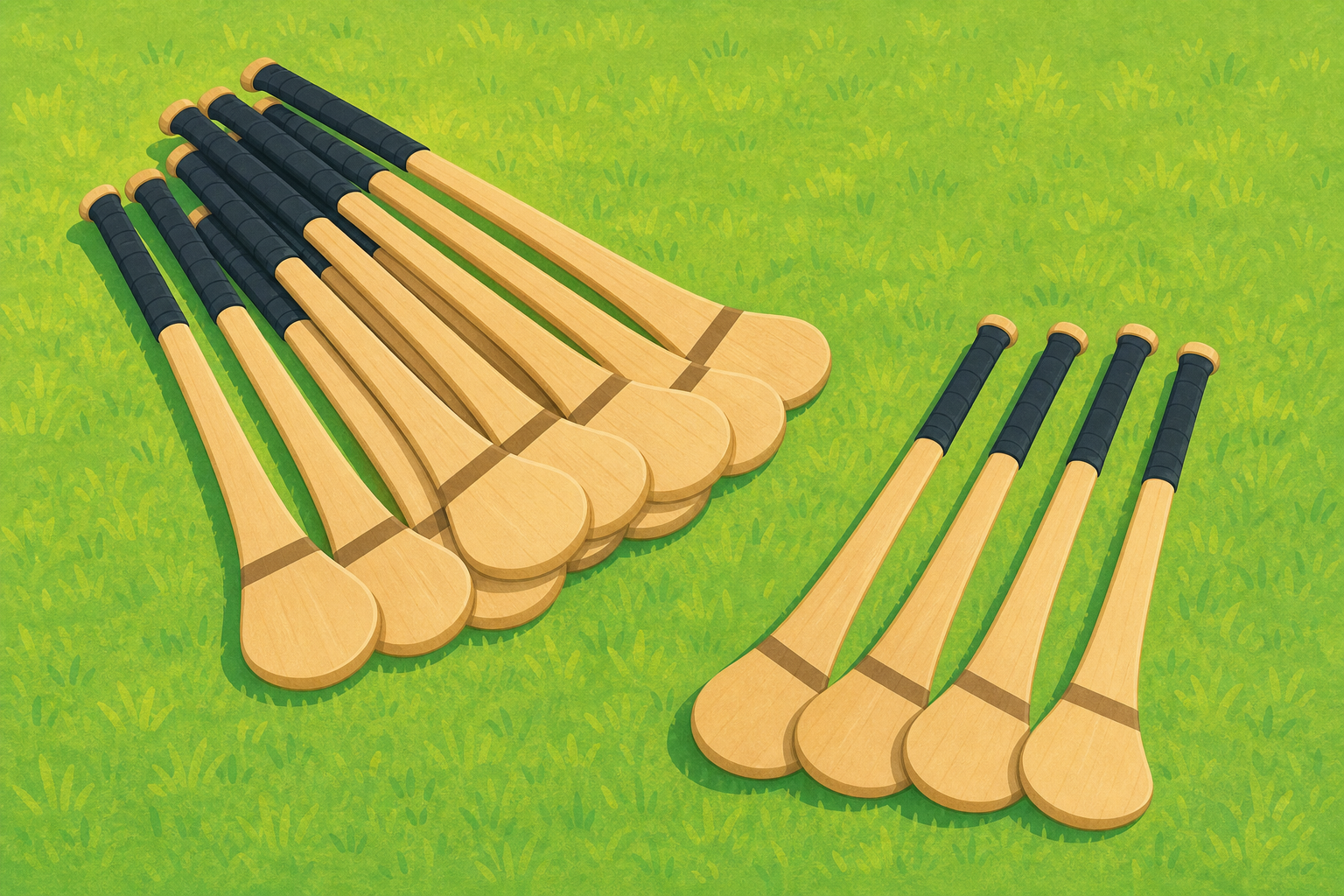
Picture this: your team has 13 hurleys to share out between 4 players so everyone has the same number. How many hurleys does each player get? And here is the tricky part: is there anything left over?
Hands up: what do we call the bit that is left over after we have shared as fairly as we can?
The interactive deals counters into equal groups, one round at a time: each time we press Deal one, every group gets one more counter. Before each share finishes, say how many you think each group will get and how many will be left over. When there are not enough counters left for another round, the ones left over are the remainder.
Today we work through these four divisions one after another at the board, dealing the counters into equal groups and reading off the leftover each time: 14 ÷ 3, then 22 ÷ 4, then 26 ÷ 6, then 40 ÷ 7. Each one leaves something over, and we will say the remainder aloud and check it is smaller than the number of groups before we move on to the next one.
In your maths copy, work these two divisions and write each answer as “□ remainder □”:
When you have both, check each remainder is smaller than the number you divided by.
You're previewing this lesson. Get full access to this lesson and hundreds more — each one ready to teach, with interactive activities, printable resources and pupil progress tracking built in.