Mathematics
Intermediate
50 mins
Teacher/Student led
+80 XP
Teacher-led from the board — pupils need no device

What you need:
IWB/Projector/Large Screen

Divisibility Rules and Tests

Learn quick divisibility tests for 2, 3, 4, 5, 9 and 10 using digit patterns and the digit-sum rule. Discover why the last digit (or last two digits) reveals whether a number divides evenly, without actually dividing.
Teacher Class Feed

Load previous activity
    Your turn
    Your teacher is running this lesson on the board. Here is the part you can try yourself.
    Hundred square
    Hundred square

    1 - Getting Started ~4 mins

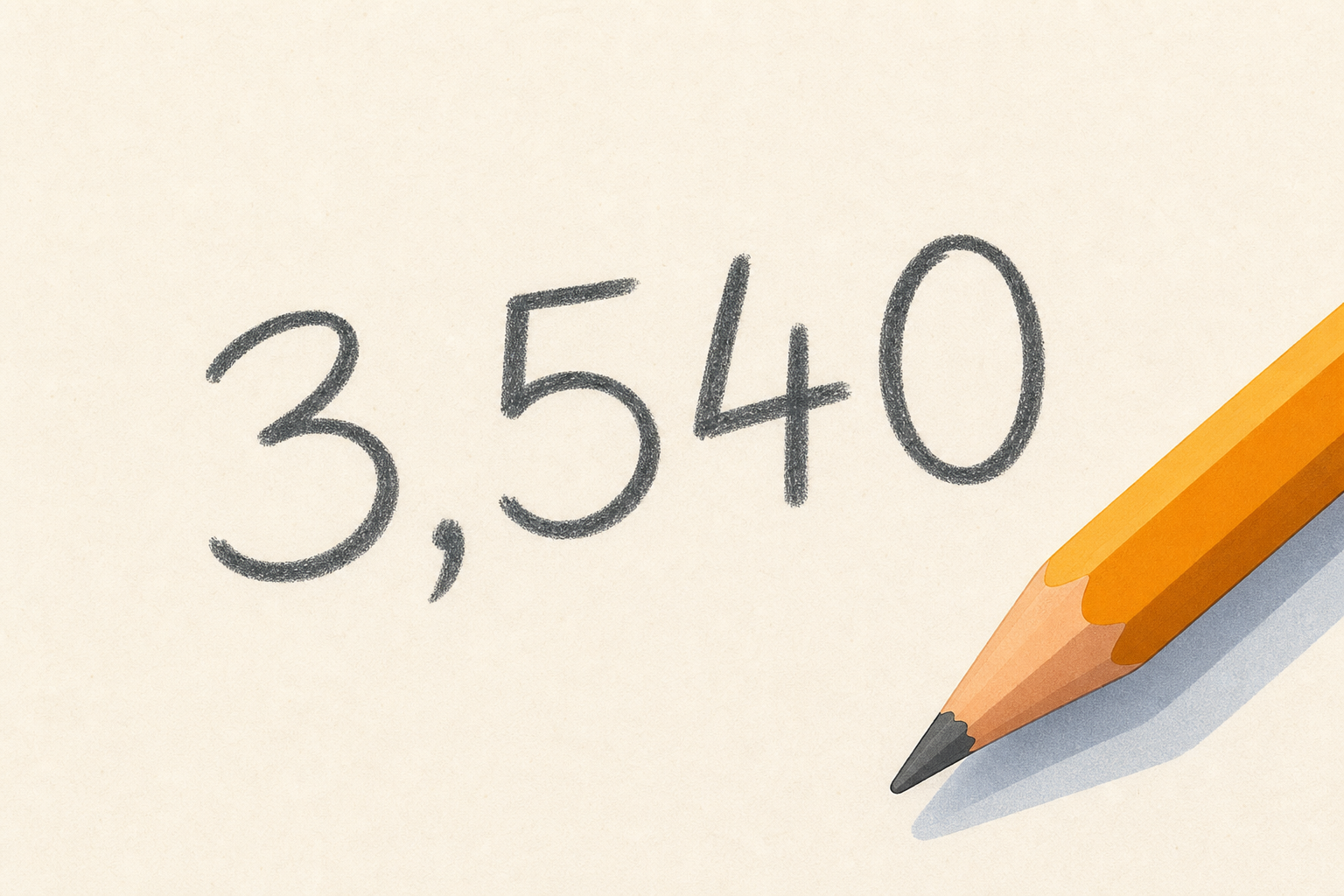
    Illustration for Getting StartedHere is a big number: 3,540. Without doing any dividing at all, can you already tell whether it splits evenly into 2, into 5, and into 10? Take a good look at it before anyone says a word. What is it about the number that gives the game away?

    2 - Watch and Notice ~11 mins

    You are about to see the same grid of numbers four times over, shaded for one divisibility rule at a time. Watch where the shading falls each time, and work out which tests you could pass with only the last digit, and which ones ask you for more than that.

    3 - Try It Together ~11 mins

    Now we work through some divisors together on the grid: first we shade the multiples of 2, then 4, then 6. When we shade the multiples of two, every second cell lights up, because two goes into every even number. There will be fewer cells for four, and we will check each one with the last-two-digits test. Six is the interesting one. A multiple of six has to pass two tests at once, because 6 = 2 × 3: the number must be even (the 2 test) and its digit-sum must divide by 3 (the 3 test).

    Key point

    Before each pattern appears, put a hand up and say where you think the shading will land. A wrong prediction is completely fine — this is thinking out loud, not a test.

    Shade the multiples together

    4 - Tick the Tests in Your Copy ~3 mins

    COPYBOOK MOMENT

    Before you open your copy, we will check one bigger number together for the 4 test so everyone sees how the last-two-digits rule works when the number has more than two digits.

    Look at 144. Cover the hundreds digit with your finger; only the last two digits matter: 44. Does 44 divide by 4? Work it out together, then decide whether 144 itself divides by 4. That is the whole method: pull out the last two digits and test just those.

    Now write these four numbers down the page in your maths copy, one under the other:

    • 90
    • 144
    • 486
    • 3,540

    Beside each one, tick which of 2, 3, 4, 5, 9 and 10 it divides by. Next to every tick, write the test you used in a few words (for example, 'ends in 0' or 'digit-sum = 9' or 'last two digits divide by 4').

    5 - Class Challenge ~8 mins

    Now we shade the numbers that pass each test in turn: first every multiple of 3, then every multiple of 6 (a number that passes both the 2 test and the 3 test), then every multiple of 9, and finally every multiple of 12. A multiple of 12 is a good one to finish on, because every one of them passes both the 3 test and the 4 test at the same time. Each round asks a little more of the digit-sum rule than the last.

    Pass the test

    Pupil practice
    Module 2 · Operations and Computational Fluency Number
    Lesson 25 · Divisibility Rules and Tests
    Download Activity Book page (PDF)
    123learn · Online learning platform

    Unlock the full learning experience

    You're previewing this lesson. Get full access to this lesson and hundreds more — each one ready to teach, with interactive activities, printable resources and pupil progress tracking built in.

    Hundreds of curriculum-aligned lessons
    Interactive activities in every lesson
    Printable resources & progress tracking
    Copyright Notice
    This lesson is copyright of 123Learn.ie 2017 - 2025. Unauthorised use, copying or distribution is not allowed.
    🍪 Our website uses cookies to make your browsing experience better. By using our website you agree to our use of cookies. Learn more