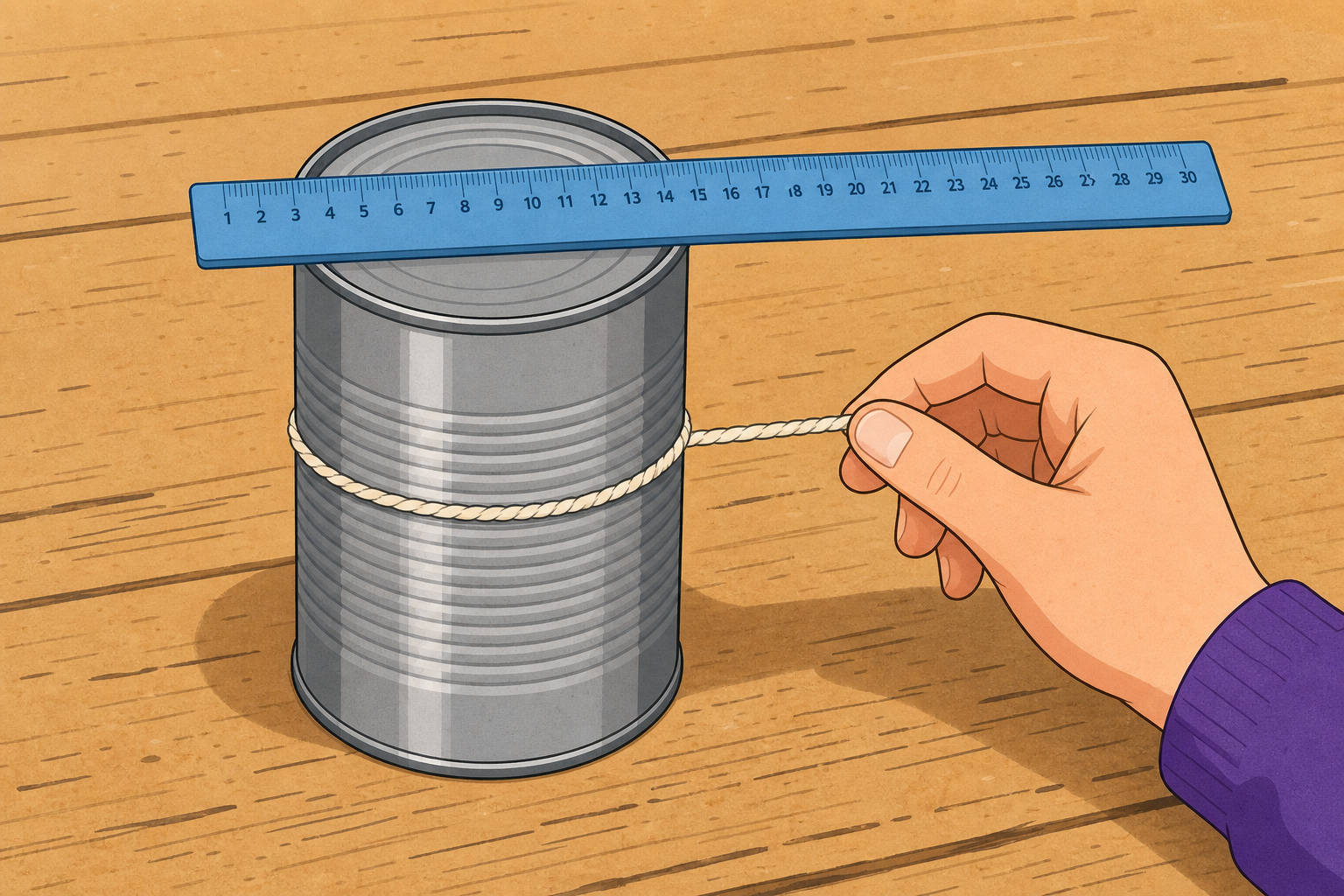
Here is a can of beans with a piece of string wrapped once around its middle.
Think about this: if we straightened out that string and laid it next to the distance straight across the can, how many times longer would the string be? Have a guess in your head, then we will share a few.
Watch three circles on the board. Each one shows its diameter and its circumference, and a panel that divides one by the other. Watch what happens to that last number as the circles change size.
Today we drag the radius slider and watch two numbers move together: the distance around (the circumference) and the distance across (the diameter). The ratio panel shows a ratio — that just means the number we get when we divide one length by another. Here it divides the way around by the way across.
We will try three circles. First a radius of 3. Then a radius of 6. Then back to a radius of 4. Before each drag, predict: will the ratio panel change, or stay the same?
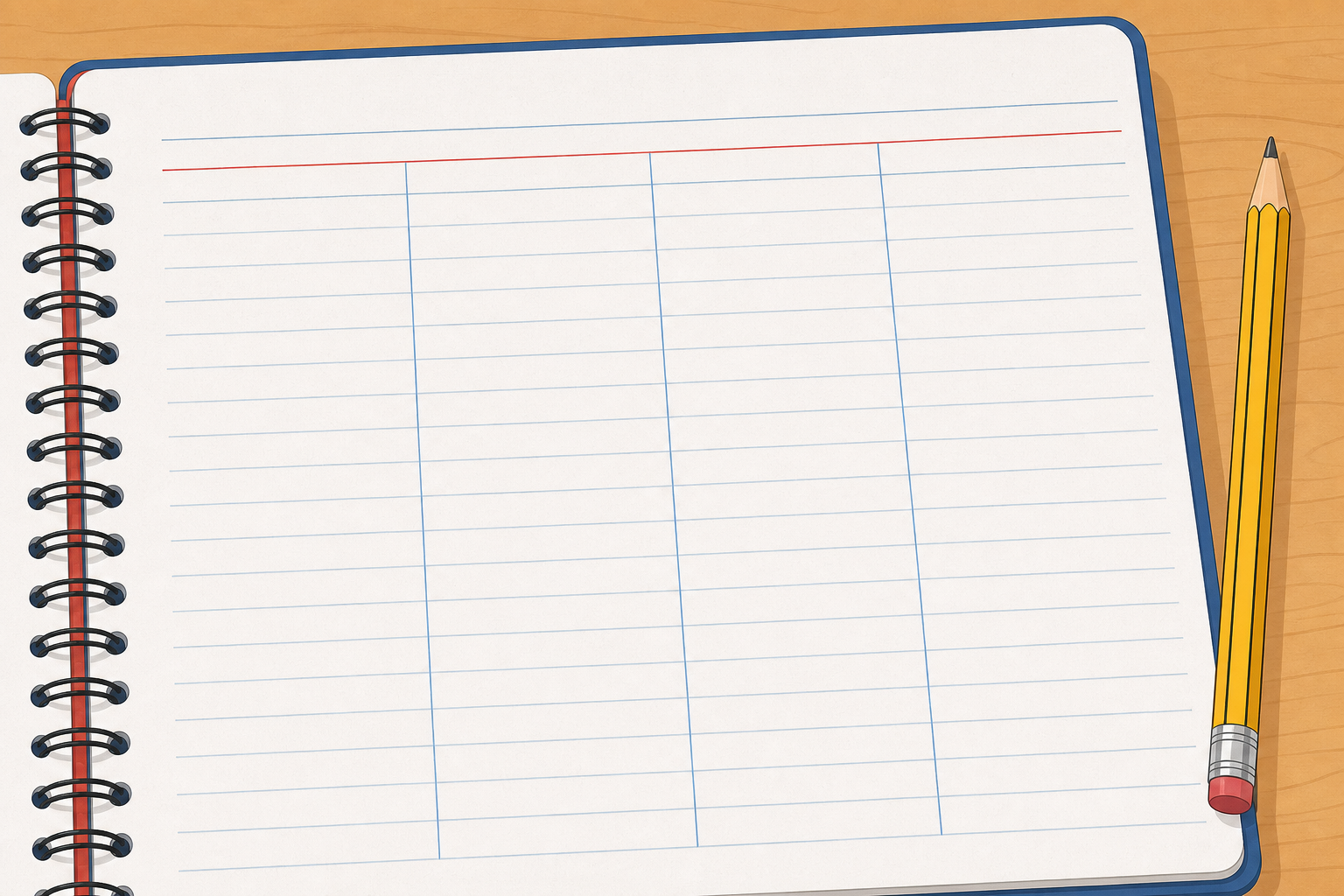
In your maths copy, draw a four-column table with these headings: Object, Diameter, Circumference, C ÷ d.
Now measure three round objects at your station — a tin lid, a CD and a coin. For each one, wrap the string around it to find the circumference, then measure straight across for the diameter. Write both numbers in your own copy with their units (cm), and work out C ÷ d beside each row.
When your three rows are done, look down your own C ÷ d column and underline the number your three answers sit closest to. Most rows will be a little over three.
You're previewing this lesson. Get full access to this lesson and hundreds more — each one ready to teach, with interactive activities, printable resources and pupil progress tracking built in.