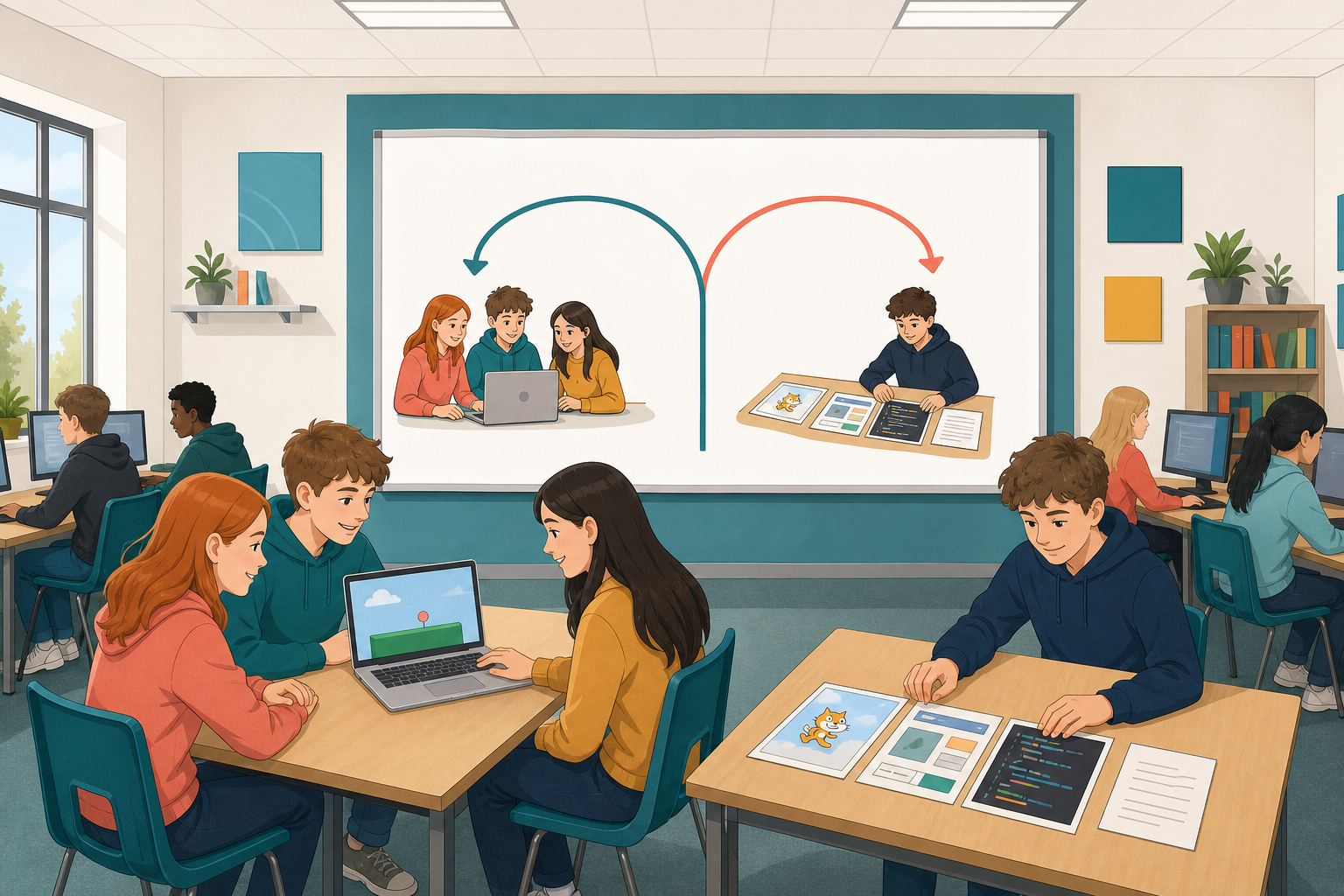
 The big piece of coding work you do in third year starts now. It is called Putting the pieces together, and it is the one your school reports on at the end of the year, so it is worth doing well.
There are two approaches you can take: a final software project in a team, or a portfolio of your own work. Today you learn what each path asks of you, weigh them against the work you already have, and choose.
There are two approaches to this piece of work. Neither is a shortcut. Pick the one that fits your strengths and the evidence you already have.
Approach 1: a final software project. You work in a team of two or three. Together you research a problem, design a solution, build it, test it, document it, present it, take peer feedback, and reflect. The heart of the evidence is one working program or website and the story of how you made it.
Approach 2: a portfolio collection. You work on your own. You gather finished examples of your own work from across the course (for example Scratch or Arcade games, a website or micro:bit project, and Python work) and write a reflection on how your learning and problem-solving grew. The heart of the evidence is the range, tied together by that reflection.
On either path, good work shows a clear purpose, planning and testing, work another person can follow, and honest reflection.
First, take two minutes to rummage through your own evidence. Open your saved work folder or notebook and star two pieces you are proud of, because your choice today should rest on work that actually exists.
Next, open one of those starred pieces and note in one line what still works and what is broken or unfinished. That single line is what you will weigh your choice against.
Then open the two cards on your screen and read both, thinking about your own strengths and the work you have just been looking at.
You have read both cards. Now hold each one against your own work so far and answer two questions for yourself: which path do your two starred pieces fit better, and which risk on that card worries you most?
There is no better path, only the one that fits you. Be honest about what you already have and where the risk sits.
Unlock the full learning experience
You're previewing this lesson. Get full access to this lesson and hundreds more — each one ready to teach, with interactive activities, printable resources and pupil progress tracking built in.
This lesson is copyright of 123Learn.ie 2017 - 2025. Unauthorised use, copying or distribution is not allowed.