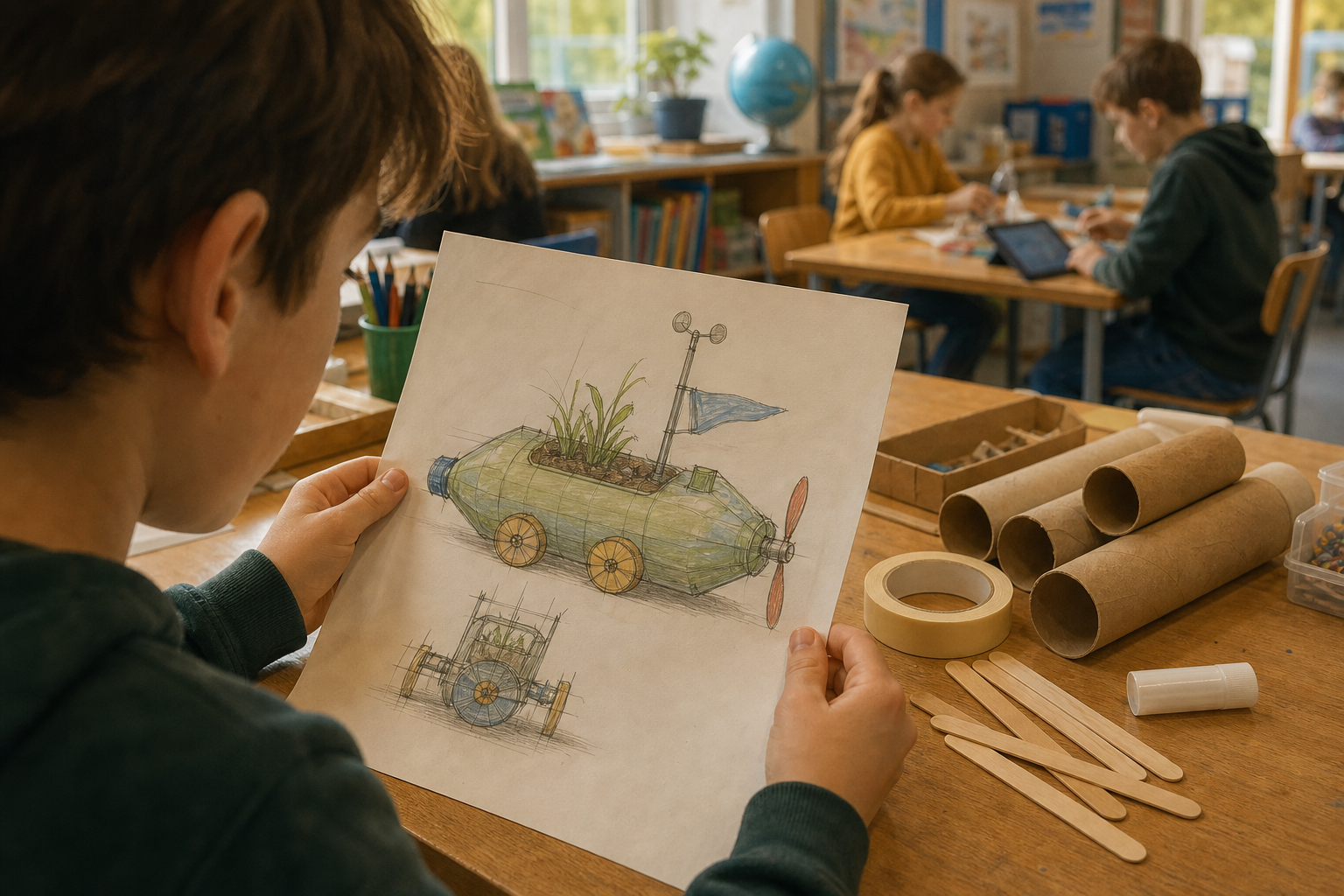
 Earlier in this project your group chose a real school problem and sketched a solution on your Design Brief. Today is the day your sketch becomes something you can hold and test.
You become the builders: turn that plan into a working prototype using the shared junk-modelling kit. Engineers almost never get a first build exactly as drawn. What matters is following the brief, noticing when something needs to change, and writing that change down.
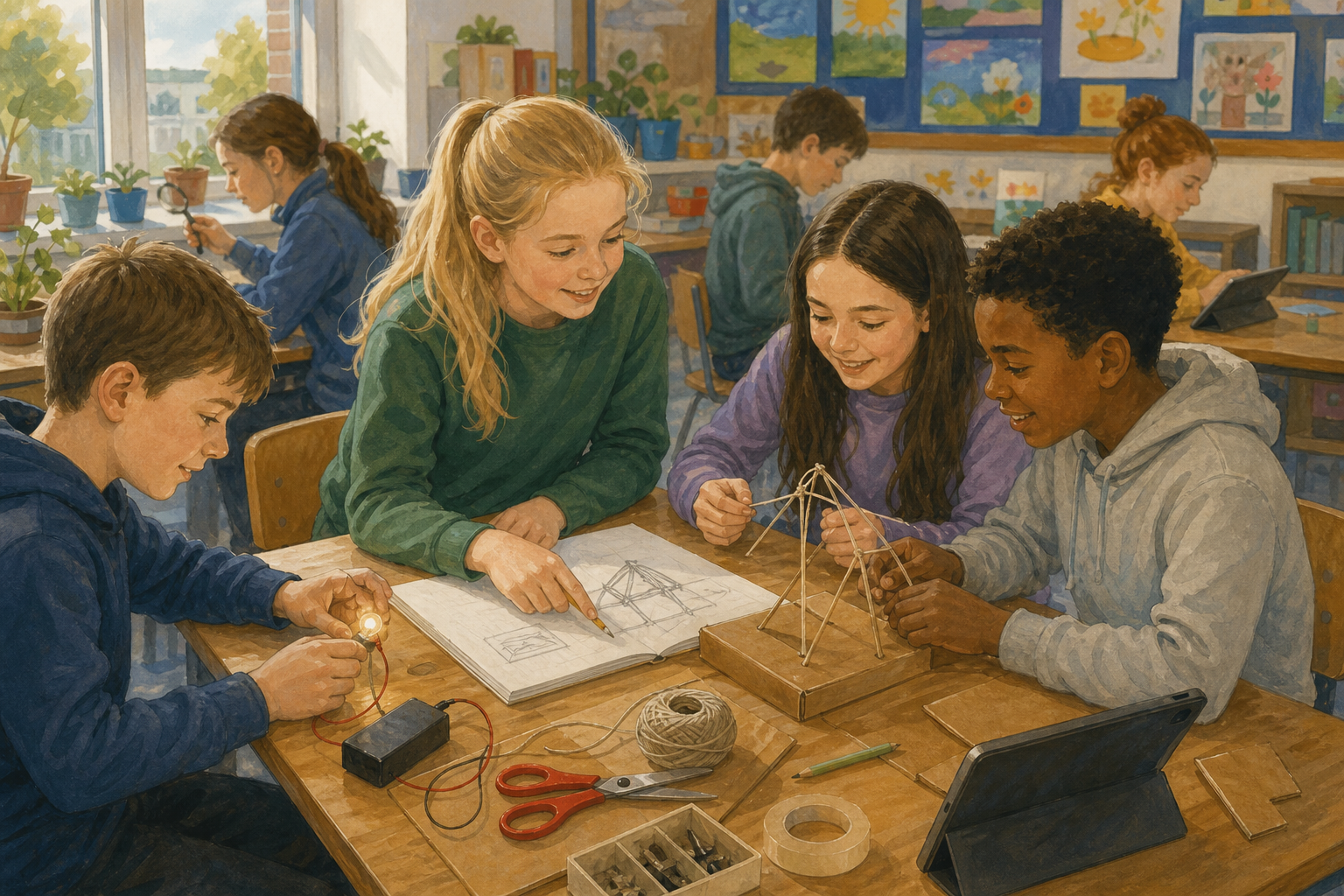 Open your Design Brief together, because it is the plan you are about to build from. Say out loud who the user is and one thing that will count as success, so everyone in the group is building the same idea, and then point to the main shape on your sketch that you will make first.
That sketch is the start of your prototype: a first working model you can test.
Your Design Brief is the plan you follow. If tape or card will not hold as drawn, keep the user need, change the join, and jot that plan change so you can finish your notes later.
The kit on your table is the same for every group, and it is all you may use. The card below holds your challenge, the order to build in and the full list of what is in the kit, so read it through with your group before anyone picks anything up.
Stop when you have a working model you can test next time, not when every detail is perfect.
If a join fails or the sketch will not stand in real card, that is normal engineering: keep the user need, change the join, and jot it.
Each of you records on your own Investigation Journal page how the build went. Use your group's sticky-note jots and talk.
On your page, complete these three things only:
- Build notes — what you made and how far you got (words or a quick labelled sketch).
- Plan change or plan held — what you changed and why, or what proved the plan was working.
- User link — one sentence that links the prototype back to the user need.
Think about your build. Be ready with one short sentence for the class, using a frame like these:
Our ______ already ______ for the user. (for example: Our book stand already holds two books upright for the reader.)
We changed ______ because ______. (for example: We changed the tape join to string because the draught-stopper flap would not stay shut.)
Also name one thing you will want to test carefully next time against your success criteria.
Unlock the full learning experience
You're previewing this lesson. Get full access to this lesson and hundreds more — each one ready to teach, with interactive activities, printable resources and pupil progress tracking built in.
This lesson is copyright of 123Learn.ie 2017 - 2025. Unauthorised use, copying or distribution is not allowed.