 You already know feeds are chosen for you by ranking systems. Today the question shifts to the content itself: when a post, advert or image leans on a ready-made idea about a group of people, can you spot it?
You will judge a set of invented digital examples for bias, then talk through what happens when the same stereotype shows up again and again.
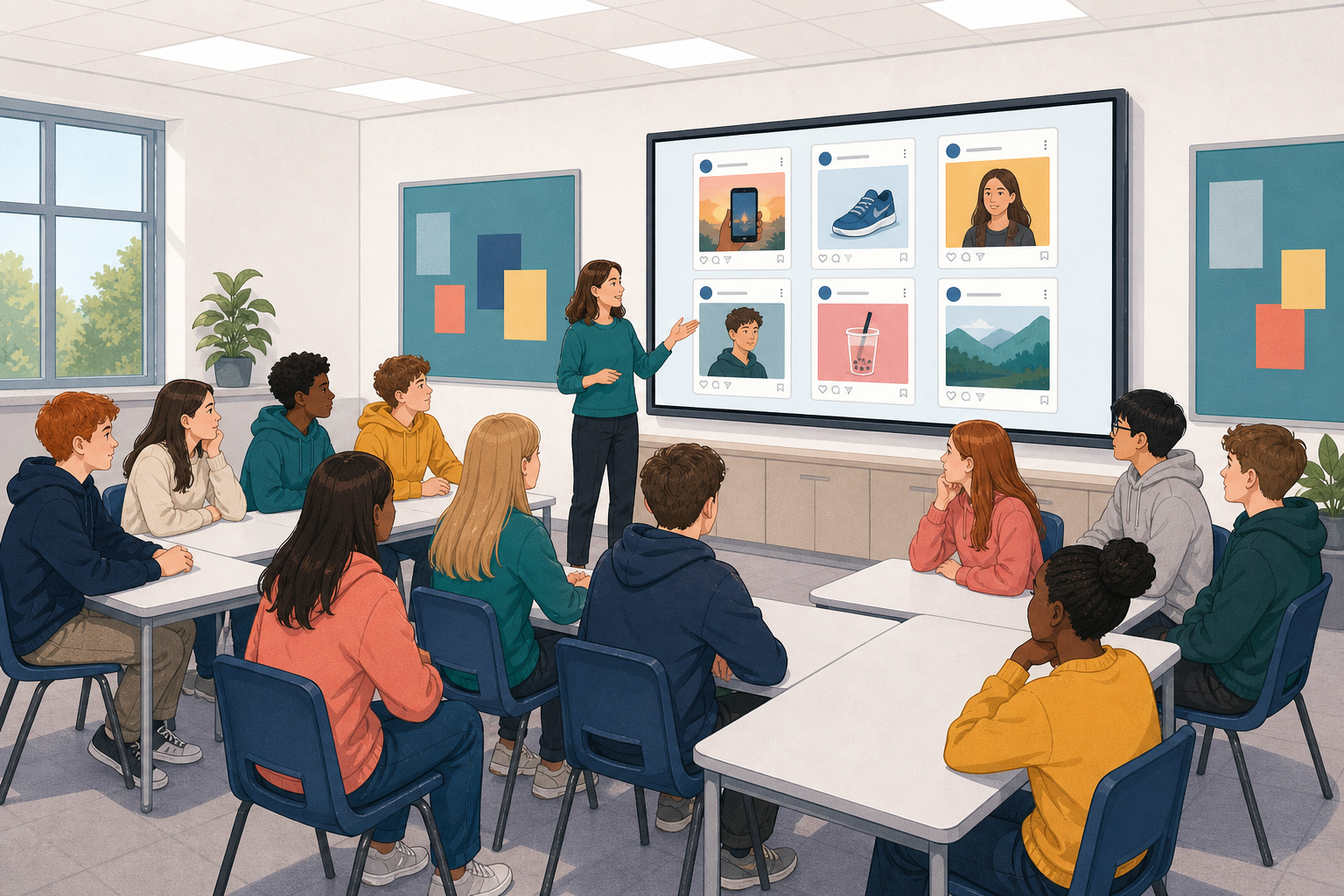 Bias is when content leans toward one view, group or story and leaves others out or makes them look worse. A stereotype is a ready-made idea about a whole group (for example "all teenagers..." or "people from X always...") treated as if it were a fact about every person in that group.
Bias can sit in posts you already agree with.
In a minute you will look at invented posts, adverts and headlines one at a time and say which of three things each one is. These are the three calls you can make:
- Balanced: fair enough about the people or views for what it is trying to do
- Shows bias: leans on a stereotype or one-sided frame in a way that matters
- Cannot tell from this: not enough detail yet to judge
First, though, think of one stereotype you have seen online about people your age. Keep it to yourself for now.
Work through the bias detective challenge as a class. You will look at invented examples one at a time: an image description, an advert, a short post or a local report. For each one you weigh what is in front of you, make your call, and then hear the reasoning behind the defensible answer.
The two questions to hold in your head each time are: who is shown and who is left out, and what ready-made idea about a group is doing the work?
You will probably get through four examples fully; two more are there if there is time.
The examples cut both ways, so some of them will lean in a direction you like. Agreeing with a post does not make it balanced, and noticing the lean in something you agree with is the hard part of the skill. One item is deliberately thin, so Cannot tell from this can be the right call.
Bias detective
Now the whole class plays the rest of the items, on your own devices. Every person answers every round, not one person per table, and you can change your answer until the time is up.
- Read the item, make your call, and lock it in.
- Say how sure you are: just checking, fairly sure, or certain.
- Your table scores together, so talk it through quietly first if you want to.
- When the reasoning comes up, check it against the one you gave.
Getting it right matters less than being able to say why. A right answer earns what you staked and a wrong one loses it, so being unsure and saying so costs you very little - being certain and wrong is what costs. Every round has a defensible answer, and the reasoning behind it is what you are here for.
Class Poll
Now step back from single posts. Talk as a class about what repeated stereotypes can do over time. There is no single right answer here.
- If the same kind of person is always missing from "clever", "brave" or "leader" roles in the media you see, what might that quietly teach viewers about who those roles are for?
- What is the difference between noticing a real pattern with evidence, and turning a pattern into a rule about every person in a group?
You do not have to say this out loud: pick one stereotype about teenagers that shows up a lot online. What expectation might it create for adults looking at you, and what expectation might it create inside your own head?
Stay analytical. Name the mechanism (repetition, who is shown, who is left out, jokes that harden into "common sense"). You do not have to agree with each other on how big the impact is.
Unlock the full learning experience
You're previewing this lesson. Get full access to this lesson and hundreds more — each one ready to teach, with interactive activities, printable resources and pupil progress tracking built in.
This lesson is copyright of 123Learn.ie 2017 - 2025. Unauthorised use, copying or distribution is not allowed.