Mathematics
Advanced
50 mins
Teacher/Student led
+80 XP
Teacher-led from the board. Pupils do not need a device, but can follow on one.

All Four Quadrants: a First Walk
Plot points with negative coordinates on a full four-quadrant grid. Learn which quadrant each point lands in, and how minus signs change the direction of movement along each axis.
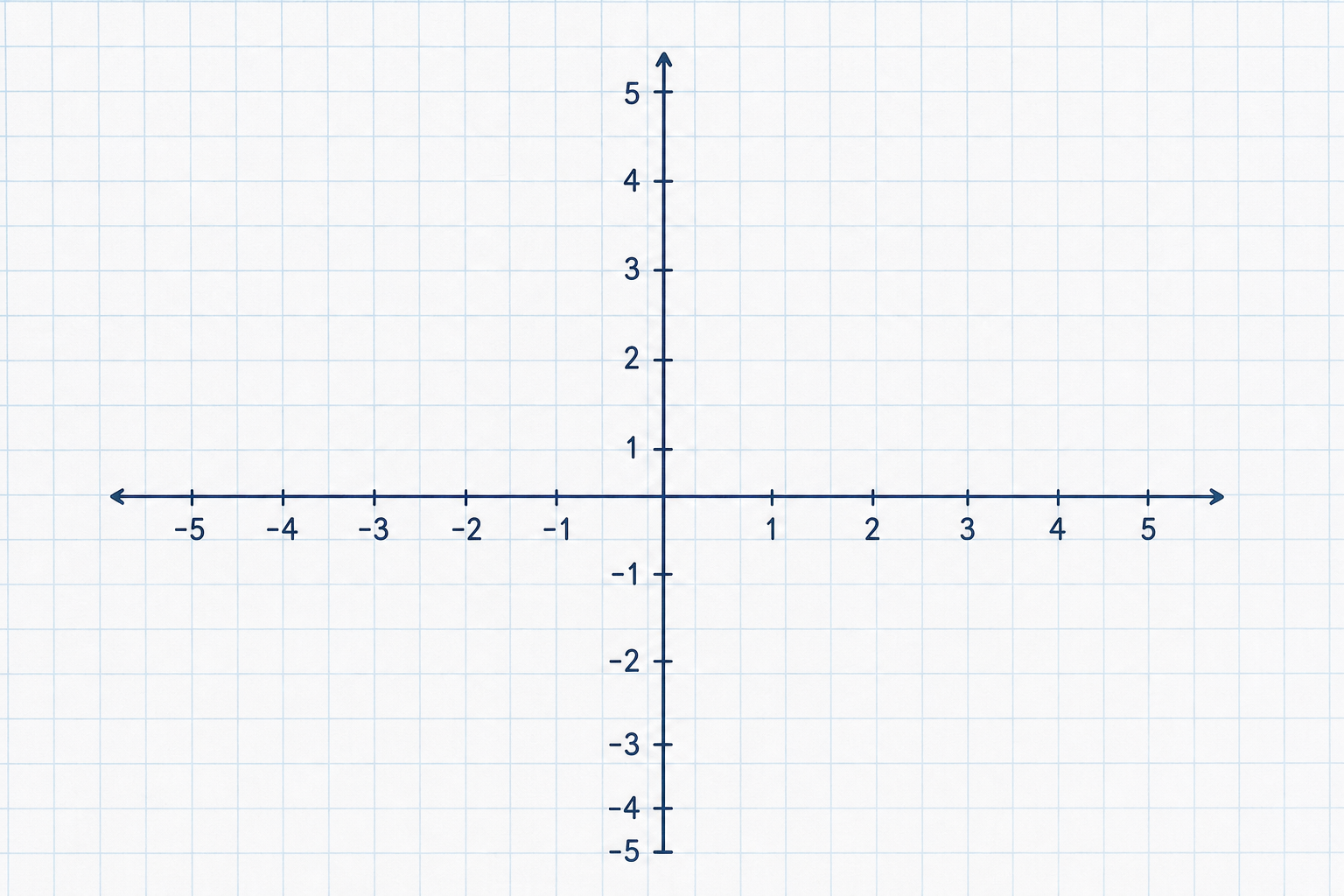 You already know how to plot points that go right and up. But a coordinate grid does not stop at zero. The two lines cross at zero and carry on in every direction, so a point can go left as well as right, and down as well as up.
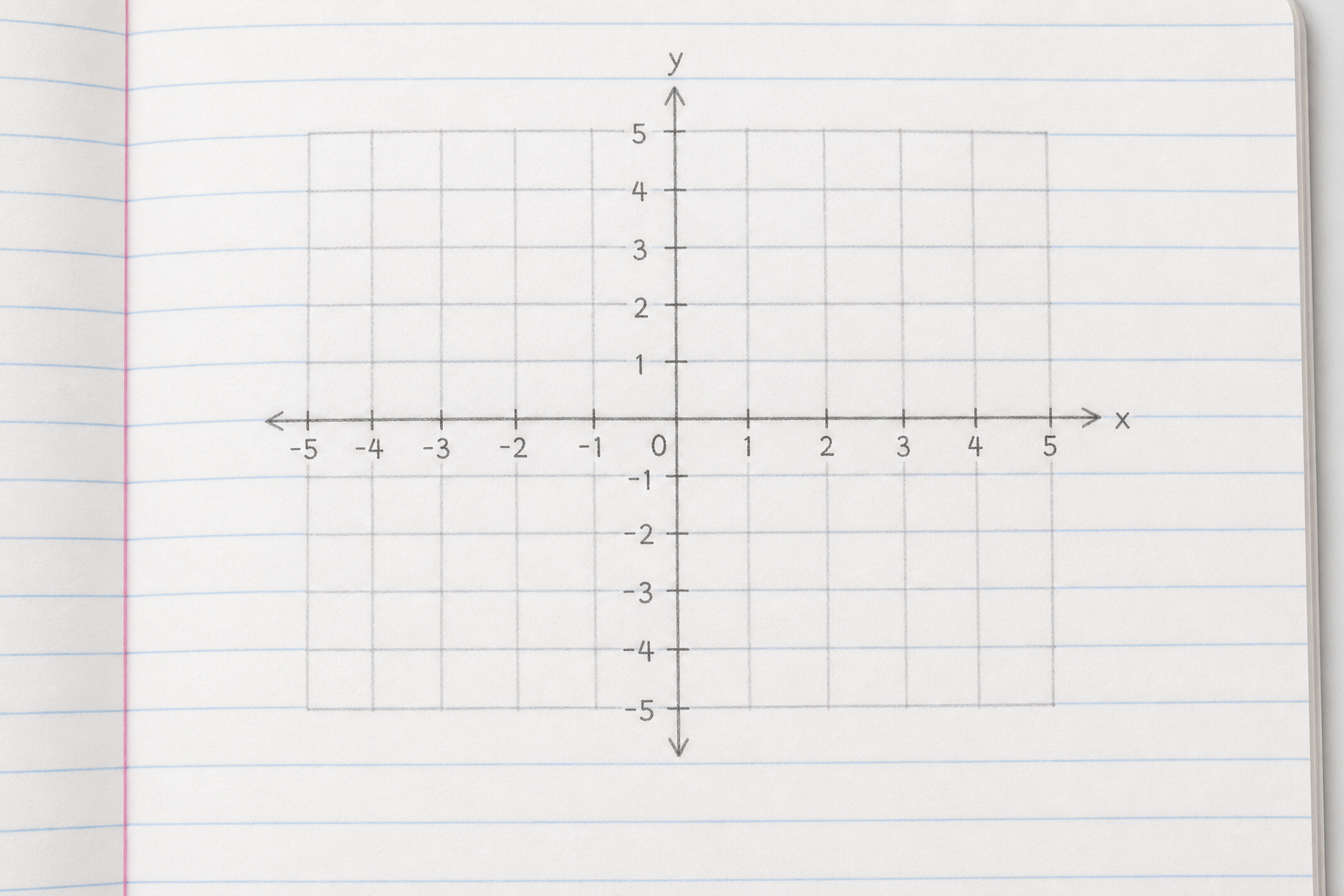 In your maths copy, sketch a four-quadrant grid with each axis running from −