A Mathematics course for Senior Infants covering numbers to 20, part-whole bonds to 10, counting on and back, patterns, 2D and 3D shapes, measures, time, money to 20c.
Everything a teacher needs to teach Maths for Senior Infants this year.
The whole books come with the course, in each class's Resources.
Every lesson is mapped to the specification. This course teaches 0 of the 15 outcomes for this class.
Tap any outcome to read it. The coloured ones are taught in this course. The curriculum does not include official reference codes for individual learning outcomes, so we have assigned a code scheme to make it easier to identify and track coverage.
120 lessons in 11 modules.
Settle the class into the maths-box routine and re-secure sorting by a rule, one-to-one matching, and 0 to 5 as amounts, numerals and ordered sets. Everything stays oral and play so every pupil starts the year feeling like a mathematician.
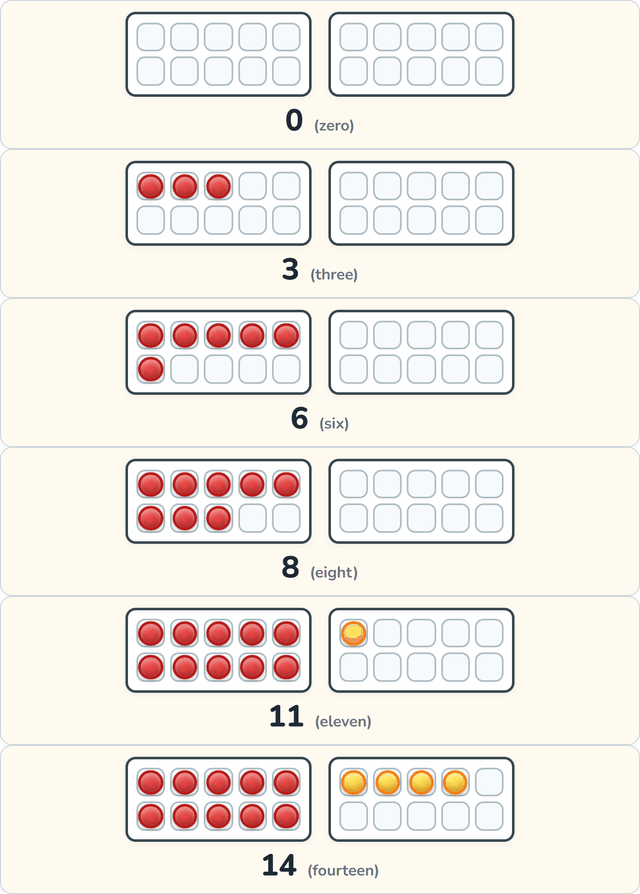
The heart of the Senior Infants year: each of 6 to 10 is met, made, counted, written and found in the child's own world, then the whole family is ordered, compared and seen at a glance. Every number is built in egg boxes, frames, fingers and beads before its numeral is traced.
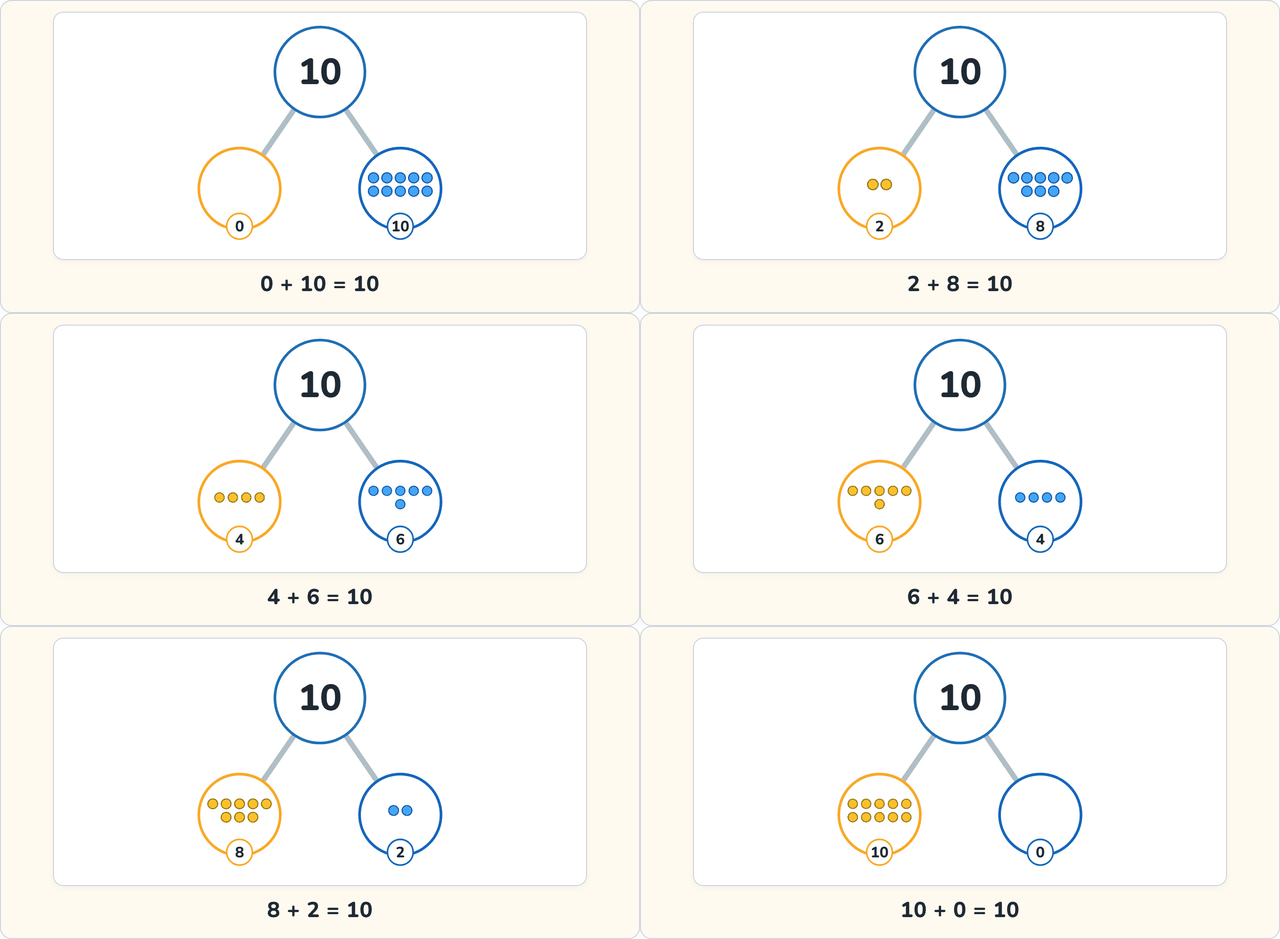
Numbers to 10 become flexible: every set can be broken into parts and put back together, six to nine are seen as five and a bit, and ten becomes the friend every number wants to make. It stays oral and concrete, combining and partitioning language only, with symbols saved for 1st Class.
The count stretches to 20, forwards, backwards and counting on from any start. Numerals to 20 are met, pegged and ordered on the line but nothing is written beyond tracing: this is oral counting made strong, with the number line as the picture that holds it together.
Repeating patterns come back stronger, read aloud, copied, extended, fixed and carried into new materials, and patterns that grow by one more each time arrive for the first time. Everything is built in cubes, beads, claps and stamps, pushing from what comes next towards what is the rule.
Solids come first, held, rolled, stacked and printed, and flat shapes are discovered living on their faces. Then shapes start to move, turning, sliding and flipping without changing what they are, and position words say exactly where things sit. Mostly hands and eyes, with the interactive kept for sorting and picture-building.
Direct comparison grows into ordering three and more objects, and comparing by eye grows into counting non-standard units, cubes, handspans, steps and cupfuls. The balance settles the arguments our eyes cannot, including the surprise that big is not always heavy.
Time at Senior Infants is lived, not read from a clock: the day gets its order, the week gets its seven names, the year turns through four seasons, and how long becomes something to feel and compare with sand timers and counted claps. The clock face waits for 1st Class.
The shop corner opens for real business: money is for swapping, the little coins 1c, 2c, 5c and 10c get names, faces and worths, and prices to 10c are read from tags and paid coin by coin in play, with the 20c coin met at the end. Everything is buying, selling and counting cents aloud, no written sums.
Halving arrives the way infants meet it in life, sharing fairly between two. One thing is cut into two fair parts, paper folds into matching halves, and little sets deal out one for you, one for me, all in the language of fair and not fair. No fraction symbols and no quarters, just halves you can hold.
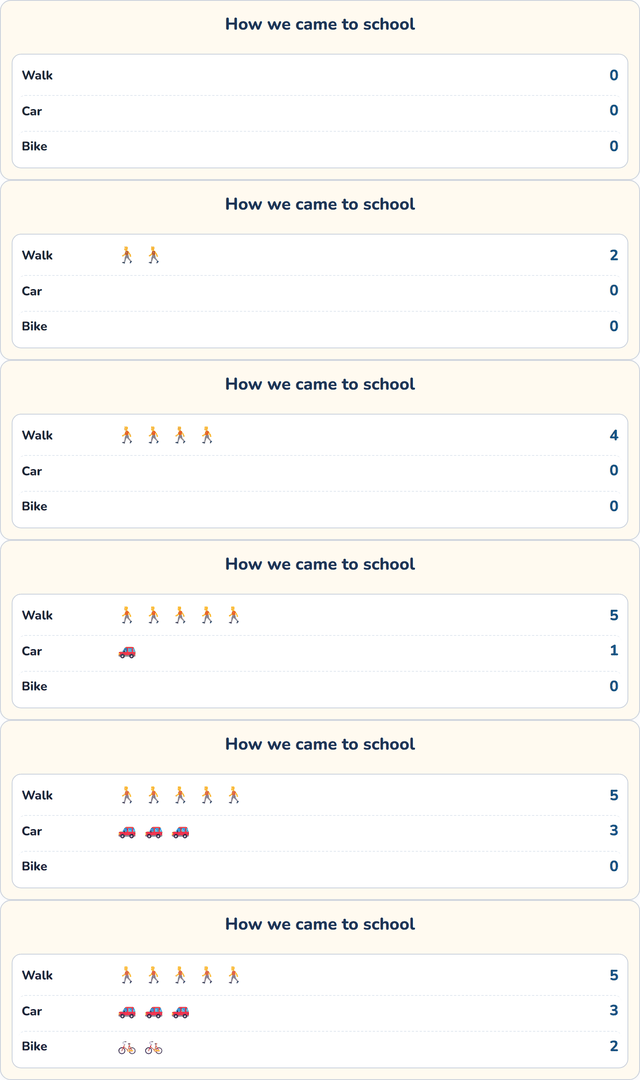
The year closes with the class finding things out for itself: ask a question we can count, collect the answers, sort and count them, and show them so anyone can read them, cube towers first, then tally marks, then pictograms where one picture means one answer. Reading the chart matters as much as building it.
Get in touch to discuss pricing and ordering for your school.
Back to Senior Infants courses